

Meet the Visit Ganvié team: native Tofinu guides, local authors, and stilt village experts. All certified to offer you the best experience.
Visit Ganvié was built on a single conviction: the best way to discover Ganvié is with the people who live there. That is not a marketing line. It is the founding principle that determines who we select as certified Ganvié guides, who we work with to produce our content, and how we remain accountable to the Tofinu community.
What you find here is the team behind every circuit, every article, and every booking confirmation — real people with real histories, bound to a place that shaped them.
Our philosophy of guiding
 A guide can know the facts about a place without knowing its soul. They can read the history, memorize the dates, prepare a well-structured script. We require all of that as a baseline. But it is not what sets our guides apart.
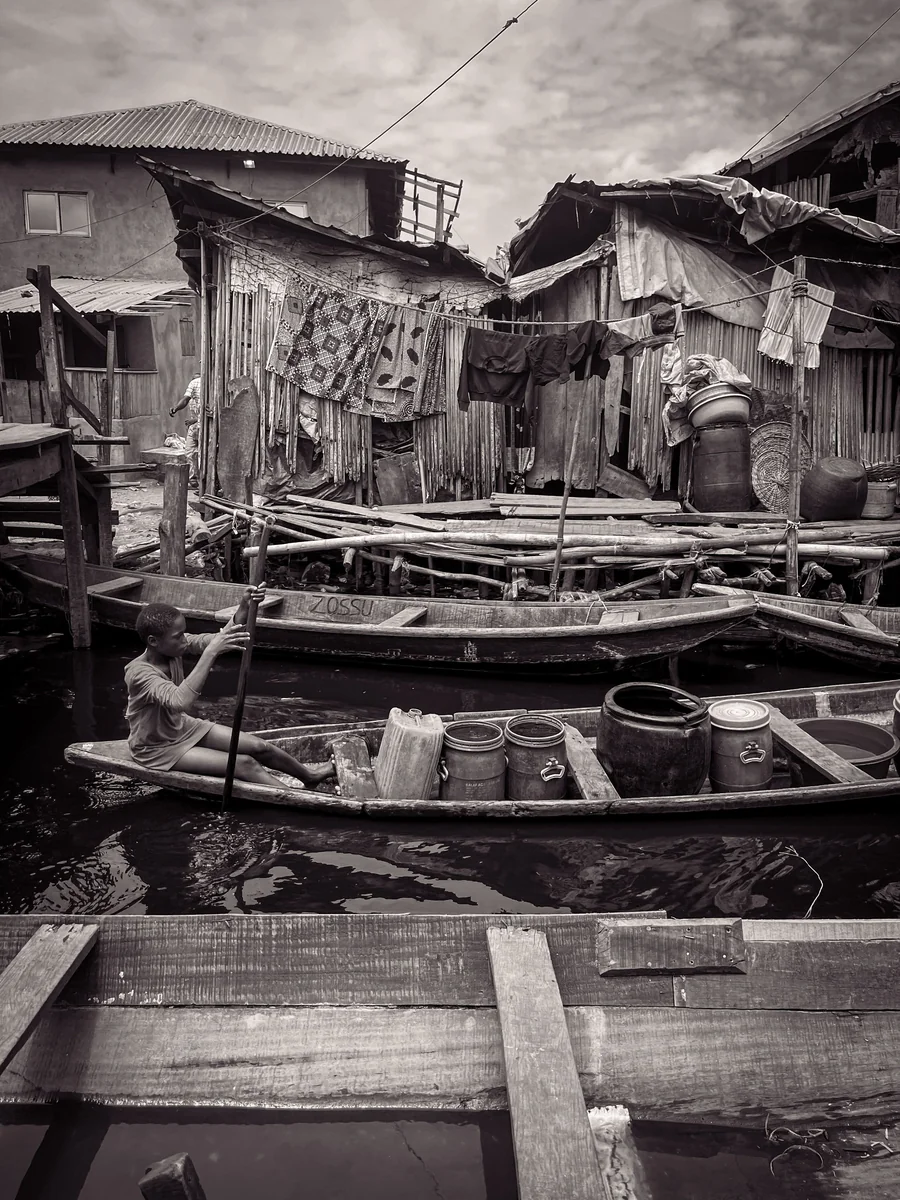
What we look for is something training cannot produce: intimate knowledge of a lived place. Our guides grew up on the lake. They learned to paddle before they learned to read. Their grandfather fishes in the acadja parks, their mother sells at the floating market, and their entire childhood unfolded on those wooden walkways above the water.
When a native guide stops in front of a house and tells you "the father of this family is the best weaver in the western quarter," that is not information from a travel guide. It is living knowledge, built over years of proximity. That depth changes the texture of a visit. It turns an excursion into an encounter.
This is why every single guide on our team is a native of Ganvié. Without exception.
The guides
Jean Ziguélé — Lead guide, oral history and fishing techniques
Jean was born in Ganvié 34 years ago, into a Tofinu family whose roots on the lake stretch back seven generations. His father is a fisherman. His mother has run a stall at the floating market for thirty years. Jean grew up paddling to the floating school each morning, which gives him a knowledge of the canal network that few guides can match.
After studying tourism in Cotonou, he returned to Ganvié with a clear objective: to offer visitors the same quality of welcome they would receive from a friend in the village, not a service provider. He speaks French, English, and the Tofinu language, which allows him to translate conversations with artisans and fishermen in real time.
His specialty is oral history. Jean knows the founding stories of the Tofinu people — the flight from the Dahomey raids, the legend of king Agbodogbé, and the history of each neighborhood in the village. He shapes these accounts for each group, never making it sound like a script.
What travelers say about Jean: "He introduced us to his family. It was not on the itinerary. It was just his life." (Moreau family, Lyon, 2025)
Hermann Dossa — Nature guide, lake ecosystem and birdwatching
Hermann is 29 and has had one passion since childhood: the birds of Lake Nokoué. Son of a fisherman and a schoolteacher, he spent his early years watching herons, egrets, and kingfishers from the family's terrace above the water. That fascination became expertise: Hermann can identify by ear 47 bird species observable on the lake across the seasons.
He holds a nature-guide certification from the Ministry of Tourism and collaborated with a Belgian ornithology team during a lake biodiversity study in 2023. For visitors interested in nature photography, birdwatching, or ecology, Hermann is the guide you want.
He speaks French and English, with particularly strong English technical vocabulary for ornithological and ecological terms.
His complementary specialty: the acadja fish parks that cover portions of the lake. Hermann explains their hydrological mechanics, their role in the local economy, and the tensions between ancestral fishing techniques and modern pressures on the lake ecosystem. It is one of the most intellectually rich topics in Ganvié, and Hermann covers it with genuine depth.
Adèle Houénou — Cultural guide, crafts and women of the lake
Adèle is the only woman guide on our certified team. At 31, she brings a perspective visitors find nowhere else: that of a Tofinu woman who grew up on the lake, studied in Cotonou, and returned to tell her culture from the inside.
Adèle is particularly valuable for floating market visits. The women who hold their pirogues loaded with fish, vegetables, and spices are her community. They speak Tofinu to each other. With Adèle as a guide, exchanges move beyond souvenir photography — she translates conversations, introduces vendors by name, and explains the economic dynamics that structure women's lives on the lake.
She speaks French, English, and Tofinu. Her own practice of traditional weaving and pottery means she explains artisan techniques from the inside, not as an outside observer describing something she has read about.
Kokou Djossou — Logistics guide, families and combined itineraries
Kokou is 38 and has a specific expertise: families and mixed-profile groups. A father of three himself, he naturally adjusts visit pacing so that children stay engaged and adults do not lose content depth in the process.
He is also the team's specialist for combined Ganvié-Ouidah-Abomey itineraries. His knowledge of roads, accommodation, and local guides at the other two sites allows him to organize coherent multi-day circuits with smooth transitions between each stop. He speaks French and English, with some Spanish.
How we select our guides
Every guide who joins our network passes through a three-stage selection process.
Stage 1 — Background verification. We confirm that the candidate is genuinely native to Ganvié or has deep family roots in the Tofinu community. This criterion is non-negotiable. It is not exclusionary for its own sake — it reflects our position that the quality of a visit depends on the depth of personal knowledge a guide has of the place.
Stage 2 — Knowledge test. Candidates undergo an oral interview in French and English covering the history of the Tofinu people, the geography of the lake, fishing techniques, cultural practices, and contemporary challenges facing the community (climate change, demographic pressure, intergenerational transmission). Answers must demonstrate living knowledge, not memorized facts.
Stage 3 — Accompanied tours. The candidate guides three real tours alongside an experienced guide, with genuine visitor groups. We observe their pacing, their adaptability to different visitor profiles, their handling of the unexpected, and the quality of their relationships with village residents.
The official Ministry of Tourism certification is a prerequisite, not a sufficient criterion. We have declined certified candidates who did not meet our own standards.
Our editorial team
The content you read on Visit Ganvié is produced and verified by a team distinct from the guides.
Writing: our articles are written by Beninese authors specializing in cultural tourism and West African history, with consistent attention to tone, historical accuracy, and avoidance of the stereotypes that too often flatten African cultures into fixed images.
Community review: every article that touches on Tofinu cultural practices, lake history, or community life is reviewed by at least one community member from Ganvié before publication. This review covers factual accuracy, respect for local sensitivities, and consistency with how residents themselves describe their culture.
Ongoing updates: prices, practical conditions, and logistical information are verified and updated twice a year. Articles carry a last-modified date so readers know which version they are reading.
Our commitment to the Tofinu community
Visit Ganvié is not a tourism operator that functions outside the community it brings visitors to. We are structurally part of that community.
All our guides are compensated above the local market rate. A portion of every booking is channeled into a community fund managed by Ganvié residents, which finances shared infrastructure: walkway repairs, support for the floating school, materials for artisans who sell to visitors.
We maintain a small-group policy (2 to 8 people maximum) not only for experience quality, but to limit tourism's impact on daily life. Ganvié is a village where families live and work. It is not a performance staged for visitors, and our operating model is designed to keep it that way.
Questions fréquentes
Are Visit Ganvié's guides certified by Beninese authorities?
Can I request a specific guide when booking?
Do all the guides speak English?
Is it possible to have a female guide?
How does Visit Ganvié maintain guide quality over time?
Book with a certified guide
All our guides are native Tofinu and trained in hospitality.
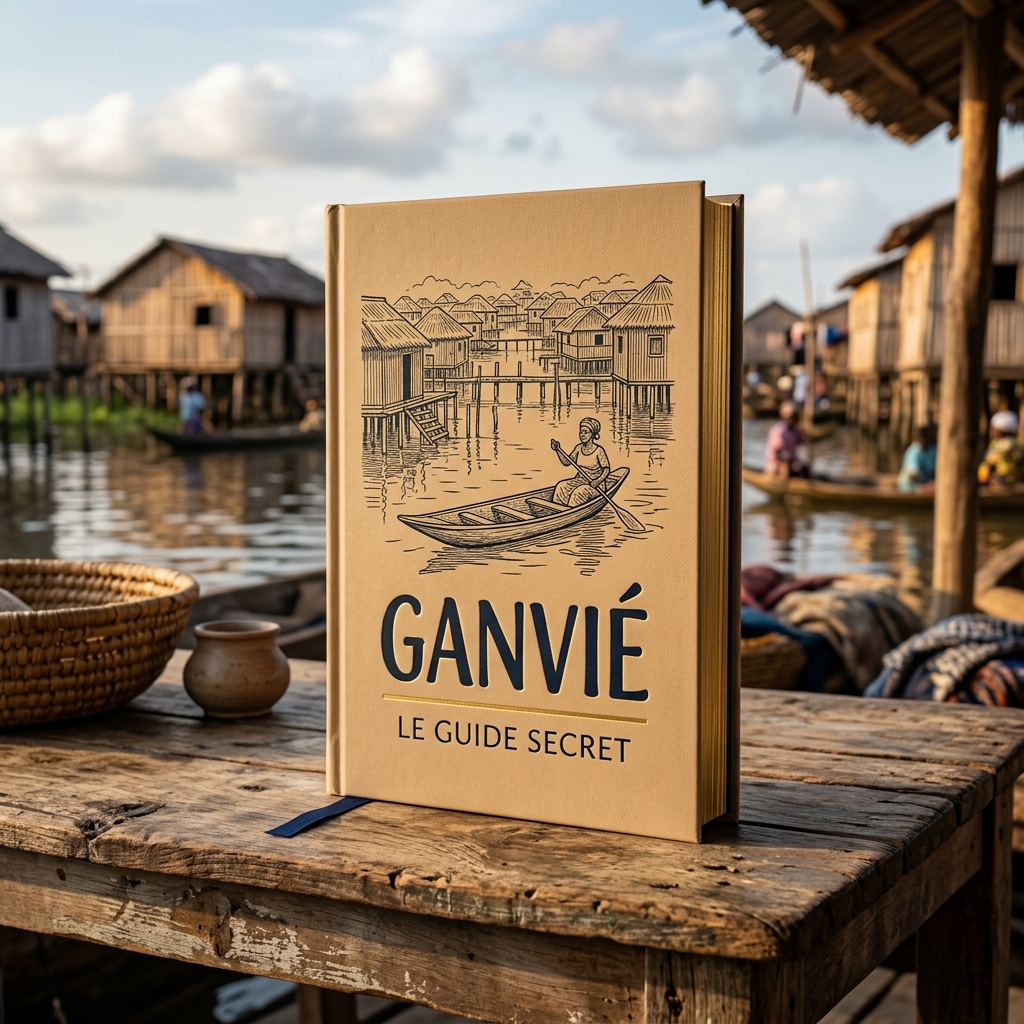
The Secret Guide to Ganvié: Hidden Gems & Etiquette
Discover the authentic Ganvié far from the tourist crowds. Download our exclusive PDF to prepare a respectful and unforgettable visit.
We respect your inbox. No spam.
The Visit Ganvié Team
Written by native Tofinu guides. We have navigated Lake Nokoué since childhood to share the true history of our city, far from tourist traps.
Related articles
Tipping in Ganvié & Benin: How Much Should You Tip Tour Guides and Boat Captains?
Should you tip during your tour of Ganvié? Discover local customs, recommended FCFA tip amounts for guides and boat drivers, and how to express gratitude respectfully.
supportSafety & Health in Ganvié: Mosquitoes, Life Vests & Family Travel Guide
Visiting a water stilt village raises natural questions about boat safety, mosquitoes, and health. Discover expert safety tips for traveling to Ganvié with complete peace of mind.