
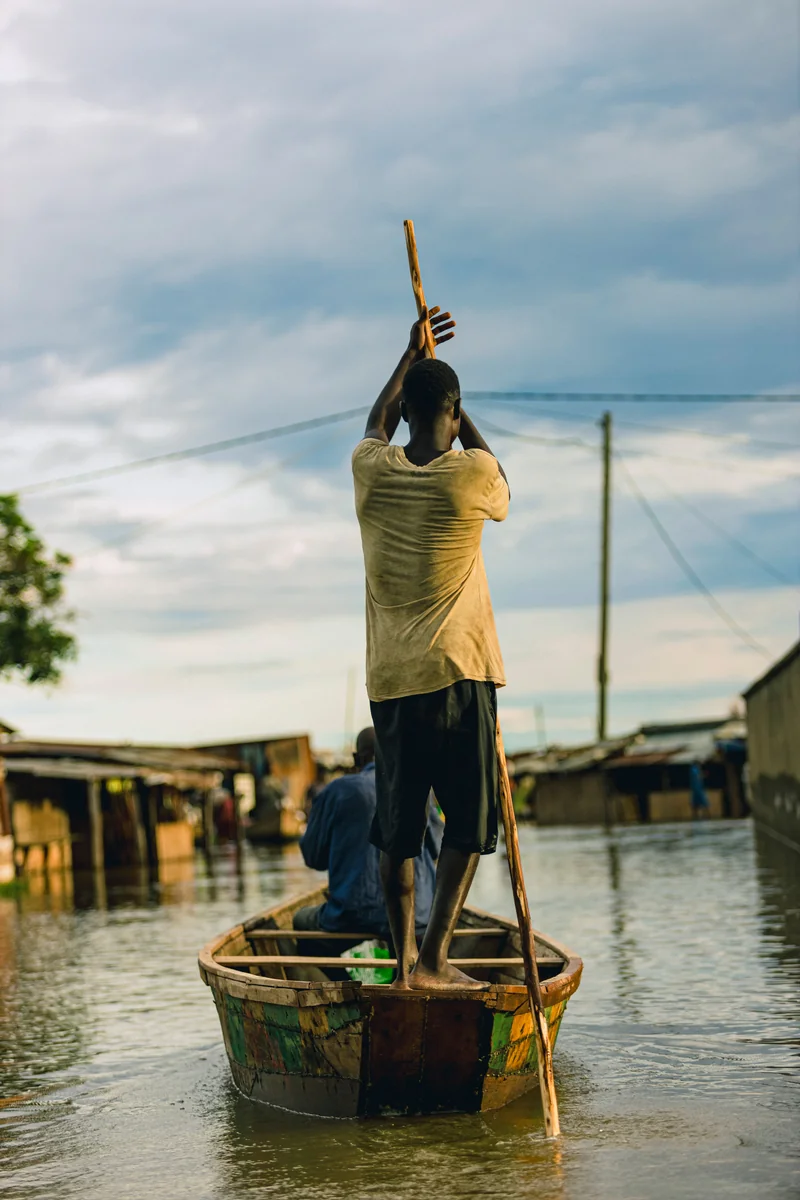
Learn how to recognize a legitimate guide in Ganvié. Tips on certification, price transparency, language skills and avoiding common tourist scams on Lake Nokoué.
Ganvié draws visitors from every continent. The stilt village on Lake Nokoué is one of West Africa's most remarkable destinations, and where there is consistent demand, there will always be people eager to offer their services. Most guides who work the Abomey-Calavi pier are honest, knowledgeable, and proud of the village they grew up in. A few are not.
Knowing how to recognize a legitimate guide in Ganvié makes the difference between a rich, grounded experience and a frustrating afternoon on the water. This article gives you the specific signals to look for, the prices to expect, and the behaviors that should make you walk away before the pirogue leaves the dock.
Official certification and badges
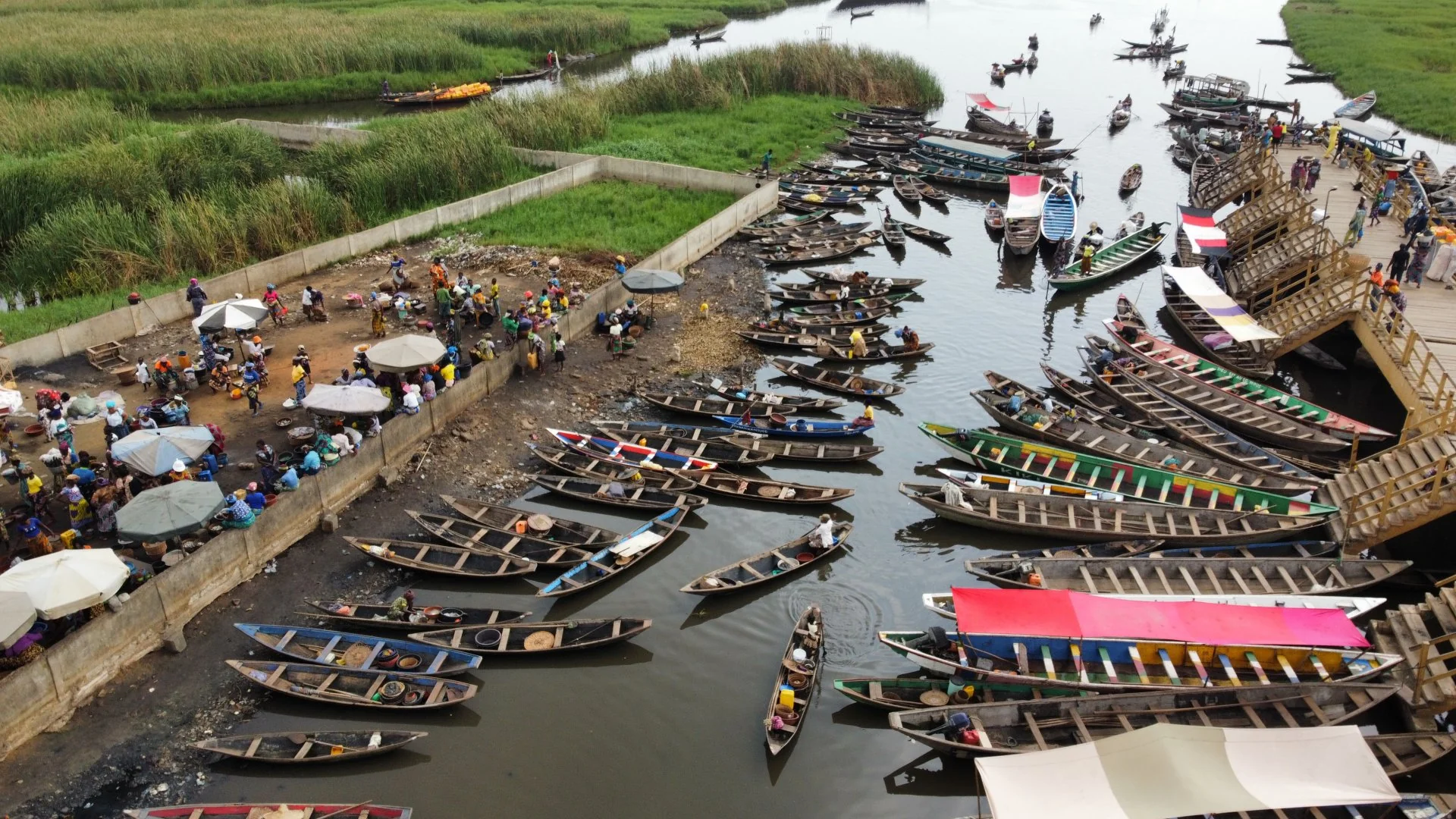 Benin's tourism sector operates a formal certification system for professional guides. A legitimate guide in Ganvié holds a professional identity card issued by the Direction Départementale du Tourisme. This card carries a photograph, a registration number, and an expiration date.
Ask to see it before you agree to anything. A certified guide keeps this card accessible and presents it without hesitation. The question does not offend them. It signals a traveler who has done their research, and they respect that.
If the guide says the card is "back at home," "in the bag on the boat," or deflects by immediately offering a price instead, treat that as a warning sign. Cards are not a guarantee of quality on their own, but they eliminate a significant number of unofficial operators at the first filter.
Some Ganvié guides are also registered with the local guide association for the stilt city, a community-level body that maintains a register of authorized guides operating on the lake. The association has a presence at the Abomey-Calavi pier. If you have doubts about a specific person, you can ask to cross-reference their name with that register.
Every guide who works with Visit Ganvié carries current certification and has been vetted directly by our coordination team. We do not send uncertified operators to meet our guests.
Price transparency and upfront quotes
The second indicator of a legitimate guide in Ganvié is their willingness to give you the full cost before departure. Not a range. Not "we discuss when we return." The complete amount, with every element either included or explicitly excluded, stated before you step into the pirogue.
What a serious Ganvié tour covers:
- A certified guide for the full agreed duration
- The pirogue and its experienced boatman
- Life jackets for all passengers
- Entry to key sites: the floating market, artisan workshops, and the main canals
- A meal for full-day tours, or a clear statement that meals are not included
Typical prices for a Ganvié guided visit:
A two to three-hour guided visit runs between 15,000 and 25,000 FCFA per person. A tour that includes the floating market and secondary canals costs 20,000 to 30,000 FCFA. A full-day visit with an overnight stay at a family guesthouse and meals runs 35,000 to 60,000 FCFA. Pirogue rental, when not included in the guide fee, adds 5,000 to 10,000 FCFA.
A price significantly lower than these figures almost always means something is missing: the guide is not certified, safety equipment is absent, the tour ends after forty-five minutes, or an aggressive upsell is waiting at the other end. A price significantly higher than these figures with no clear justification means someone is testing how much they can extract from an uninformed traveler.
The three-quote rule
If you arrive at the Abomey-Calavi pier without a pre-booked guide, take a few minutes to speak with two or three different guides before committing. Compare what each one includes, observe their attitude, and notice whether they pressure you to decide immediately. A legitimate guide in Ganvié is confident, not desperate. They can wait.
Local knowledge and community roots
The most effective guides in Ganvié are not the ones who memorized the most facts. They are the ones who grew up here. Sons and daughters of the lake, educated at the floating school, raised in houses on stilts, connected by family ties to every canal and quarter in the village.
What local roots produce in practice:
A guide born in Ganvié does not explain the village to you. He introduces you to it. When he stops in front of a weaver's house, it is not because she is on the standard circuit — it is because she has been his neighbor since childhood. When he explains how an acadja fish park works, he names the man who planted those stakes twenty years ago. When he shows you the statue of founder Agbodogbé near the royal square, he connects that founding story to his own family's oral history.
This depth of personal knowledge is not something a training manual produces. It is not available from an audio guide or a travel book. It requires years of lived experience on the lake, and it is exactly what separates the visit you talk about for years from the one you forget by the time your flight lands.
Test a guide's knowledge before you commit. Ask specific questions: What is the name of the current village chief? What is the difference between a Tofinu house and a Fon house? How long has your family lived in Ganvié? A native guide answers without pausing. A guide who arrived from Cotonou this morning gives vague answers or redirects the conversation toward logistics.
For more on what a well-guided visit should include, see our Ganvié practical guide.
Language skills and communication
A legitimate guide in Ganvié communicates fluently in the language you agreed on, not just approximately. Most certified guides speak French and English. Several also speak Spanish, Italian, or German, particularly those who have worked with international tour operators over multiple seasons.
How to evaluate language capacity before booking:
Have a short conversation in your preferred language before agreeing to anything. Ask the guide to explain something specific about the village — the history of the founding, how the floating market is organized, what the acadja fishing technique involves. A fluent guide responds in complete sentences, adjusts for your level of familiarity with the topic, and checks whether you understood. A guide who mostly responds in monosyllables or falls back on gestures will not sustain two or three hours of meaningful explanation on the water.
Francophone native guides from Ganvié speak French with a local accent, which is entirely natural. What matters is clarity and depth, not accent purity. If you need an English-speaking guide specifically, book in advance. Genuinely bilingual guides with strong English are fewer and get reserved quickly. Walk-up availability at the pier is unreliable for English-speaking visitors.
Red flags to watch for
Even experienced travelers can be caught off guard at the Abomey-Calavi pier if they do not know the patterns.
The aggressive greeter. Someone approaches you in the parking area or at the taxi drop-off, before you have had a chance to get your bearings. They claim your pre-booked guide had an emergency and offer to substitute. Always verify that the person meeting you matches the exact name and description in your booking confirmation.
The suspiciously low price. A complete Ganvié tour for 5,000 FCFA per person raises an immediate question: what does that actually include? The math does not work for a legitimate operation with certified staff, proper safety equipment, and an experienced boatman. Low prices are typically recouped through forced stops at shops that return commissions, unannounced supplements at the end of the tour, or dramatically shortened visits.
The mid-tour supplement. "The temple entry is extra." "The boatman expects a tip." "The fishing demonstration is a separate fee." A legitimate guide in Ganvié announces every cost at the beginning. If a new charge appears during the tour, you are entitled to decline it.
The pressure tactics. "The last pirogue leaves in ten minutes." "Every other guide is fully booked today." "You need to decide now." These lines manufacture urgency where none exists. A legitimate operator can accommodate reasonable planning time.
Why put yourself through this?
This exact "obstacle course" is why we created our Premium Tours. Your private driver drops you off directly with our official representative, with a fixed program and everything included. Zero touts, zero stress, zero hidden costs.
What a good guide actually gives you
It is worth being specific about what quality changes in practice, beyond the obvious elements of safety and accurate information.
A native guide does not accompany you through Ganvié. He introduces you into it. When he stops at the house of a weaver, it is not because she is on the circuit — it is because she is his neighbor. When he explains the mechanics of an acadja fish park, he is not reciting a description: he is pointing to the man who built it and explaining why his family switched from one fishing technique to the other two decades ago. When he shows you the statue of founder Agbodogbé, he connects that founding story to his own family's oral history in a way no historical plaque can replicate.
Travelers who visited Ganvié with a low-quality guide — limited context, surface-level knowledge, commercial diversions — consistently describe the experience as correct but unremarkable. Travelers who had a native guide with genuine roots in the community consistently describe an experience that changed how they understand West Africa.
The difference is decided at the booking stage, not once you are on the water.
How to book a reliable guide (and avoid the stress)
At this point, you have two options: the "DIY" mode or a Premium Tour.
If you go by yourself: Arrive early in the morning (before 9:00 AM) at the Abomey-Calavi pier. Prepare to be solicited as soon as you reach the parking lot. Stand your ground, ask to see professional cards, negotiate the pirogue price fiercely, and cross your fingers that you make the right choice.
The "Zero Risk" solution (The Premium Tour): Instead of playing the lottery at the pier, book one of our Premium tours in advance. The difference is radical:
- You do zero negotiating.
- You face no harassment at the pier.
- You have a contractual guarantee of being accompanied by one of the best certified guides (often a child of the village).
- Everything is included (private driver, private pirogue, guide, meals).
Don't let a handful of touts ruin your discovery of the "Venice of Africa".
Conclusion
Recognizing a legitimate guide in Ganvié requires vigilance, time, and energy. The signals are clear: official certification, transparency, and an absence of commercial pressure. But the best way to protect yourself remains anticipation.
Take no risks
Dodge the pier scams. Our Premium tours include transport from Cotonou, a private pirogue, and a 100% guaranteed certified Tofinu guide.
Questions fréquentes
What documents should a legitimate Ganvié guide show?
How much should a Ganvié guide cost?
What are the signs of an uncertified guide?
Is it better to book a guide in advance or find one on arrival?
Do Ganvié guides speak English?
Book your visit
Guided tour with native Tofinu guide, private pirogue, fixed prices.
The Secret Guide to Ganvié: Hidden Gems & Etiquette
Discover the authentic Ganvié far from the tourist crowds. Download our exclusive PDF to prepare a respectful and unforgettable visit.
We respect your inbox. No spam.
The Visit Ganvié Team
Written by native Tofinu guides. We have navigated Lake Nokoué since childhood to share the true history of our city, far from tourist traps.
Related articles
Tipping in Ganvié & Benin: How Much Should You Tip Tour Guides and Boat Captains?
Should you tip during your tour of Ganvié? Discover local customs, recommended FCFA tip amounts for guides and boat drivers, and how to express gratitude respectfully.
supportSafety & Health in Ganvié: Mosquitoes, Life Vests & Family Travel Guide
Visiting a water stilt village raises natural questions about boat safety, mosquitoes, and health. Discover expert safety tips for traveling to Ganvié with complete peace of mind.