
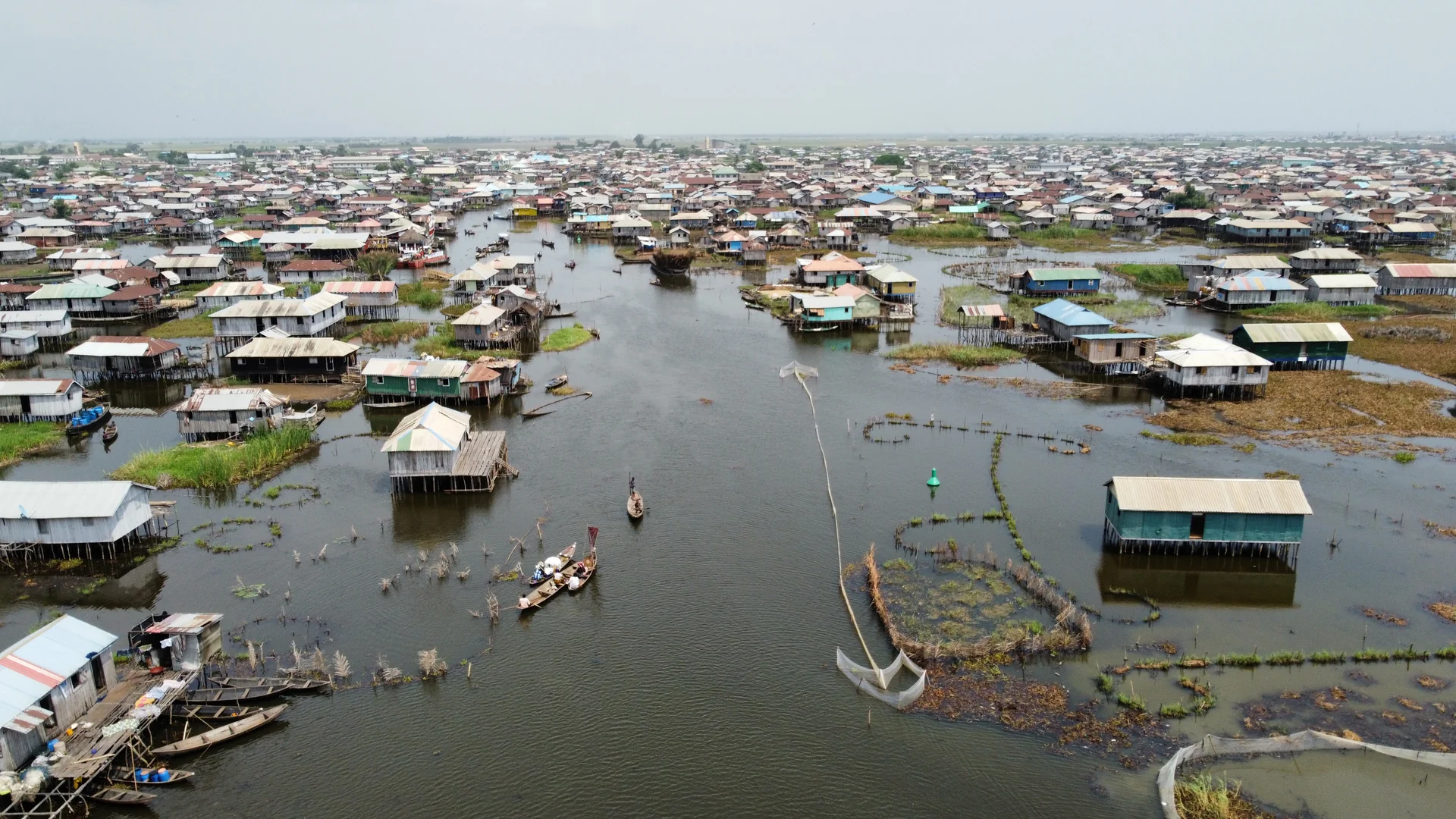
To reach Ganvie from Cotonou, take a taxi or zemidjan to the Abomey-Calavi pier (30-60 min). From there, a motorized pirogue crosses Lake Nokoué in 20 minutes, or a traditional pole canoe in 45-60 minutes. Expect 10,000-25,000 FCFA total per person including the boat and municipal tax.
The stilt city of Ganvie is the most iconic attraction in southern Benin. But for most first-time visitors, the question that stops the planning cold is a practical one: how to get to Ganvie from Cotonou?
Between the capital's traffic jams, the choice between two possible piers, and the uncertainty around pirogue prices, the adventure can feel stressful before it even begins. This guide covers every stage of the journey — from your hotel lobby to the stilted boardwalks of Ganvie — with real distances, real prices, and the kind of local knowledge that turns a logistical hurdle into part of the experience.
If you are planning to stay overnight on the lake, also read our guide to sleeping on the water in Ganvie.
To reach Ganvie from Cotonou, go to the Abomey-Calavi pier first (30-60 min by car). The pirogue crossing takes 20 minutes by motor or 45-60 minutes by traditional pole canoe. Budget 10,000-25,000 FCFA per person for the round trip including municipal tax. Morning departures before 8 am are best for seeing the floating market.
Cotonou to Abomey-Calavi: choosing your transport
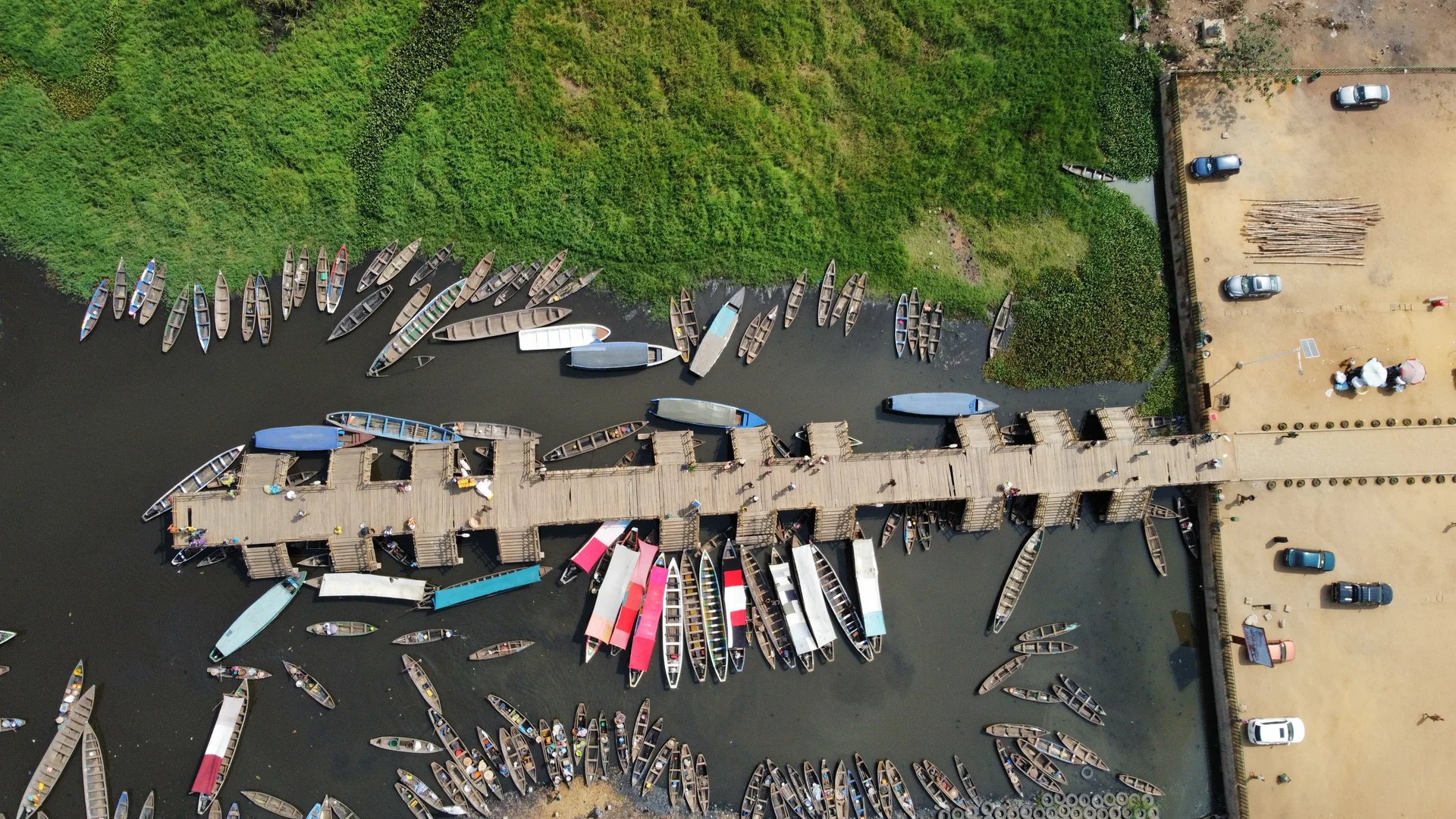
Ganvie sits on Lake Nokoué about 35 kilometers north of central Cotonou. No road leads directly to the village — every visitor must first reach the embarkation point at Abomey-Calavi, a lakeside town that serves as the gateway to the stilt city.
You have three ways to cover this first leg.
Private taxi or car
The most comfortable option. A private taxi from anywhere in Cotonou to the Abomey-Calavi pier costs 5,000-7,000 FCFA and takes 30 to 60 minutes depending on traffic. Ask the driver to take you to the "débarcadère de Ganvié" in Calavi — there are multiple piers along this stretch of the lake and not all serve Ganvié directly.
The main challenge is traffic on the RNIE 1, especially between 7:30 am and 9:30 am and again after 5 pm. Departing before 7 am or around 10 am avoids the worst congestion.
Zemidjan (motorcycle taxi)
Faster through traffic, less comfortable for the distance. A zemidjan from central Cotonou to Calavi costs 1,500-2,500 FCFA. This is the budget choice for solo travelers who travel light. Make sure the driver knows the Ganvié pier specifically, not just "Calavi" — the town stretches along the lake and the wrong drop-off point adds unnecessary walking.
Ride-hailing (Yango / Gozem)
Yango operates in Cotonou and a ride to Calavi costs roughly 4,000-6,000 FCFA depending on demand pricing. Gozem also offers moto-taxi booking through its app. Both options provide price certainty before you ride, which eliminates the negotiation step.
Did you know?
Organizing your own round-trip transport from Cotonou often means scrambling for a taxi on the way back, exhausted and in the midday sun. Our organized tours include a private driver who waits for you throughout your visit to take you back to your air-conditioned hotel.
Choosing your pier: Abomey-Calavi versus the alternative
The standard embarkation point is the public pier at Abomey-Calavi, located just off the main road near the Calavi market landmark. This is where independent pirogue operators gather and where most organized tours begin.
A smaller embarkation point exists further north near Houédo, used primarily by local fishermen and residents. It shaves about 10 minutes off the lake crossing but adds 15-20 minutes of driving on unsealed roads. First-time visitors should stick with the main Abomey-Calavi pier.
Beware of touts: When arriving at the public Abomey-Calavi pier on your own, expect to be heavily solicited by unofficial "guides". Keep a smile, but stay firm until you reach the official ticket booth, or better yet, arrive accompanied by your own guide.
Every organized transfer booked through Visit Ganvié uses the main pier, where our private waiting areas spare you from the crowds and harassment as soon as you arrive.
The pirogue crossing: options and prices
Once at the pier, the pirogue crossing is where Ganvié reveals itself.
Motorized pirogue (most common)
Duration: 20-25 minutes one way. Price: 15,000-25,000 FCFA round trip for a private pirogue (1-4 passengers). The motor does generate noise, but the speed makes it practical for day trips. Most visitors choose this option.
Traditional pole canoe (authentic)
Duration: 45-60 minutes one way. Price: similar to motorized, though harder to find on demand. This is the silent crossing — you glide through the hyacinth and hear the birds and the distant rhythm of village life before you see it. Best for photographers and travelers with time to spare.
Group boat (shared, budget)
Duration: 25-30 minutes. Price: 5,000-8,000 FCFA per person. Shared boats depart when full (typically 6-8 passengers). These exist but are less advertised to foreign visitors. Ask at the pier or book through a guide who can coordinate a group departure.
All prices include the driver's waiting time and the return crossing unless specified. Confirm round trip pricing before boarding.
Price tip
Pirogue prices are negotiated at the pier. Independent operators quote higher to foreign visitors — this is normal. A fair price for a private motorized round trip is 20,000 FCFA. If you book through a local guide or organized tour, the price is fixed and includes the guide, which eliminates uncertainty.
Municipal tax and other fees
The commune of Abomey-Calavi collects a municipal tourism tax at the pier before departure. The official rate in 2026 is 1,000 FCFA per foreign visitor. Keep the receipt — you may be asked to show it at the Ganvie landing. This tax funds pier maintenance and local tourism infrastructure.
Some independent operators try to include an inflated version of this tax in their quote. The official rate is 1,000 FCFA — do not pay more.
The Budget: "DIY" Mode vs "Premium Tour"
The big question is often: should you organize it yourself or book an all-inclusive tour?
Here is what a self-organized (DIY) round trip looks like per person in 2026:
| Item | Cost (FCFA) | The hidden "hassles" | | --- | --- | --- | | Taxi Cotonou → Abomey-Calavi | 5,000-7,000 | Hard negotiations, risk of wrong drop-off | | Municipal tax | 1,000 | Waiting in line under the sun | | Motorized pirogue (RT, shared) | 5,000-8,000 | Discomfort, waiting for the boat to fill up | | Guide hired on spot (optional) | 10,000-15,000 | Risk of getting an unqualified fake guide | | Total per person (group 3-4) | 10,000-15,000 | A lot of wasted time and energy | | Total solo traveler | 20,000-25,000 | - |
Yes, it is possible to visit Ganvie for less than 15,000 FCFA. That is the price of discomfort. This rate does not include the heat of waiting, the harassment from touts at the pier, the uncertainty about boat safety, and most importantly, the lack of a profound historical narrative that gives Ganvie its true meaning.
Why choose an All-Inclusive Tour?
For comparison, our Premium organized tours offer a radically different approach to guarantee an unforgettable experience:
- Zero stress, zero negotiation: Your air-conditioned driver picks you up in Cotonou and drops you off right in front of our private pirogue.
- Safety and comfort: Privatized boat, premium life jackets, and a cooler on board.
- Cultural immersion: A certified native guide exclusively for you.
- Time saved: Not a minute wasted, you just enjoy your trip.
If you value your time and wish to experience Ganvie like a VIP guest rather than just another passing tourist, the private transfer is a thoroughly justified investment.
Book your visit with total peace of mind
Avoid touts and scams. Our Premium tours include transport from Cotonou, a private pirogue, and a native guide for a memorable experience.
Best time to cross
The crossing experience changes dramatically with the time of day.
Morning (6 am - 8 am): the lake is calm, the light is golden, and the Ganvié floating market is at its busiest. This is the ideal window for photographers and anyone who wants to see the village wake up. The air temperature is still pleasant.
Midday (10 am - 2 pm): the sun is high, the reflection off the water is intense, and the heat can be draining. Bring a hat, sunscreen and at least one liter of water per person. The market activity slows down as vendors seek shade.
Late afternoon (3 pm - 5 pm): second-best window after the morning. The light softens, the heat drops, and the return crossing at sunset is spectacular. This timing works well for visitors staying overnight.
Boats rarely cross after 5:30 pm unless arranged in advance, because navigating the channels requires visibility. If you are not staying overnight, plan your return crossing no later than 4:30 pm.
What to bring for the crossing
The lake environment is specific. A few items make the difference between a comfortable crossing and a regretful one:
- Sun protection: hat, sunglasses, sunscreen SPF 50+. The lake surface reflects UV strongly.
- Water: at least one liter per person. There are no shops on the water.
- Insect repellent: especially if you are crossing near dawn or dusk.
- Light long sleeves: the sun burns fast on open water, and mosquitoes come out at twilight.
- Camera in a dry bag: the spray from the pirogue is minimal but unpredictable.
Cash is essential — there are no card payment facilities at the pier or in Ganvie. Bring small denominations (1,000 and 2,000 FCFA notes) for taxis, the municipal tax and small purchases at the market.
Arriving in Ganvie: what happens at the landing
The pirogue pulls up to one of several wooden landings on the eastern edge of the village. A representative from the local guide association may greet you — this is the official system. All visitors are encouraged to take a registered local guide. The fee is standardised:
- 2-hour guided tour: 10,000-15,000 FCFA per group
- Half-day with market visit and stilt house tour: 20,000 FCFA per group
The guides are native Tofinu speakers who know the history, the families and the unwritten codes of the village. Hiring one is the difference between a photo stop and a genuine cultural exchange. For more on this, read our guide to responsible travel in Ganvié.
The return journey
The return crossing follows the same route in reverse. Coordinate the pickup time with your pirogue driver before departing — agree on a meeting hour at the same landing. Most drivers are punctual if the time is confirmed. Allow for the same crossing duration plus the taxi ride back to Cotonou.
If you hired a driver for the full day (Cotonou → Calavi → wait → Calavi → Cotonou), confirm the meeting point at the Abomey-Calavi pier on the return side. Mobile reception at the pier is generally good.
Conclusion
Getting to Ganvie from Cotonou involves three short legs — a road trip, a lake crossing and a guide-led walk into the stilt city — but the logistics are simpler than most travelers expect. With an early start, the right price expectations and a reliable pirogue operator, the journey becomes part of what makes Ganvie unforgettable.
For a completely hands-off experience, browse our guided tours that include transport, guide and activities in one fixed price.
Questions fréquentes
How long does it take to get from Cotonou to Ganvie?
Can I visit Ganvie without a guide?
What is the cheapest way to reach Ganvie?
Is there secure parking at the Abomey-Calavi pier?
What time does the Ganvie floating market start?
The Secret Guide to Ganvié: Hidden Gems & Etiquette
Discover the authentic Ganvié far from the tourist crowds. Download our exclusive PDF to prepare a respectful and unforgettable visit.
We respect your inbox. No spam.
The Visit Ganvié Team
Written by native Tofinu guides. We have navigated Lake Nokoué since childhood to share the true history of our city, far from tourist traps.
Related articles
From Cotonou Airport (COO) to Ganvié Pier: Transfers, Taxis & Transport Guide
Landing at Cotonou International Airport (COO) and heading directly to the lake stilt village of Ganvié? Discover our comprehensive transport guide, drive times, and taxi fares.
supportGanvié: tourism and visit on Lake Nokoué
Ganvié is Africa's largest stilt village. Between pirogues, floating market, Acadja fishing, and life on stilts, it offers an unforgettable tourism experience on Lake Nokoué. Everything you need to know before your visit.