
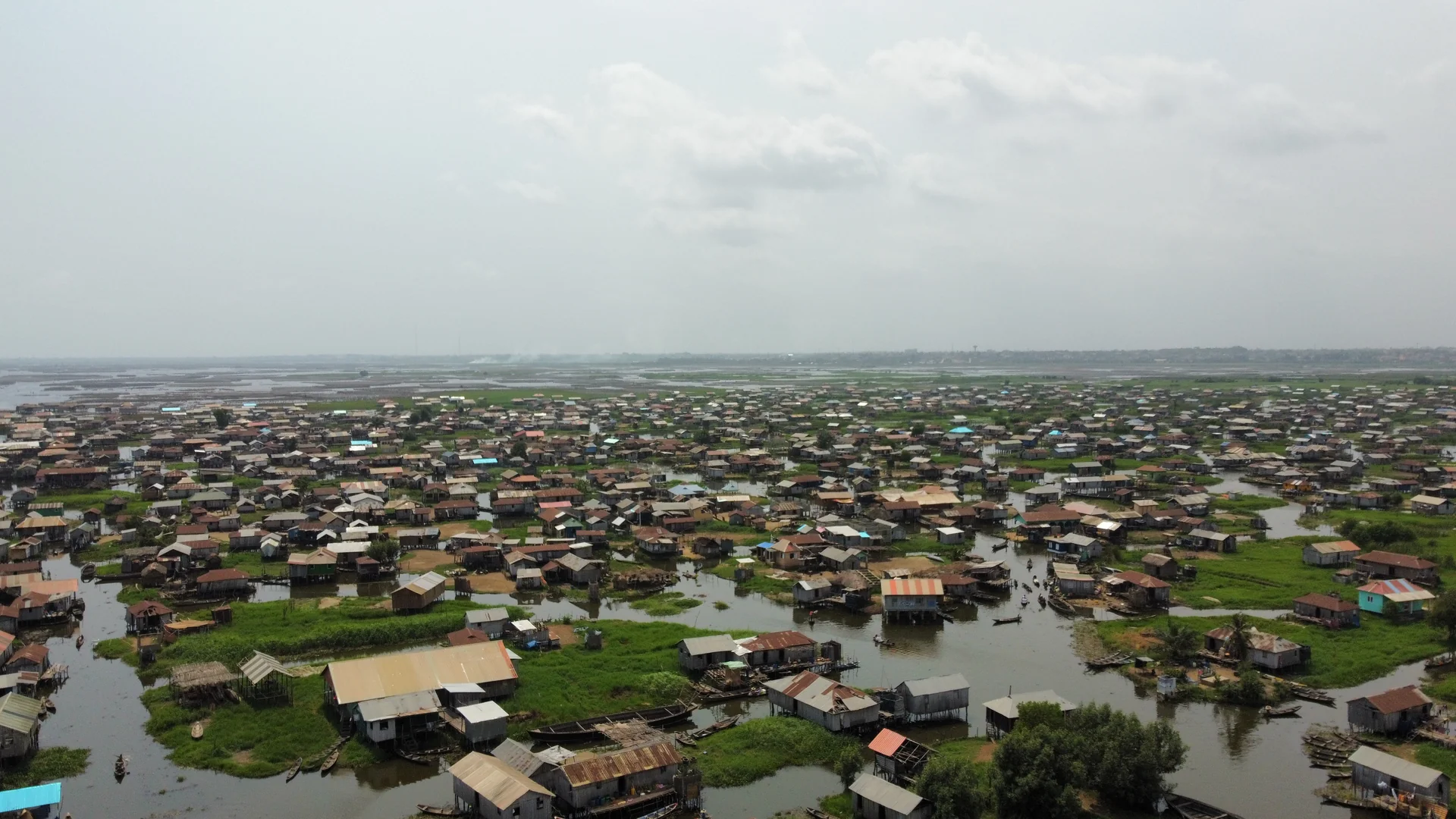
Ganvié is Africa's largest stilt village. Between pirogues, floating market, Acadja fishing, and life on stilts, it offers an unforgettable tourism experience on Lake Nokoué. Everything you need to know before your visit.
Why Ganvié is a unique tourism destination in the world
Ganvié is not a tourist village built for visitors. It is a living city of more than 30,000 inhabitants, entirely built on stilts in the middle of Lake Nokoué, without a single street, car, or inch of dry land. This reality makes tourism in Ganvié an experience with no equivalent in Africa.
Every year, travelers from around the world come to discover how a human community transformed a lake into inhabited territory, how children take pirogues to go to school, how a floating market supplies thousands of families every day, and how traditional Acadja fishing sustains a centuries-old lake economy.
What strikes visitors upon arrival is the total absence of staging. Ganvié does not play a role for tourists. Children dive from the tops of stilts because that is how they have always bathed. Women transport their goods by pirogue because it is their daily means of transport. Fishermen repair their nets by their floating homes because fish is their livelihood. Nothing is fabricated for the tourist's gaze, and that is precisely what makes the visit to Ganvié for tourism such an authentic experience.
That is a rare luxury, in an era where so many destinations manufacture their authenticity.
The Venice of Africa: a nickname worth qualifying
Ganvié is often called the "Venice of Africa." The nickname is flattering, but it does not do justice to the reality it describes. Venice is a city on water built by engineers, architects, and merchants. Ganvié is a city on water built by fishermen and families fleeing the slave raids of the Kingdom of Abomey in the 18th century. The stilts are not aesthetic by architectural choice: they are functional because dry land was absent. The canals are not romantic waterways: they are the roads, avenues, and highways of the city.
This authenticity makes tourism in Ganvié a radically different experience from what you can find elsewhere. You are not visiting a reconstructed set. You are entering a way of life built around the constraint of the lake, which transformed that constraint into culture. The Tofinu, Ganvié's founding people, developed a social organization entirely adapted to water: property is measured in number of stilts, travel is by pirogue, and encounters happen on the water.
The floating market: a unique experience in Benin
Ganvié's floating market is the economic heart of the city and one of the most photographed attractions in Benin. Every morning, hundreds of pirogues loaded with fruits, vegetables, fish, fabrics, and utensils converge on a central point of the lake. The sellers set up their stalls in their own pirogues. Customers navigate from one boat to another to buy their daily provisions. The air smells of smoked fish, palm oil, and the iodine of the lake.
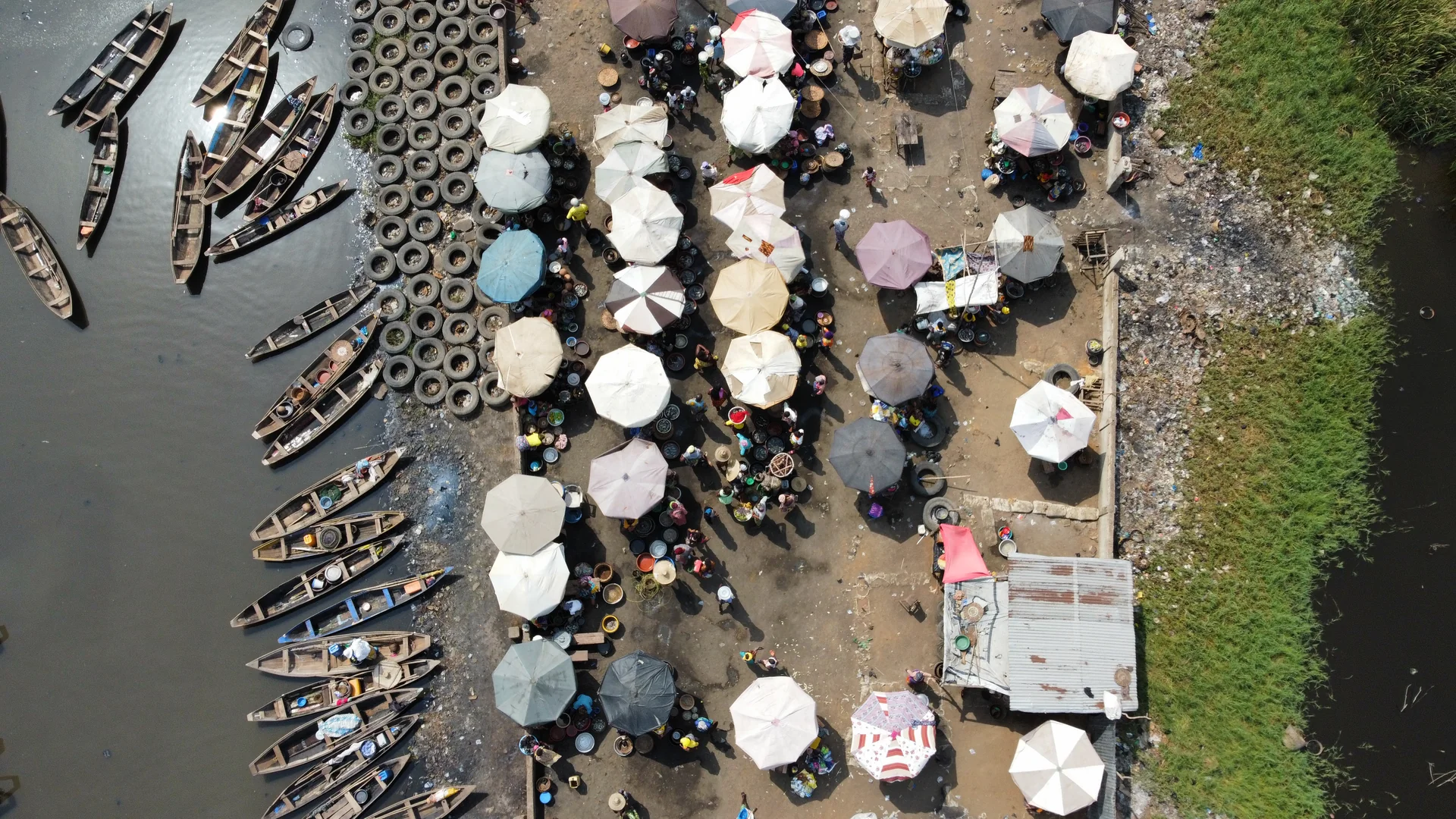
Unlike a land market, everything floats here. Transactions unfold in a silent ballet of paddles and outboard motors. You can find everything: freshly caught fish from the lake, vegetables grown on the shores of Lake Nokoué, cassava, corn, spices, handmade soap, and clothing. Prices are negotiated directly between buyers and sellers, often in the Goun or Fon language, sometimes in French.
For visitors, the best time to discover the floating market is in the morning, between 7:00 AM and 10:00 AM. Arriving early lets you see the market at its fullest intensity, before the heat and sun push sellers back to their neighborhoods. Your guide will take you by pirogue to the heart of the market, where you can observe the exchanges without disturbing the traders' routines.
How many visitors leave without seeing the market at dawn? Most of them.
Life on stilts: a unique social organization
Ganvié's houses are built on mangrove wood stilts planted directly into the bed of Lake Nokoué. Some are modest huts with corrugated iron roofs, others are large permanent homes with verandas and tiled roofs. Each tells the story of a family that, for generations, chose to stay on the water rather than return to land.
Schools, churches, mosques, bars, restaurants, and even hotels are all built on stilts. Ganvié is a complete city floating on one of Benin's largest lakes. Children travel by pirogue to go to school. The sick are transported by pirogue to the clinic. Weddings are celebrated in function halls on stilts. Funerals take place on burial islands where the deceased join their ancestors.
This social organization, entirely conceived around water, is what fascinates visitors most. It is not a picturesque backdrop, but a complete lake civilization with its own rules, customs, and economy.
Must-do activities during your visit
Pirogue ride through the canals
The main mode of transport in Ganvié is the pirogue. A ride through the canals takes you through residential neighborhoods, past floating schools, and alongside the pirogue-shops of itinerant merchants. It is the best way to understand the spatial organization of the city.
The main canals are wide and lively. You will encounter pirogues of all sizes: small single-person pirogues for individual travel, large motorized pirogues for transporting goods and visitors, and pirogue-shops where vendors sell beignets, skewers, or cold drinks. The secondary canals, narrower, wind between houses and provide access to residential neighborhoods.
Discovering the floating market
The floating market is active every day, but the crowds peak in the morning. A guided tour of the market lasts about an hour and a half and includes navigating through the different market zones, explanations about the local products and trading techniques, and a stop to buy fresh produce if you wish.
Observing Acadja fishing
Acadja fishing is a traditional Tofinu technique that involves planting branches and roots in the lake to create natural breeding zones for fish. It is a sustainable method, practiced for generations, and is an integral part of Ganvié's economy and culture.
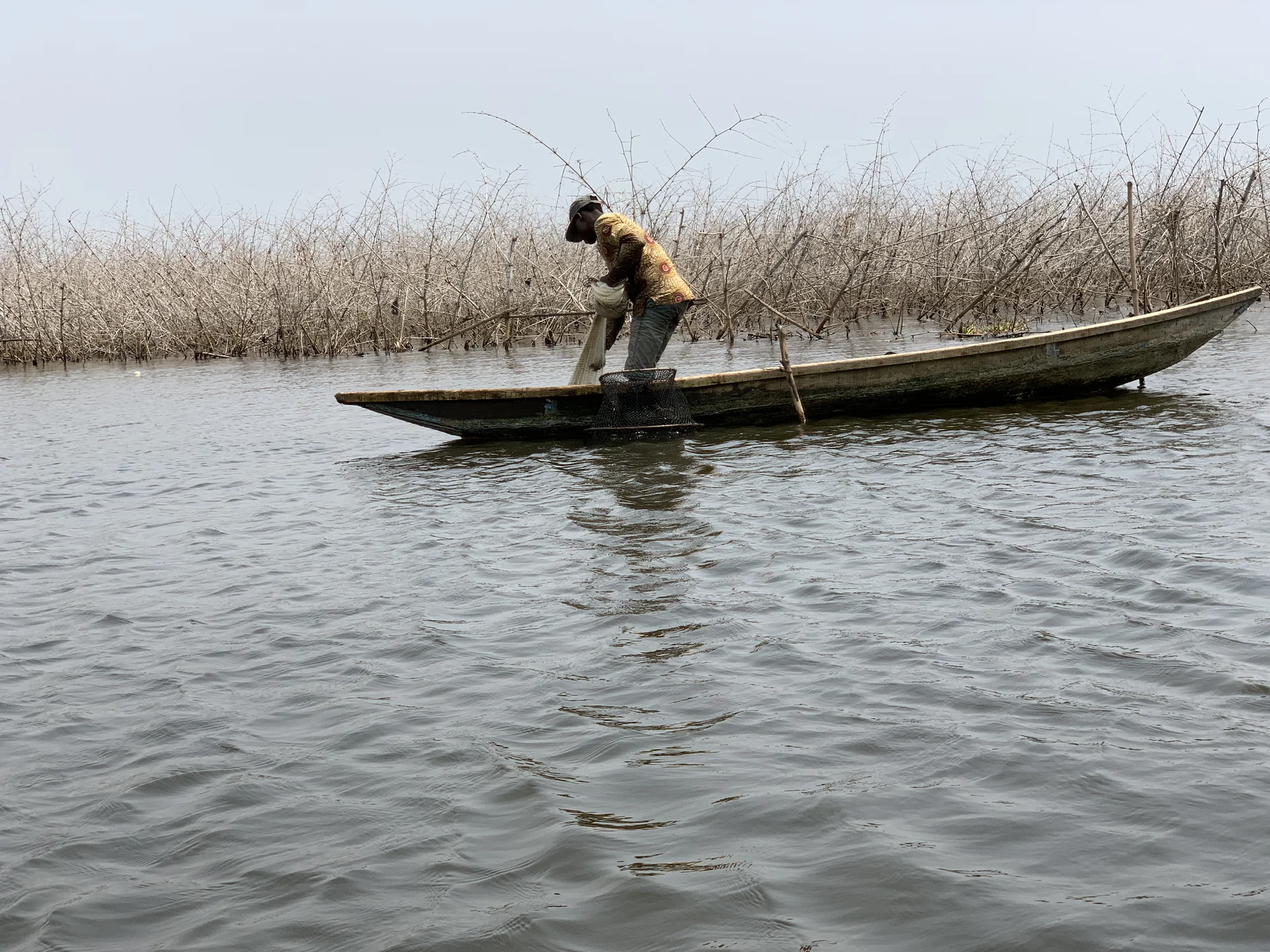
The principle is simple: tree branches are planted in shallow areas of the lake, creating a favorable habitat for fish to reproduce and feed. After several months, fishermen surround the area with a net and remove the branches, harvesting the fish that have accumulated there. This technique, passed down from father to son, is a remarkable example of sustainable fishing that preserves the Lake Nokoué ecosystem.
Dinner on the water at sunset
Several stilt restaurants offer sunset dinners with local specialties such as grilled fish accompanied by attiéké or peanut sauce. The sight of the sun setting behind the stilts, with the lake reflecting the last rays of the day, is a magical moment not to be missed.
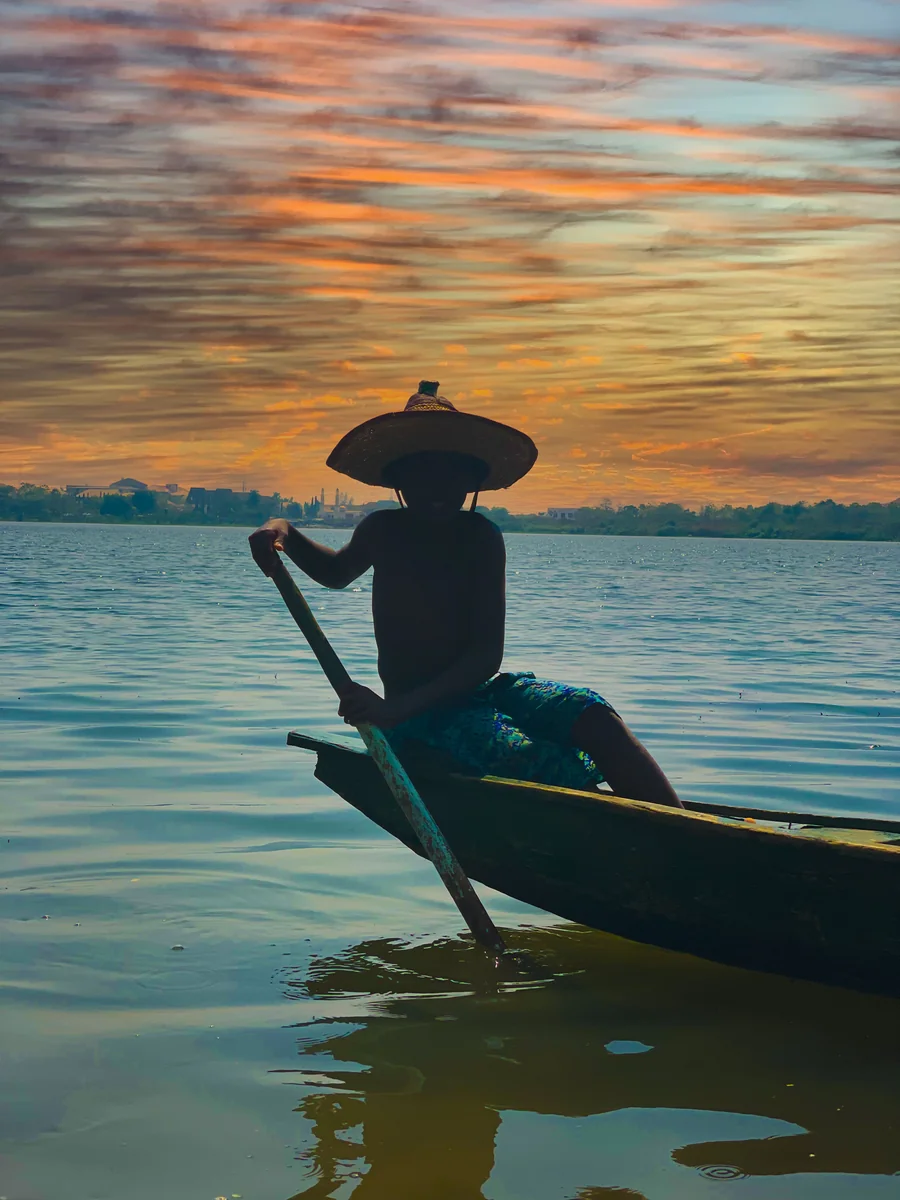
Dinner on the water is often visitors' favorite moment. After a day exploring the canals, the market, and the neighborhoods, sitting on a terrace above the water, feet dangling over the lake, and watching the sky change color as pirogues return to their moorings is an experience that stays etched in memory.
Practical tips for your tourist visit
How to get to Ganvié from Cotonou
Ganvié is about 30 kilometers from Cotonou. You first need to reach the Abomey-Calavi jetty by taxi or zemidjan (30 to 60 minutes depending on traffic), then cross Lake Nokoué by motorized pirogue (20 minutes) or traditional pirogue (45 to 60 minutes).
The Abomey-Calavi jetty is the mandatory departure point for reaching Ganvié. Several pirogue companies offer the crossing, with prices varying by boat type and number of passengers. Motorized pirogues are faster and more comfortable, but traditional pirogues offer a more authentic experience.
For all details on transport, prices, and available options, consult our complete guide: How to get to Ganvié from Cotonou.
What is the best time to visit Ganvié
The dry season, from November to March, offers the best conditions for a tourist visit: clear skies, calm water, bearable heat. Temperatures range between 25 and 32 degrees Celsius, with moderate humidity. Days are sunny and sunsets are spectacular.
The rainy season (April to October) should not be ruled out. Crossings are more adventurous but the lake is higher and the vegetation more lush. The landscapes take on a different dimension, with skies full of clouds offering beautiful light for photography.
How much does a visit to Ganvié cost
A guided tour of Ganvié costs between 10,500 and 15,500 FCFA per person (about 16 to 24 EUR), depending on duration and circuit chosen. The budget includes the pirogue crossing, native guide, and site entry fees. The most complete circuits also include lunch on the water and a visit to the floating market.
For detailed prices and a comparison of different options: Ganvié visit prices and rates.
What to see absolutely during your visit
The floating market, residential canals, lake schools, Acadja fishing zones, and panoramic viewpoints are the must-sees of a tourist visit to Ganvié. Allow half a day for the essentials, a full day to see everything without rushing.
Discover our complete guide on what to see in Ganvié for a detailed itinerary with recommended times.
Ganvié in Benin's tourism circuit
Thirty minutes from Cotonou, centuries of lake history await you. Ganvié is one of the three major tourism sites in Benin, alongside Ouidah and Abomey. Many travelers combine all three destinations in a single 4- to 5-day trip, allowing them to discover the diversity of Benin's heritage: lake culture, the memory of the slave trade, and royal history.
Organizing an itinerary linking these three highlights of Beninese tourism is simple: Ganvié is 30 minutes from Cotonou, Ouidah is 45 minutes from Cotonou on the coast, and Abomey is 2.5 hours' drive north. The three sites form a triangle covering the most compelling aspects of the country's history and culture.
To organize your full itinerary: Combining Ganvié, Ouidah, and Abomey.
Tips for responsible tourism in Ganvié
Visiting Ganvié means entering a living space. A few simple gestures allow you to do so with respect for the inhabitants:
- Hire a native Tofinu guide: they know the lake, the culture, and the people. You ensure your money benefits the community directly.
- Ask before taking photos: some residents prefer not to be photographed, especially in private spaces. A smile and a polite request are enough.
- Shop at the floating market: it is a direct economic gesture that supports local traders and their families.
- Leave no waste: Lake Nokoué is a fragile ecosystem. Take your waste back to land.
- Wear modest clothing: out of respect for local customs, avoid beachwear.
To learn more: Responsible travel in Benin.
Prepare your visit now
Ready to discover Africa's most astonishing stilt village? Check out our complete guide to visiting Ganvié or book a guided tour with a native Tofinu guide.
Book your visit
Guided tour with native Tofinu guide, private pirogue, fixed prices.
Frequently asked questions about tourism in Ganvié
Is Ganvié a safe tourist destination? Yes, Ganvié is a safe destination for tourists. Residents are welcoming and native guides know the lake and its customs perfectly. As anywhere, it is recommended to follow your guide's advice.
Can you visit Ganvié in one day from Cotonou? Yes, this is what most travelers do. Allow half a day (4 to 5 hours) for a tour of the essentials, or a full day (7 to 8 hours) for a more in-depth experience including lunch on the water.
Do you need a guide to visit Ganvié? A native guide is highly recommended. They will help you understand the history and culture of the city, navigate local customs, know where to go and what to see, and enjoy your visit fully without logistical stress.
Can you sleep on the water in Ganvié? Yes, several lodges and stilt accommodations offer nights on the lake. It is an unforgettable experience for travelers who want to experience Ganvié from the inside, listen to the sounds of the lake at nightfall, and wake up facing the water.
What is the best time of day to visit Ganvié? Early morning (departure around 7:00-8:00 AM) is ideal: the floating market is at its peak, the light is beautiful for photos, and the heat is still bearable. An early departure lets you enjoy the whole day without rushing.
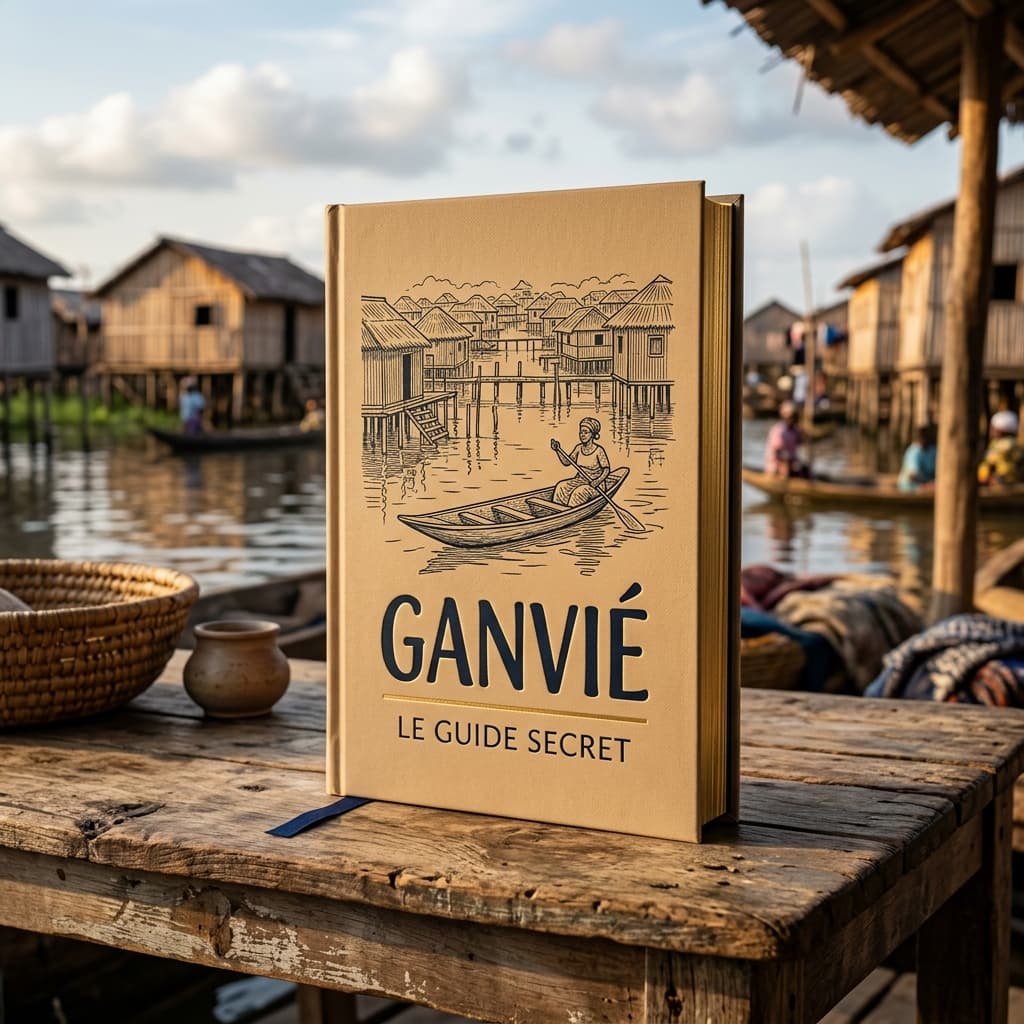
The Secret Guide to Ganvié: Hidden Gems & Etiquette
Discover the authentic Ganvié far from the tourist crowds. Download our exclusive PDF to prepare a respectful and unforgettable visit.
We respect your inbox. No spam.
The Visit Ganvié Team
Written by native Tofinu guides. We have navigated Lake Nokoué since childhood to share the true history of our city, far from tourist traps.
Related articles
From Cotonou Airport (COO) to Ganvié Pier: Transfers, Taxis & Transport Guide
Landing at Cotonou International Airport (COO) and heading directly to the lake stilt village of Ganvié? Discover our comprehensive transport guide, drive times, and taxi fares.
supportTourist attractions in Benin: complete guide to places to visit
Benin is packed with unique tourist attractions: the stilt city of Ganvié, the Slave Route in Ouidah, the Royal Palaces of Abomey, Porto-Novo, Grand-Popo beaches, and Pendjari National Park. Complete guide with suggested itinerary.