
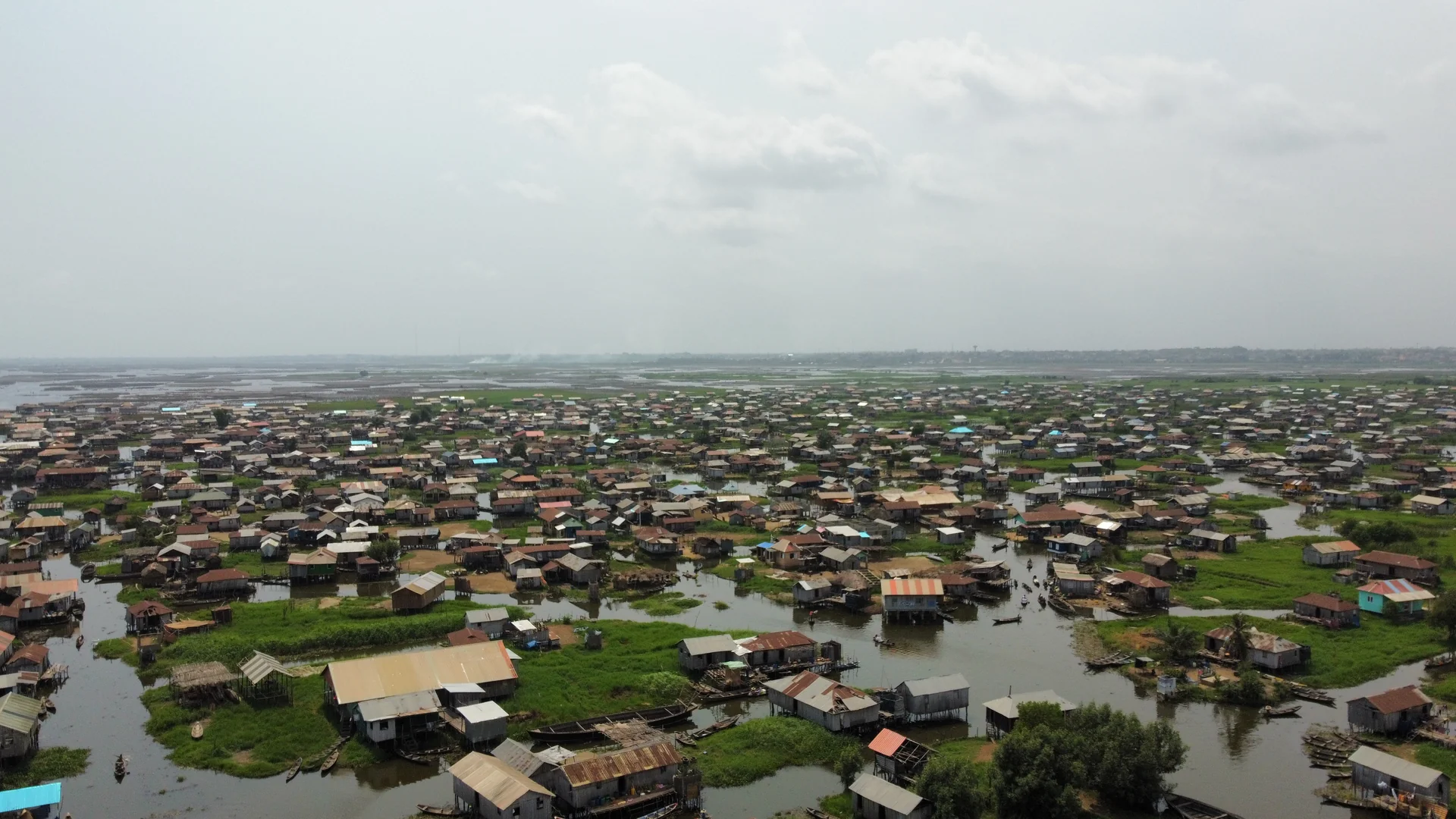
Ganvié, Benin's stilt village on Lake Nokoué, offers unique photographic opportunities. From dawn light to aerial shooting rules, a complete guide to photographing Ganvié with respect.
Ganvié is one of the most photogenic subjects in Benin. Thousands of stilt houses stretching across Lake Nokoué, shimmering canals plied by colorful pirogues, silhouettes of fishermen in the morning light. The stilt village offers photographers a visual repertoire that few places in West Africa can match.
But photographing Ganvié is not like photographing an empty landscape. It is a living village, home to more than thirty thousand people going about their daily routines. The images you bring back reflect how you treated the people in your frame. This guide helps you produce strong images while respecting a community that has welcomed visitors for decades and learned to distinguish the respectful photographer from the drive-by shooter.
The best photo spots
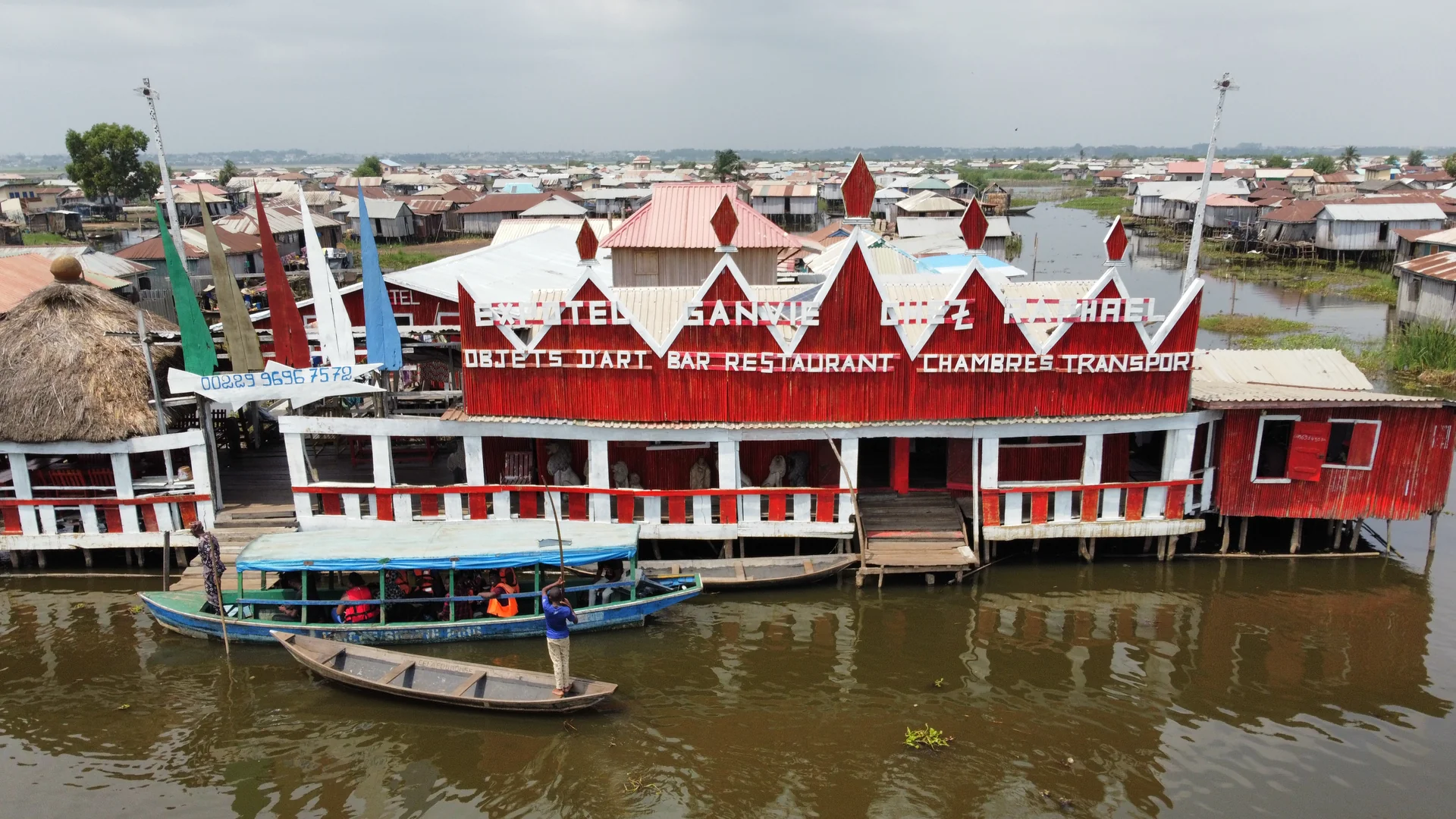
Ganvié offers several distinct viewpoints, each with its own character and light.
The main channel entrance. This is the first image every photographer seeks: the grand access canal to Ganvié, framed by the first stilt houses. Arriving early in the morning, fishing pirogues returning from the lake create natural movement within the frame. The best angle comes from positioning your pirogue in the middle of the channel, facing the village. Ask your guide to slow down or cut the engine to reduce noise and let the pirogue drift gently into position.
The floating market. Between 6 am and 8:30 am, the market is a festival of color and texture. Pyramids of tomatoes, chilies, eggplants and fish gleam under the raking light. The faces of vendors focused on their transactions offer authentic portraits. The density of pirogue traffic creates a naturally animated background. But the market is also the busiest and most sensitive place for pointing lenses without permission. Read the section on protocol below before taking any portraits.
The roofs from a high point. The only place to take in Ganvié from above is the top of certain public buildings or multi-story guesthouses. The plunging view over corrugated roofs, winding canals and moored pirogues is spectacular. This viewpoint requires effort: you need to spend the night on site and negotiate access with the guesthouse owners.
The side canals. Moving away from the main circuit, the secondary canals offer more intimate frames. Children playing in the water, women washing clothes on the walkways, fishermen mending their nets. This is where Ganvié's daily life hides: less visible, more genuine.
Sunsets over the lake. From the western exit of Ganvié, the sun sets directly along the axis of the lake. The houses are silhouetted in black against an orange and pink sky. This is the favorite moment of experienced photographers who have had the wisdom to stay after the day-trip tours depart.
Acadja at dawn. The fish parks made of branches, planted in the shallower areas of the lake, offer a little-known photographic subject. Fishermen working their Acadja at dawn, standing in their pirogues with cast nets, make for visually powerful images. To reach these areas, leave before 5:30 am with a guide who knows the active Acadja zones.
Light and the best shooting times
At Ganvié, light is everything. Everything depends on when you press the shutter.
Golden hour in the morning (6 am to 8 am). This is the ideal time to photograph Ganvié. The light is soft, warm and raking. Shadows are long and draw patterns on the water. Residents are active, pirogues are moving, the market is in full swing. Everything is in motion. Arrive on site before 6 am to be set up before the first glow. This means leaving Abomey-Calavi around 5 am, or sleeping on site the night before.
Midday (10 am to 2 pm). The sun is overhead, the light is harsh and contrast is extreme. Highlights risk blowing out on the corrugated roofs. This is the least favorable time for landscape photography. However, it is a good slot for shaded portraits inside homes or under market awnings, where indirect light is soft and flattering.
Blue hour in the evening (5 pm to 6:30 pm). The light softens again and colors warm up. This is the second best slot of the day for photographing Ganvié. Activity slows, the atmosphere becomes contemplative. Reflections on the water are magnificent. Sunset lasts about forty-five minutes, with rapid color changes.
Night (7 pm to 9 pm). For photographers equipped with a body that performs well at high ISO, the early evening hours offer a type of image hard to produce elsewhere. Solar lamps on terraces and kerosene lanterns on pirogues create a chaotic and beautiful light. Long exposures on a tripod reveal a version of Ganvié the naked eye barely perceives.
Recommended camera settings
For landscapes and wide views: use an aperture between f/8 and f/11 for maximum depth of field. A tripod is essential at dawn when shutter speeds are slow. Set white balance to daylight (5500-6000K) to preserve the warm morning tones. Shooting in RAW gives you more white balance flexibility in post-processing.
For portraits: a wide aperture (f/2.8 to f/4) will isolate your subject from the background of stilts. Rely on natural light without flash: direct flash hardens faces and makes eyes squint. The faces of fishermen and market vendors, weathered by sun and salt, deserve to be photographed with softness and gentle backlight.
For action scenes (pirogues, fishermen at work): a shutter speed of at least 1/500s is needed to freeze paddle movement and splashing fish. Raise ISO if needed: modern sensors handle 1600 ISO without visible degradation. A telephoto lens (70-200mm or longer) lets you capture scenes from a distance without disturbing your subjects.
Protection against spray: whether you are on a pirogue or a walkway near the water, splashes are inevitable. A UV filter or lens hood protects the lens. A waterproof bag or simple plastic bag slipped around the body between shots prevents saltwater intrusion into the camera seals.
Drone regulations
Drone flights over Ganvié are regulated. The use of drones for tourism purposes requires prior authorization from Beninese authorities. Several reasons justify this regulation.
Respect for residents' privacy comes first. Ganvié is an inhabited village, and residents have the right not to be filmed from the air without their consent. The second reason is safety: drone propellers pose a risk to lake birds and to residents moving by pirogue beneath the flight paths.
If you want to use a drone, contact a licensed local operator who knows the procedures and authorized zones. Some guides offer services that include legal aerial footage with the necessary permits obtained in advance.
Never fly over floating schools, places of worship or public gatherings without express authorization. Do not fly a drone near Acadja fishing zones: nets and branches can become entangled in the propellers and damage both the equipment and the fishing structures that represent families' livelihoods.
Asking permission: the essential protocol
The golden rule for photographing Ganvié is simple: ask before taking a photo of a person. This gesture of respect transforms a potentially intrusive image into a human exchange. Photographers who skip this step produce soulless images. Those who practice it get portraits that tell something true.
Here is how to proceed:
- Approach with a smile. Say hello in French or, better, in Fon ("Afo") or Gun ("Kudo"). This single gesture changes the atmosphere of an interaction.
- Gesture toward your camera. Ask "May I photograph you?" or simply "Permission?"
- If the person agrees, take your shot quickly and thank them. A simple "Thank you" with a smile is enough.
- If the person refuses, put your camera away and move on without insisting. Refusal is an absolute right and deserves to be respected without comment.
- Show the result if the person asks. The screens on our devices are a source of wonder for many residents: this moment of sharing is often as valuable as the photo itself.
- Buy something at the market before photographing the vendors. A small purchase is a form of reciprocity and a concrete contribution to the village economy.
These rules are not tourist folklore. They are the conditions for photography at Ganvié to remain a welcome and mutually respectful practice.
What to avoid
Some behaviors appear regularly in the accounts of local guides and residents:
Photographing from the pirogue without stepping off. Staying in the boat and pointing a telephoto lens at people in their homes or on their terraces is perceived as intrusive and disrespectful. Step off, approach, engage.
Photographing children without parental consent. Even with the best intentions, photographing children without parental permission is problematic. Ask your guide to help you obtain consent.
Publishing images without consent. On social media, content published without explicit consent can cause real harm to the people depicted: biometric data theft, unwanted exposure. Treat faces with the same care you would treat your own.
Interrupting a commercial transaction for a photo. The floating market is a workplace. Waiting until an exchange finishes before approaching for a photo is basic respect.
Bring back images, not just souvenirs
Photographing Ganvié means capturing a living heritage that is constantly evolving. Every image of the stilt village is a document, a testimony to how the men and women of the Tofinu people continue to live on the water, between tradition and adaptation to the modern world.
Take time to look before you photograph. Settle into the pirogue, let the boats pass, wait for the light. The best images of Ganvié are not the ones stolen in haste from a moving pirogue, but the ones earned through patience and respect.
To learn more about daily life on the lake you are photographing, read our article on a day in the life of a Ganvié resident. To prepare your visit in the best conditions, consult our complete practical guide.
Book your visit
Guided tour with native Tofinu guide, private pirogue, fixed prices.
Questions fréquentes
What is the best time to photograph Ganvié?
Can I use a drone at Ganvié?
Do I need permission to photograph residents?
What lens should I bring to photograph Ganvié?
Can I photograph the floating market?
How do I protect my camera equipment on the lake?
The Secret Guide to Ganvié: Hidden Gems & Etiquette
Discover the authentic Ganvié far from the tourist crowds. Download our exclusive PDF to prepare a respectful and unforgettable visit.
We respect your inbox. No spam.
The Visit Ganvié Team
Written by native Tofinu guides. We have navigated Lake Nokoué since childhood to share the true history of our city, far from tourist traps.
Related articles
Dinner on water at Ganvié: a nighttime food experience on Lake Nokoué
Dinner on the water at Ganvié turns an evening into an unforgettable memory. A floating restaurant under moonlight, grilled fish from the lake and starry skies above the stilt city.
supportGanvié by night: the mystical lake experience after sunset
Spending the night on Lake Nokoué transforms your Ganvié experience: dawn market at 4 AM, dinner on a stilt terrace under the stars, and Tofinu ancestral legends told in the dark.