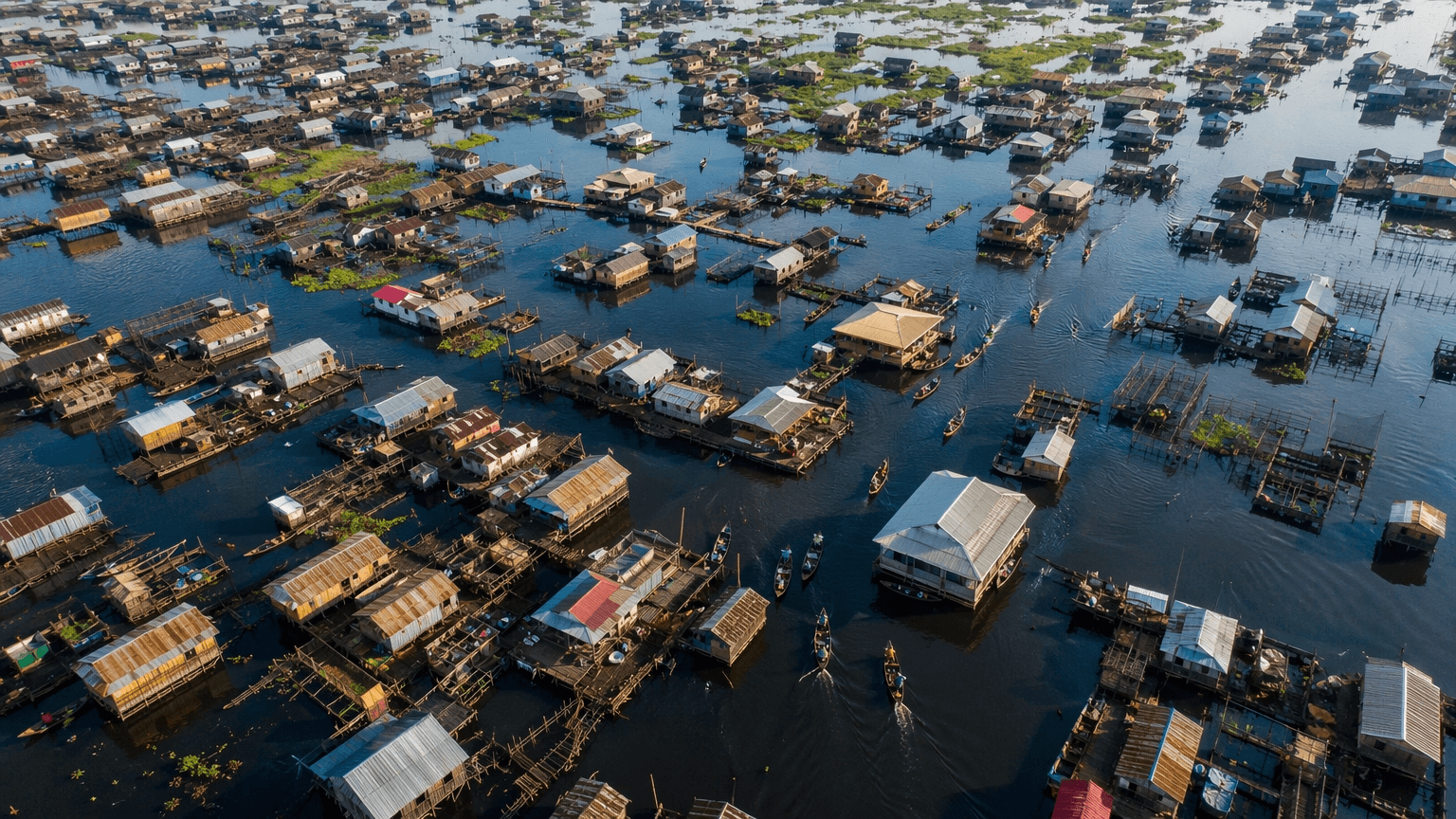
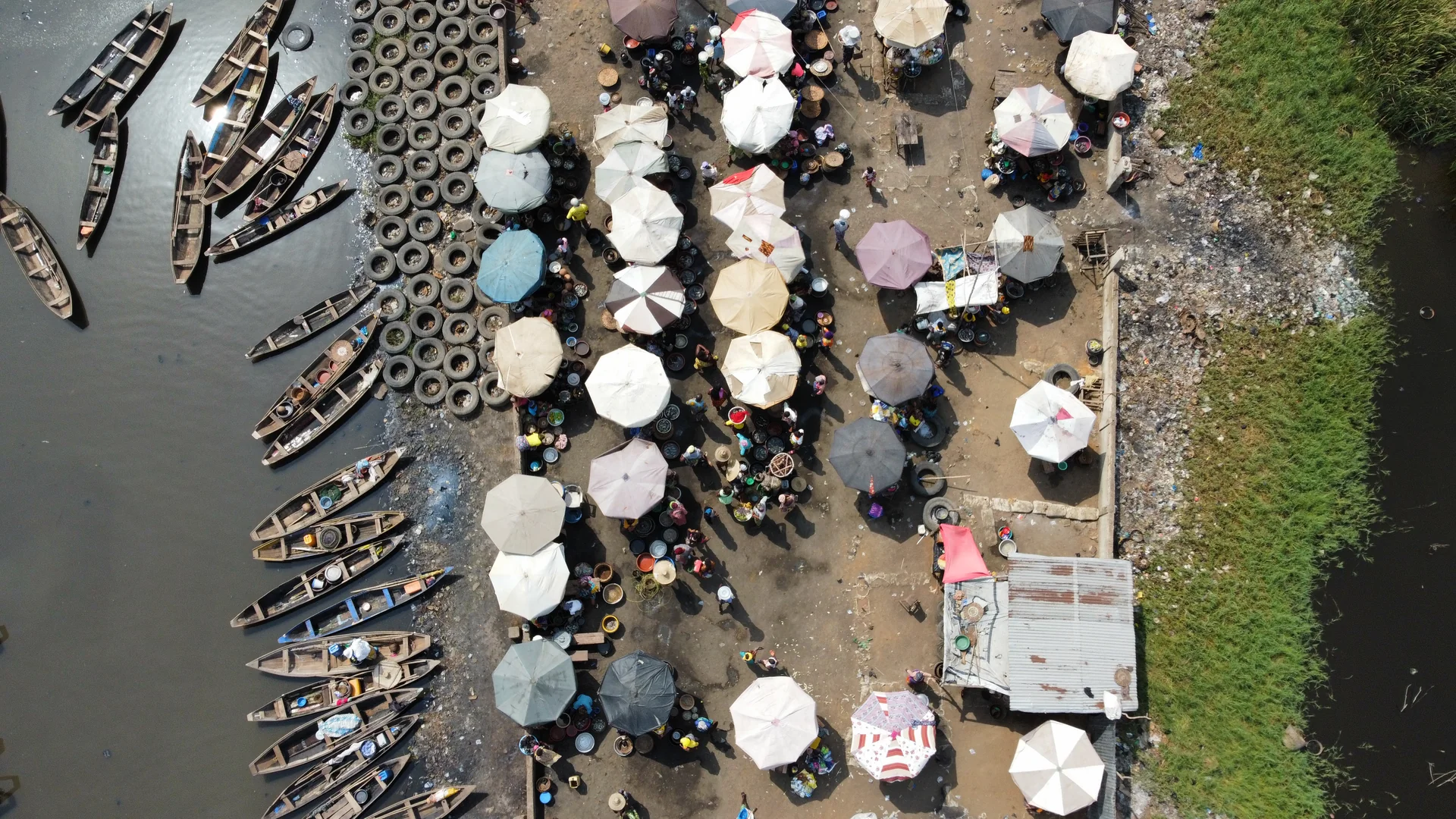
Authorized in May 2025, the rehabilitation of the Abomey-Calavi pier, the official gateway to Ganvié, fits into Benin's 'Bénin Révélé' investment program. What this project means for anyone planning an excursion.
Before discovering Ganvié's stilt houses, every visitor passes through the same place: the Abomey-Calavi pier, the official and mandatory gateway to the lake city. It's precisely this spot, often crossed without a second glance, that's now the subject of a rehabilitation project authorized by the Beninese government. Here's what it actually means for your excursion.
A mandatory crossing point, not just a dock
The Abomey-Calavi pier isn't an improvised jetty. It's an organized tourist station where buying a ticket and being assigned a certified guide are mandatory before boarding. The crossing to Ganvié takes place aboard a motorized, canopy-covered pirogue over roughly 8 kilometers of Lake Nokoué, at a regulated rate of around 5,000 CFA francs per person for the traditional crossing, though most visitors today opt for a full guided tour with a certified operator.
This structured setup didn't appear overnight. As early as December 2021, then-Tourism Minister Jean-Michel Abimbola visited the site to launch a first phase of rapid tourism development at the station: a new ticketing system, meetings with local guides, hoteliers, and transporters to standardize service quality. The current renovation continues and deepens that effort started years ago.
What the May 2025 decision authorizes
On May 7, 2025, the Council of Ministers approved contracting for project management of the pier's rehabilitation and renovation work. In practice, the technical mandate covers several components: technical studies on roadways and the site's various utility networks, and an action plan for resettling people affected by the construction, a measure that reveals the real scale of the project, well beyond a simple facelift.
This renovation fits into the presidential program Bénin Révélé, the structural investment roadmap led by Patrice Talon, whose second five-year term allocated over 600 billion CFA francs to the tourism sector. Within that envelope, the Calavi pier holds a strategic position: it's the single point of contact between every visitor and the lake city, regardless of their guide, nationality, or chosen tour.
Why this particular pier
No other access point plays a comparable role in Ganvié's tourism economy. Every guide, every agency, every individual visitor converges on this same dock before heading out onto the lake. Ganvié remains Benin's top tourist destination, welcoming close to 100,000 visitors each year and generating an estimated 8 million dollars in local revenue from guided tours, crafts, and lake-related activities. Nearly all of that volume funnels through one single physical bottleneck: the Abomey-Calavi pier.
Upgrading this infrastructure therefore has an outsized effect relative to its size. A better-organized pier, with reliable access roads and functioning sanitation networks, improves the experience of every visit that follows, without requiring investment to be spread across dozens of other sites. It's classic infrastructure logic: rather than scattering resources across many points, concentrate effort on the node through which every flow passes.
The pier had also long suffered from sanitation issues raised by local press over the years, a point the authorities are explicitly working to fix with this project. A run-down starting point leaves a lasting negative first impression, even when the lake experience that follows is flawless. That's a problem this renovation directly aims to solve, continuing efforts that began in 2021 with the rollout of a modern ticketing system.
What it actually changes for your visit
The basic process stays the same. You'll still buy your ticket, meet your certified guide, and board a motorized pirogue from the same site. The visit's core logic remains unchanged: ticketing, guide, crossing, immersion in Ganvié.
Some areas of the site may be temporarily inaccessible. A project of this nature, involving roads and utility networks, almost always comes with occasional work zones. Check with your guide or agency when booking if you're planning a visit in the coming weeks, as the situation evolves with the pace of construction.
The overall experience should improve over time. More reliable access roads, upgraded sanitation networks, and a better-organized site directly benefit the smoothness of the welcome, particularly during high-traffic periods like the dry season, from November to April.
A quiet project that reveals a lot
The Abomey-Calavi pier doesn't make headlines the way the heritage classification or the 1000-unit lacustrine housing program do. Yet it may be the project most directly tied to every visitor's concrete experience: it's the first place you set foot before reaching the lake, and the last before heading back.
Its renovation, carried by the Bénin Révélé program and underway since May 2025, completes a broader transformation of the lake city. The March 2026 heritage classification protects Ganvié for the future, the lacustrine housing program rebuilds its urban fabric, and the pier rehabilitation secures the gateway through which everything begins. Three distinct projects, one shared trajectory: making Ganvié a destination that delivers on its promise, from the first step on the dock to the return trip home.
Sources: Le Matinal, Government of the Republic of Benin, Bénin Révélé — Government Action Program, Données Mondiales — Tourism in Benin
Want to experience Lake Ganvié firsthand?
Book your certified pirogue guide for a unique cultural crossing from Abomey-Calavi pier.
Réseau Destination Bénin
Official Mainland Gateway
Discover hotel stays, dining & transport in Calavi before embarking.
City of Memory & Vodoun
Explore the Door of No Return, Python Temple & Sacred Forest.
Kingdom of Dahomey Kings
Visit UNESCO Royal Palaces and Dahomey historical heritage.
Beaches & Bouche du Roy
Relax on golden sands and explore Mono river estuary ecosystems.