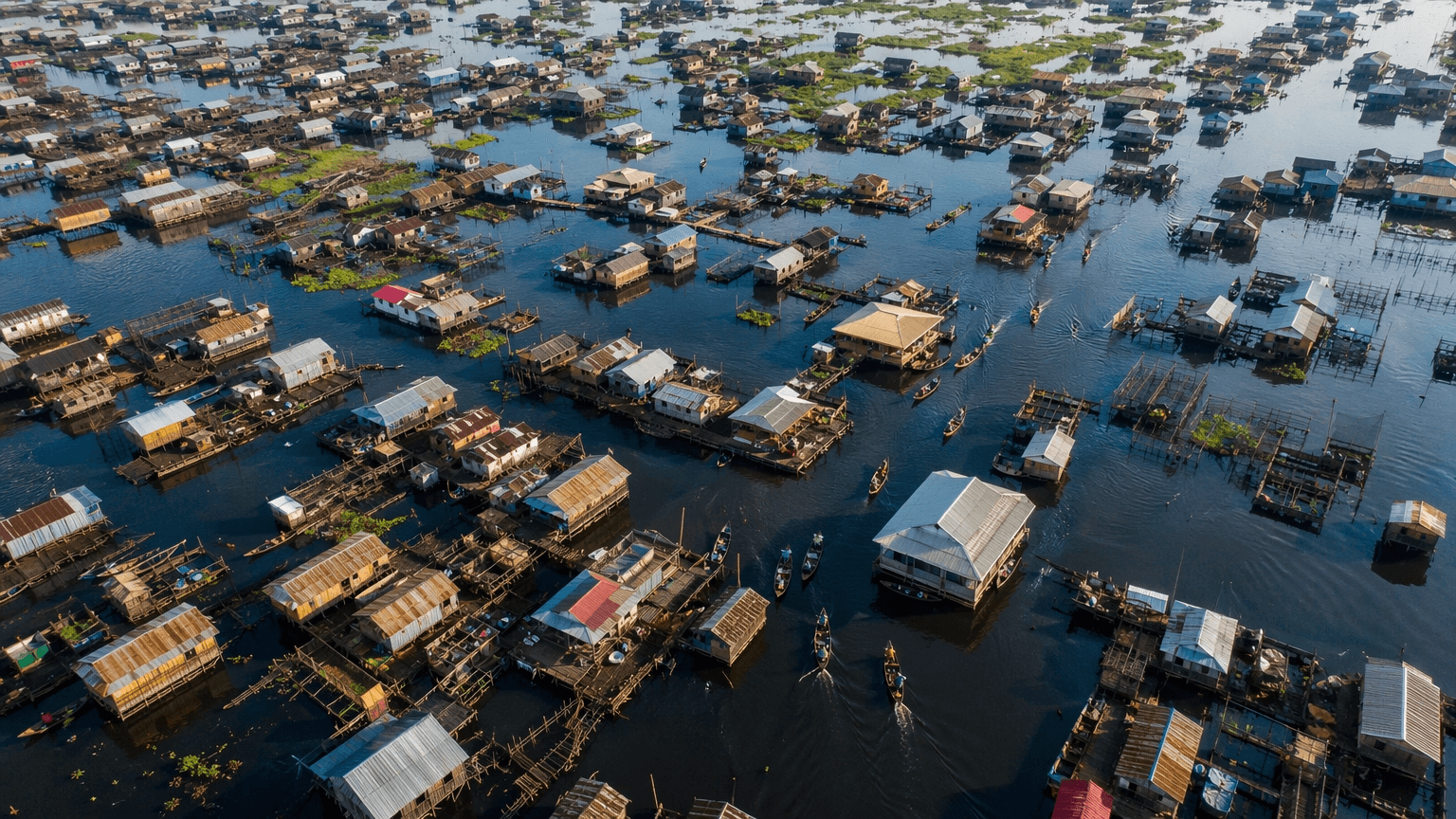
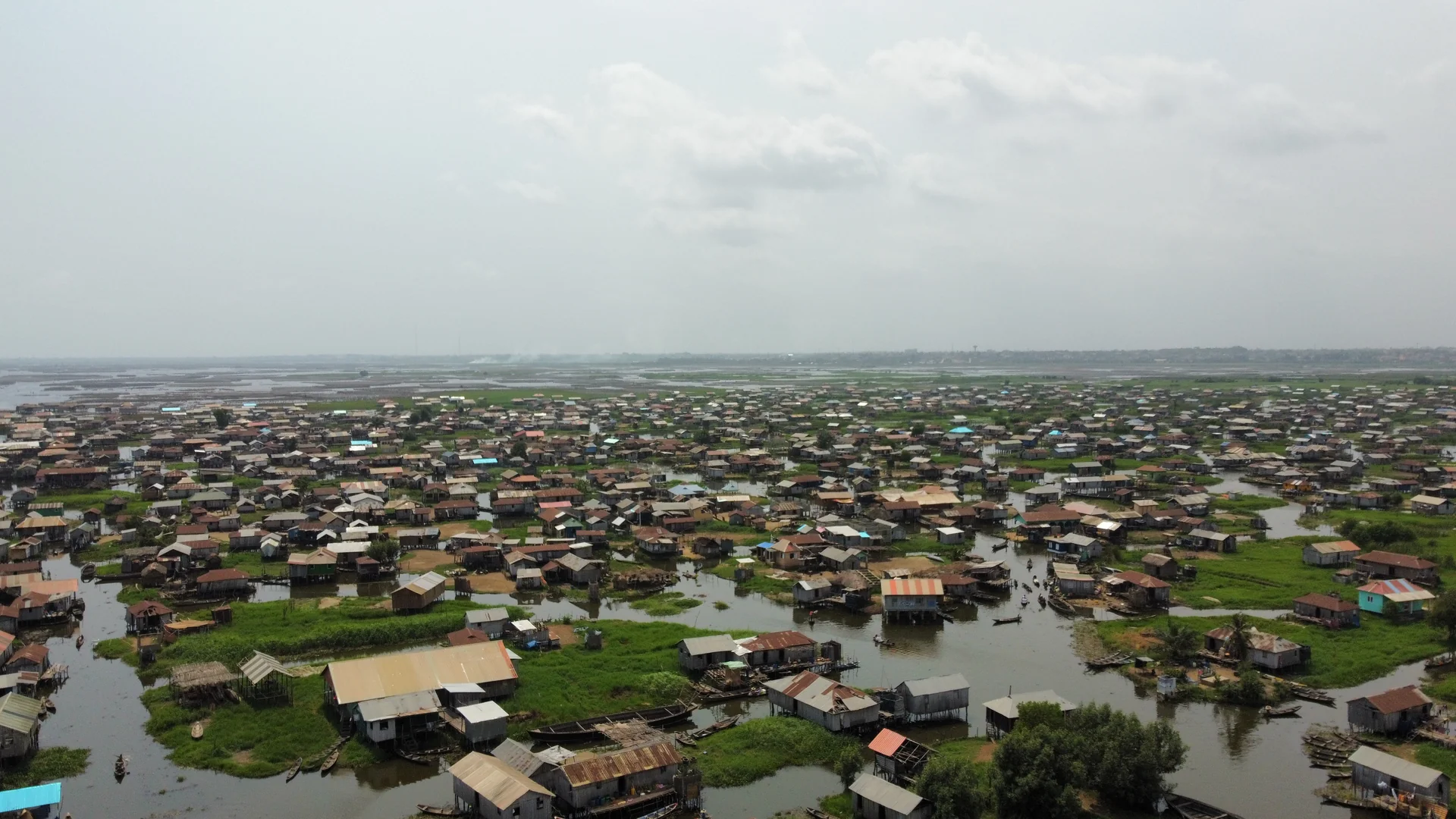
The Reinventing Ganvié program, led by Benin and the French Development Agency, enters its concrete phase: 250 new lacustrine dwellings as a first step, toward a final target of 1000.
Seen from a pirogue, Ganvié's houses look timeless, as if they've always sat on the water. They haven't. Many of these traditional stilt dwellings today suffer from weakened frames, roofs that give way under heavy rain, and growing vulnerability to bad weather. That observation is what pushed the Beninese government and the French Development Agency (AFD) to launch a large-scale project: building 1000 new stilt houses in Ganvié.
A program that didn't start yesterday
The project, named Reinventing the Lacustrine City of Ganvié, wasn't born in 2026. It was launched in 2019, jointly led by the Beninese state and AFD, with a dual goal: preserve the exceptional cultural heritage of this three-century-old city while sustainably improving living conditions for its residents. AFD has committed around 25 billion CFA francs (roughly 42 million US dollars, combining sovereign loan and grant) to finance the full program.
What changed recently is the shift from diagnosis to execution. On June 18, 2025, Benin's Council of Ministers authorized contracting for the realization of lacustrine housing prototypes in Ganvié, a decisive technical step ahead of any large-scale construction.
What traditional architecture is up against
To grasp the scale of the technical challenge, it helps to understand how Ganvié's current houses are built. The frame relies entirely on wood: stilts made of mangrove or iroko timber, two species chosen for generations for their resistance to permanent humidity and to wood-boring insects. The floor, slightly raised above water level, is made of tightly assembled wooden slats. Walls combine wooden planks with, for more modest dwellings, interwoven bamboo or raffia stems. Roofs are either traditional thatch or corrugated metal sheeting, depending on each family's means.
This ingenious system naturally isolates the house from rising water and promotes airflow, a valuable trait in a hot, humid lakeside climate. But it ages poorly under increasingly severe pressures: humidity cycles that intensify as the lake's water level rises, more frequent storms tied to climate disruption, and timber that's growing harder to source as surrounding forest resources dwindle. A mangrove-wood frame that lasted twenty years a generation ago now holds up for far less time, under the combined weight of these pressures.
Why prototypes come before the 1000 units
Building on water bears no resemblance to building on dry land, and replacing a construction method that's three centuries old doesn't happen overnight. On June 18, 2025, the Council of Ministers authorized contracting with a company recognized for its expertise in fine, durable materials suited to lacustrine housing, to build prototypes before any generalization.
These pilot units are used to test, under real conditions, what no paper study can guarantee: how foundations hold up in the specific lakebed of Lake Nokoué, how substitute materials perform under constant humidity, and above all how these new constructions fit the daily habits of Tofinu families, from fishing practiced right at the doorstep to how living space is organized around the home.
This methodological caution answers a simple requirement: the new houses need to outlast current dwellings without distorting the architecture that gives Ganvié its visual identity. A poorly calibrated project would risk producing standardized housing, disconnected from the traditional built environment that draws visitors seeking a way of life found nowhere else. Ganvié's district chief, Paul Lokossou Keta, praised the decision as a historic step for the municipality, welcoming the government's willingness to involve local populations in defining the housing model rather than imposing a turnkey solution.
The program's first phase targets construction of 250 lacustrine dwellings, an intermediate milestone ahead of the final target of 1000 units announced by the Beninese presidency.
What the program covers beyond housing
Reinventing Ganvié isn't limited to building houses. The project articulates four complementary components: improving road and logistical access to the lake city, strengthening basic services (electricity, drinking water, public spaces), sustainably developing Lake Nokoué's resources, and reinforcing local institutional capacity, particularly that of the Sô-Ava municipality.
Wastewater treatment systems and the electrification of several Ganvié neighborhoods are among the initiatives already underway alongside the housing project, a sign the program aims for comprehensive transformation rather than an isolated operation.
What it means for visitors
A project of this scale, carried out on water, in a living city, doesn't go unnoticed. Visitors planning an excursion in the coming months might come across construction zones or material deliveries by pirogue, particularly around the neighborhoods covered by the first 250-unit phase.
This doesn't undermine the visit experience. The floating market keeps buzzing from dawn, traditional fishing techniques remain visible from the pirogues, and native guides know exactly which areas to favor for a smooth visit, construction or not. It's even an opportunity, for those interested, to watch a city transform in front of its visitors, a rare privilege for such an ancient site.
A bet on the long term
Reinventing Ganvié isn't meant to turn the lacustrine city into a modern residential zone. The project's stated ambition runs the other way: give the Tofinu the means to keep living on the water, under safer conditions, without giving up what makes their way of life singular after three centuries.
The program's success will be measured less by how fast the 1000 units get built than by how seamlessly they fit into the built landscape visitors come to discover today.
Sources: French Development Agency, Les 4 Vérités, Benin Ministry of Tourism, Benin Secretariat General of Government — Council of Ministers, June 18 2025, La Pierre d'Angle — Traditional construction on Lake Nokoué
Want to experience Lake Ganvié firsthand?
Book your certified pirogue guide for a unique cultural crossing from Abomey-Calavi pier.
Réseau Destination Bénin
Official Mainland Gateway
Discover hotel stays, dining & transport in Calavi before embarking.
City of Memory & Vodoun
Explore the Door of No Return, Python Temple & Sacred Forest.
Kingdom of Dahomey Kings
Visit UNESCO Royal Palaces and Dahomey historical heritage.
Beaches & Bouche du Roy
Relax on golden sands and explore Mono river estuary ecosystems.