
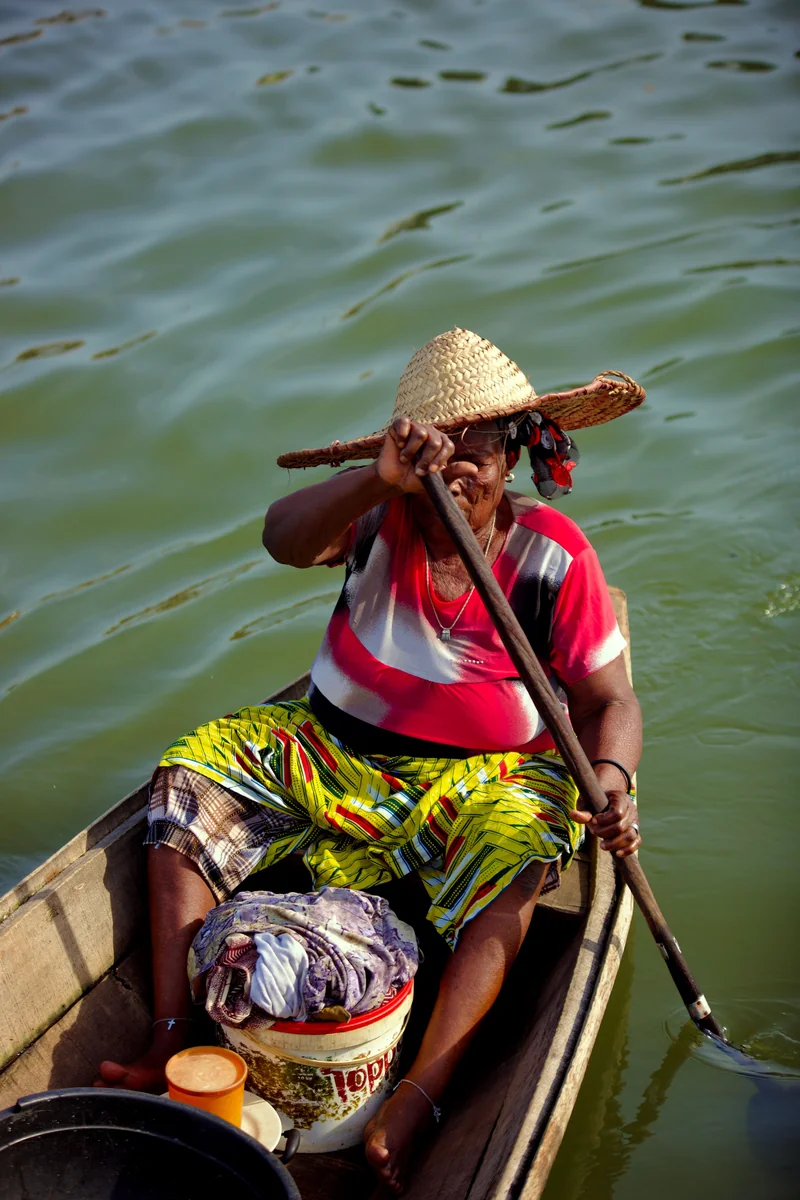
Photographing in Ganvié requires tact, warmth, and respect. Learn essential ethics for capturing your boat trip without intruding on the Tofinu community or treating the lake city as an open-air museum.
The very moment Ganvié’s silhouette emerges across Lake Nokoué’s horizon, every traveler's immediate impulse is visual. Golden morning sunlight reflecting off bamboo facades, shifting mirror images of stilt houses built on ebony wood pillars, and gracefully moving canoes gliding silently across the water form a scene of rare poetic beauty. For any photography enthusiast, the temptation is irresistible: raise the lens and press the shutter.
However, Ganvié is neither a theme park, nor a abandoned movie set, nor an open-air museum. It is a living, breathing city inhabited by over 30,000 residents. Every waterway is a neighborhood street, every wooden porch is a family courtyard, and every dugout canoe serves as both transportation and a workplace.
In recent years, the rapid growth of telephoto lenses and smartphones has occasionally caused fatigue or discomfort among Tofinu residents. In this comprehensive guide written with our native certified guides, we share essential practices for ethical, warm, and respectful photography on the lake.
- The Golden Rule: Always greet residents ("Awa" in Fon) and request consent before focusing your camera on an individual.
- At the floating market, buy local produce before asking a female vendor for a portrait.
- Protect children's dignity: never photograph children in vulnerable situations or isolated without parental consent.
- Respect sacred Voodoo shrines and follow your native guide's instructions on photography bans.
1. Understanding Image Perception on Lake Nokoué
To appreciate why photography can sometimes prompt caution in Ganvié, it helps to understand local history and cultural beliefs. Among the Tofinu people, a person's image is not viewed as a mere material portrait. It touches on personal intimacy and, in traditional spiritual views, reflects vital energy.
Furthermore, legitimate fatigue has developed among certain residents who have seen their portraits featured on postcards, international stock photo agencies, or social media channels without their knowledge or any benefit returning to the lake.
When arriving in Ganvié with camera equipment, remember that you are entering the private living space of people who did not choose to be exposed to public gaze. Approaching photography with humility and openness completely transforms how warmly you are welcomed.
2. Greet Before You Shoot: The Ritual of Fon Politeness
In Benin, and especially across Lake Nokoué, greetings are fundamental social pillars. Aiming a lens at someone 5 meters away without first acknowledging their presence is perceived as intrusive.
Essential Local Phrases:
- "Awa" (Ah-wah): Hello / Greetings (a warm, informal greeting used across the lake).
- "Afon gbedji ?" (Ah-fon gbeh-djee): How did you wake up? / How are you doing?
- "M'yi bo" (Mmee-yee-boh): Thank you very much.
A genuine smile, a spoken greeting, and politely pointing to your camera with a questioning glance works in 95% of situations. If the person nods or smiles back, you have enthusiastic consent. If they turn away or wave a hand, immediately stow your camera with a polite nod. Never push.
3. Photographing the Floating Market in Ganvié
The floating market is Ganvié's vibrant economic heart. From 06:00 AM, female vendors gather in wooden canoes to trade fruits, vegetables, smoked fish, spices, and household goods. It is a colorful spectacle, but above all, a hard workplace.
Floating Market Rules of Engagement:
- Do not block traffic: Commercial canoes need room to maneuver. Ask your boat captain to hold your boat at a respectful distance.
- The Fair Trade Approach: If you wish to photograph a vendor selling oranges, bananas, or fresh fish, buy some produce first. Once the purchase is completed in good spirits, politely ask for permission to take a photo. Your portrait will be far more natural and authentic.
- Avoid direct cash handouts for photos: Handing out small cash bills solely for a photo turns human interaction into an artificial transaction. Always favor purchasing actual trade items.
4. Protecting Children: Ethical Guidelines for Young Residents
Ganvié's children learn to row by age 4 or 5 and possess remarkable agility on the water. Their natural joy attracts cameras effortlessly. However, child safety and dignity demand strict boundaries:
- Never photograph children bathing or in vulnerable moments: Respect privacy along stilt house porches and bathing docks.
- Parental consent is mandatory: Never take isolated close-up portraits of children without a parent or guardian present and agreeing.
- Say no to photo begging: Do not hand out candy, toys, or coins in exchange for children posing. It encourages school absenteeism and unhealthy habits.
- Social Media Awareness: When sharing photos of children online, ensure images are respectful, appropriately framed, and avoid tagged location data.
5. Shrines, Sacred Spaces & Spiritual Boundaries
Lake Nokoué is deeply rooted in Voodoo spirituality. Numerous shrines (Fa, Legba, Dan) are built directly on wooden platforms or small islands along channels. They are identifiable by white flags, sacred palm leaves (Azan), or stacked clay pots.
- These sites are sacred and access is strictly reserved for initiates.
- Photography at certain shrines or during offering rituals is forbidden by traditional authorities.
- Your certified native guide will explicitly point out areas where cameras must be put away. Follow their guidance without exception.
Optimal Lighting & Camera Gear for Ganvié
- Early Morning Light (07:00 – 08:30): Soft mist over Lake Nokoué, gentle water reflections, and quiet morning market routines.
- Golden Hour Sunset (17:00 – 18:30): Fisherman silhouettes standing on canoes against fiery orange skies.
- Recommended Lenses: A 35mm or 50mm lens for natural portraits (with permission), and a 70-200mm telephoto for capturing village life from your boat without crowding residents.
6. Sharing Your Photographs Authentically
Once back home, how you caption and share your photographs matters. Avoid sensationalist or pity-based narratives.
Ganvié is a proud, resilient community with a 400-year history of resisting enslavement and building a unique water civilization. Highlight the beauty of lake life, the warmth of its inhabitants, and the extraordinary harmony between humans and the water.
If you formed a warm connection with your native guide or boat captain, ask for their WhatsApp number: sending them copies of your photos after your trip is a gesture of appreciation they will cherish!
The Secret Guide to Ganvié: Hidden Gems & Etiquette
Discover the authentic Ganvié far from the tourist crowds. Download our exclusive PDF to prepare a respectful and unforgettable visit.
We respect your inbox. No spam.
The Visit Ganvié Team
Written by native Tofinu guides. We have navigated Lake Nokoué since childhood to share the true history of our city, far from tourist traps.
Related articles
Ganvié in transit: what to do during a long layover in Cotonou
Have a 6 to 12-hour layover at Cotonou airport? Ganvié is within reach. Complete guide to organizing a lightning tour to the stilt city between two flights.
supportResponsible travel in Benin and Ganvié: a practical guide
A practical guide to visiting Ganvié responsibly: how to choose a guide who is actually from the community, pay fair prices, navigate photography ethics on the lake, respect vodun sacred spaces, and protect Lake Nokoué for the next generation.