
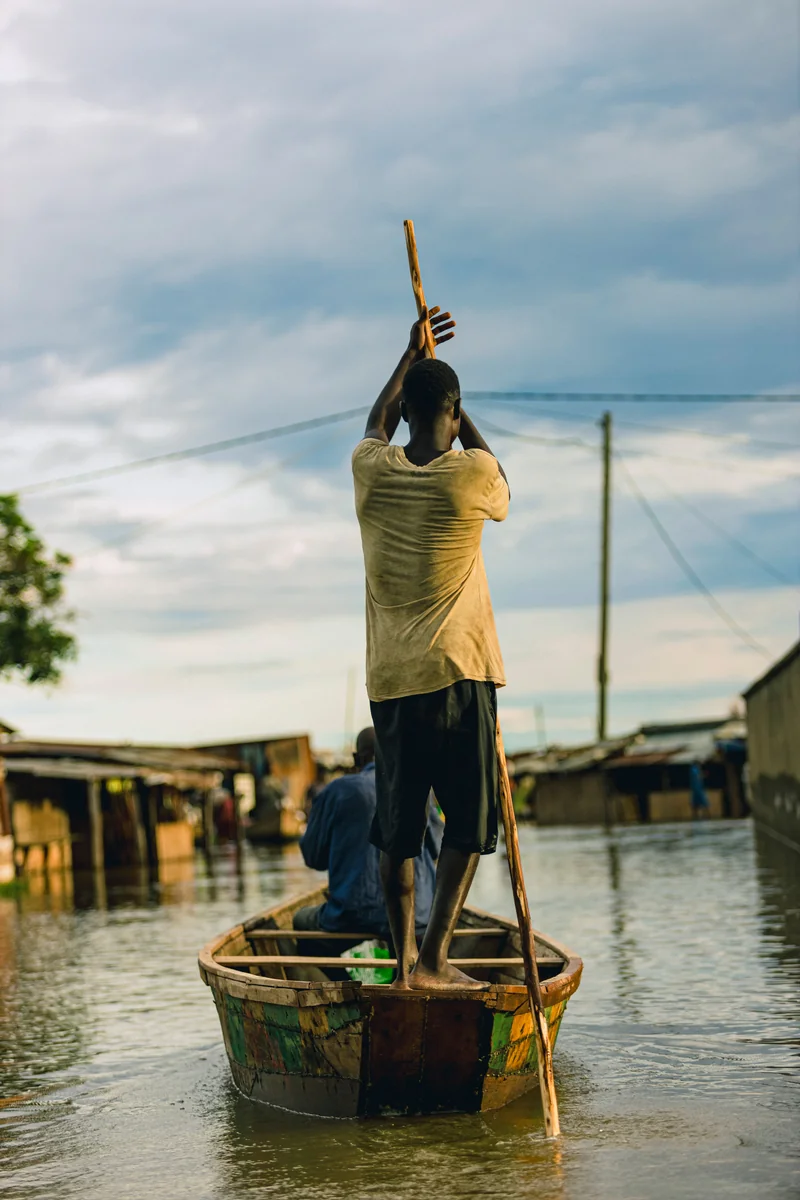
Solo travel guide to Ganvié: safety tips, joining group tours, meeting locals, and the best experiences for independent travelers on Lake Nokoué.
Ganvié is an excellent destination for solo travelers. The stilt village on Lake Nokoué is safe, welcoming, and easy to navigate once you know the basics. Whether you are passing through Cotonou on a longer West Africa itinerary or making Ganvié your main reason for visiting Benin, going alone is not just feasible — it is often the best way to experience the place.
Ganvié solo travel allows a pace and a depth of engagement that groups rarely achieve. Without the dynamics of traveling with others, you notice more, spend more time in the places that interest you, and have conversations that group dynamics crowd out. This guide covers everything you need to feel confident visiting alone.
Is Ganvié safe for solo travelers?
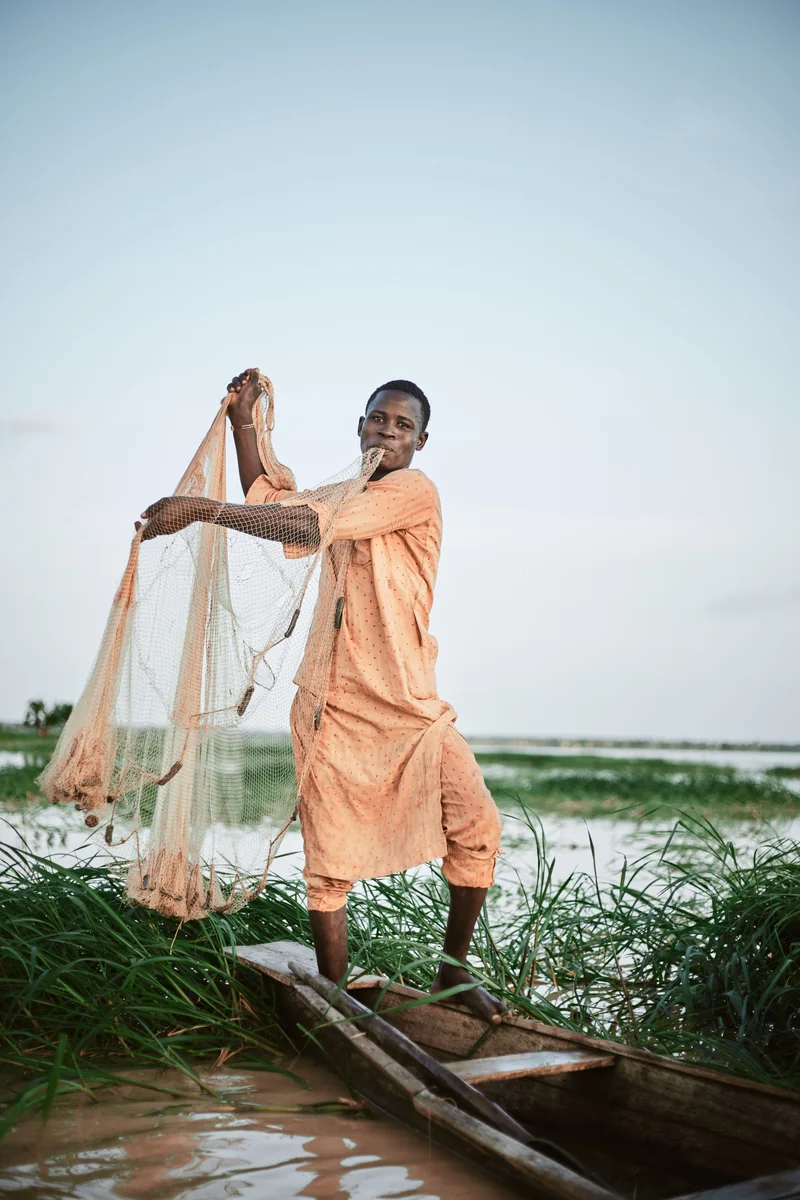 Benin is one of the most politically stable and visitor-friendly countries in West Africa, and Ganvié reflects this. The community is tight-knit and long accustomed to foreign visitors. Interactions with local guides, vendors, and residents are generally straightforward and respectful. Crime against tourists at Ganvié is rare enough that it does not feature in standard travel advisories.
The main safety considerations are not about crime. They are practical and environmental:
The pirogue crossing. The boat is stable, the operators are experienced, and life jackets are available. The risks are sun exposure and heat, not drowning. Crossing a 150 km² lake is not drama, but it merits basic precautions.
Sun and heat. The open water doubles effective UV exposure. Solo travelers sometimes underestimate this because they have no one reminding them to reapply sunscreen. Set a timer. Wear a hat.
The walkways. The wooden boards linking stilt houses can be narrow and uneven. Wet wood is slippery. Watch your footing, especially if you are carrying camera equipment.
After dark. Solo travelers who stay overnight in Ganvié should stick to areas they know and carry a headlamp. There is no street lighting. This is not about risk — it is about practicality.
For women traveling alone: Ganvié is welcoming. Local guides are professional. Dress conservatively (shoulders and knees covered is appropriate for most of Benin), and be direct if a vendor or guide is pushier than you want. A polite but firm "non merci" works in the vast majority of situations.
How to visit Ganvié alone: the logistics
Option 1: Join an organized group tour. This is the simplest approach for solo travelers. Most Cotonou-based travel agencies and guesthouses offer daily group departures to Ganvié. You join a small group (typically 4 to 8 people), share the pirogue cost, and travel with a guide who handles all logistics. Prices range from 25,000 to 45,000 FCFA per person including transport, pirogue, guide, and sometimes lunch.
The advantage for solo travel: cost-sharing on the pirogue (which is priced per boat, not per person), a group structure that means you are never navigating alone, and the occasional bonus of meeting compatible travelers.
Option 2: Arrange it independently at the embarcadère. Arrive at the Abomey-Calavi embarcadère on your own, find a pirogue operator, hire a guide at the local guides desk. This works but costs more as a solo traveler because you pay for the pirogue alone (15,000 to 25,000 FCFA aller-retour for a private boat) and negotiate in real time at the pier.
Practical advice for independent arrangement: know the reference prices before you arrive (see our budget guide to Ganvié), arrive early when operators are fresh and competition is highest, and ask specifically for a guide registered with the local association (they wear a badge).
Option 3: Book with Visit Ganvié in advance. A fixed-price booking with a native guide removes all the negotiation and uncertainty. You confirm your date by WhatsApp, your guide is waiting when you arrive, the pirogue is reserved. For solo travelers who want to maximize time on content rather than logistics, this is the most efficient option.
What solo travel adds to the experience
Solo travelers have access to a quality of attention that is difficult in a group. When you are not managing the experience for others, you can:
Stay longer where it interests you. Spend 15 minutes watching a fisherman work his Acadja without feeling guilty about keeping others waiting. Sit at the floating market for an extra half-hour without negotiating with a partner about when to leave.
Have real conversations. The Tofinu are curious and communicative. A solo visitor who shows genuine interest — who asks a question in Goun, who buys something and says thank you with a real smile — often gets invited to see something that is not on any circuit.
Process what you see. Ganvié is an intense sensory experience. The visual complexity of thousands of stilt houses over water, the sounds of pirogues and market voices, the smell of grilled fish — solo travelers have room to absorb this in a way that group conversation interrupts.
Spend more time. Without a group consensus to manage, you can easily extend the visit to include the outer villages, a longer lunch, or a second pirogue loop through the secondary canals.
Meeting locals and connecting with the community
One of the advantages of solo travel to Ganvié is the ease of spontaneous human contact. The Tofinu community is open to visitors who approach with respect and genuine curiosity.
The floating market is the best place for spontaneous interactions. Vendors are happy to chat between transactions. Buying something small — a piece of fruit, a bag of local peanuts, a strip of dried fish — is the natural way to begin a conversation. The price is negligible; the exchange is worth it.
Your guide is a resource beyond navigation. A good native guide who knows you are alone and curious will fill the gaps between stops with information and observation. Ask questions about the lake, the fishing system, the history of a particular house. Solo travelers consistently report that the best part of a guided visit to Ganvié was the conversation with the guide.
Overnight guests have a particular advantage. The families at the stilt guesthouses (Chez Roger, Chez Monique) receive so few solo travelers that you are often the only one there. Dinner is shared at a communal table. The host family and any other guests become the evening's company. This is one of the genuinely memorable forms of travel hospitality that is rare in more tourist-saturated parts of the world.
A few words in local language open doors no English or French phrase can. Learn "Kudo" (good morning in Goun), "Mi kudo" (thank you), and "Akwaba" (welcome, usable as a greeting). Pronounce them badly — people will appreciate the attempt more than the pronunciation.
The best solo experiences at Ganvié
The pirogue at sunrise. Organize an early crossing (depart Abomey-Calavi at 5:30 to 6:00 AM) and arrive as the lake comes alive. You are likely to be the only tourist on the water for the first hour. The light is extraordinary, the bird activity is at its peak, and the wholesale fish market (4:00 to 5:30 AM) is visible if you arrive early enough. This experience — available only to those who arrange early departure — is consistently described by solo travelers as the most vivid memory of their Benin trip.
A slow walk through the artisan village. Without a group to keep pace with, you can stop in front of a woodcarver for twenty minutes without social cost. Watch the process of making a miniature pirogue from start to finish. Ask if you can try. Some artisans will let you.
Photography. Ganvié is exceptional for photography. The combination of water, light, human activity, and dense visual texture provides subjects that reward patience. Solo travelers with photography as a priority should plan a second or third morning visit to work the same locations at different light and market stages.
A meal shared at the guesthouse. Solo travel at Ganvié reaches its best expression in the evening, when the tourist pirogues have left and the lake belongs to its inhabitants. The guesthouse dinner — fresh fish, sauce, rice, served on a wooden terrace above the water — is a meal that asks you to be present, because there is nothing else competing for your attention.
Practical tips for solo travelers
- Carry small denomination FCFA. 1,000 and 2,000 FCFA bills are most practical for markets, taxis, and guides' tips. Vendors and operators rarely make change for 10,000 FCFA notes.
- Bring a reusable water bottle with at least one liter. You can refill at your Cotonou hotel. Bottled water is also sold at the Ganvié market.
- A dry bag for phone and camera during the pirogue crossing is not optional — it is the kind of precaution that prevents a ruined trip.
- Download offline maps. Mobile data coverage on the lake is variable. Maps.me with offline Benin tiles works well.
- Travel insurance. Boat transport in a developing-world lake environment is covered under standard adventure travel policies. Worth confirming before departure.
- Tell someone your plans. Not because Ganvié is risky — it is not — but because good practice is good practice. Leave your planned schedule with your hotel.
Read our complete practical guide to visiting Ganvié for transport details and price breakdowns.
Questions fréquentes
Is Ganvié safe for solo female travelers?
What is the cheapest way to visit Ganvié alone?
Can I visit Ganvié without a guide?
Is overnight solo travel to Ganvié recommended?
How do I meet other travelers in Ganvié?
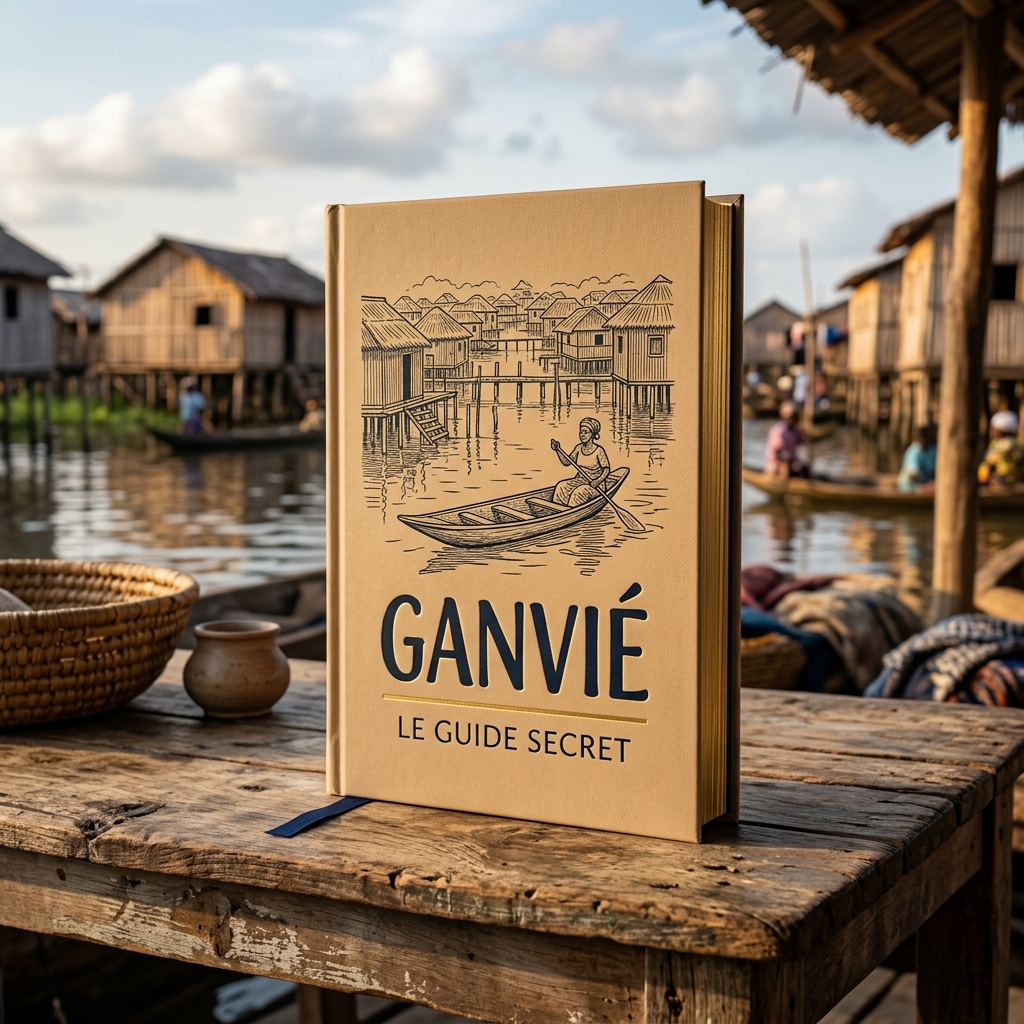
The Secret Guide to Ganvié: Hidden Gems & Etiquette
Discover the authentic Ganvié far from the tourist crowds. Download our exclusive PDF to prepare a respectful and unforgettable visit.
We respect your inbox. No spam.
The Visit Ganvié Team
Written by native Tofinu guides. We have navigated Lake Nokoué since childhood to share the true history of our city, far from tourist traps.
Related articles
From Cotonou Airport (COO) to Ganvié Pier: Transfers, Taxis & Transport Guide
Landing at Cotonou International Airport (COO) and heading directly to the lake stilt village of Ganvié? Discover our comprehensive transport guide, drive times, and taxi fares.
supportGanvié: tourism and visit on Lake Nokoué
Ganvié is Africa's largest stilt village. Between pirogues, floating market, Acadja fishing, and life on stilts, it offers an unforgettable tourism experience on Lake Nokoué. Everything you need to know before your visit.