
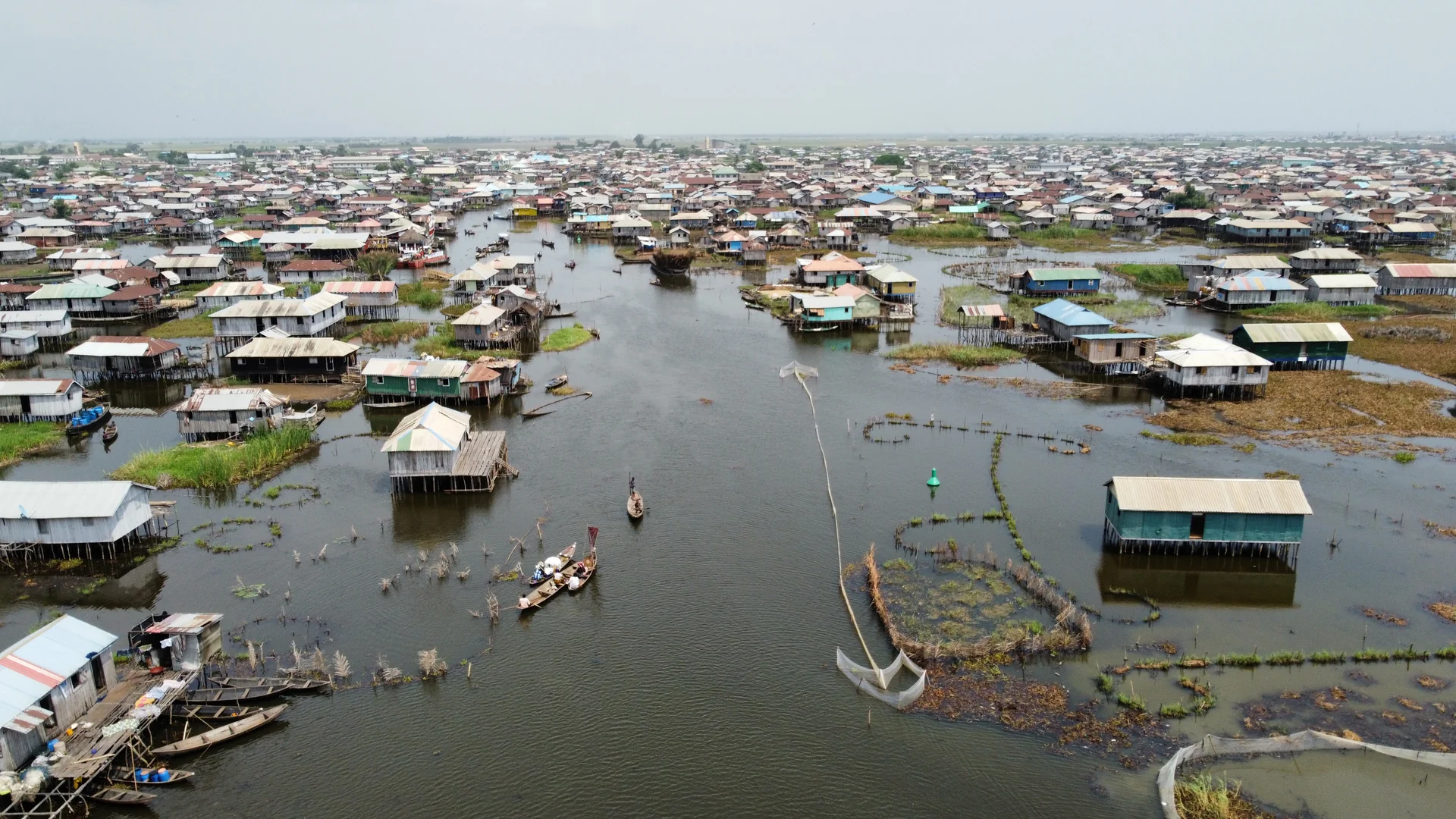
The military slave raids of the Dahomey kingdom forced the Tofinu to abandon dry land and seek refuge on Lake Nokoué in the 17th century. A survival choice that gave birth to Ganvié.
Ganvié would not exist without the Abomey razzias. That is a difficult truth to articulate, binding the birth of an extraordinary architectural wonder to the brutality of West African history. But it is the truth: Ganvié was born from flight, and it was the armies of the Dahomey kingdom that pushed the Tofinu people to seek refuge on the water of Lake Nokoué.
The city that 30,000 people call home today — its stilt houses, its floating market, its pirogue canals — is the direct product of a survival decision made under extreme duress, across several generations, as the raids of Abomey intensified along the Beninese coast. To understand Ganvié fully, you need to understand the terror that created it.
The Dahomey kingdom: a war machine serving the slave trade
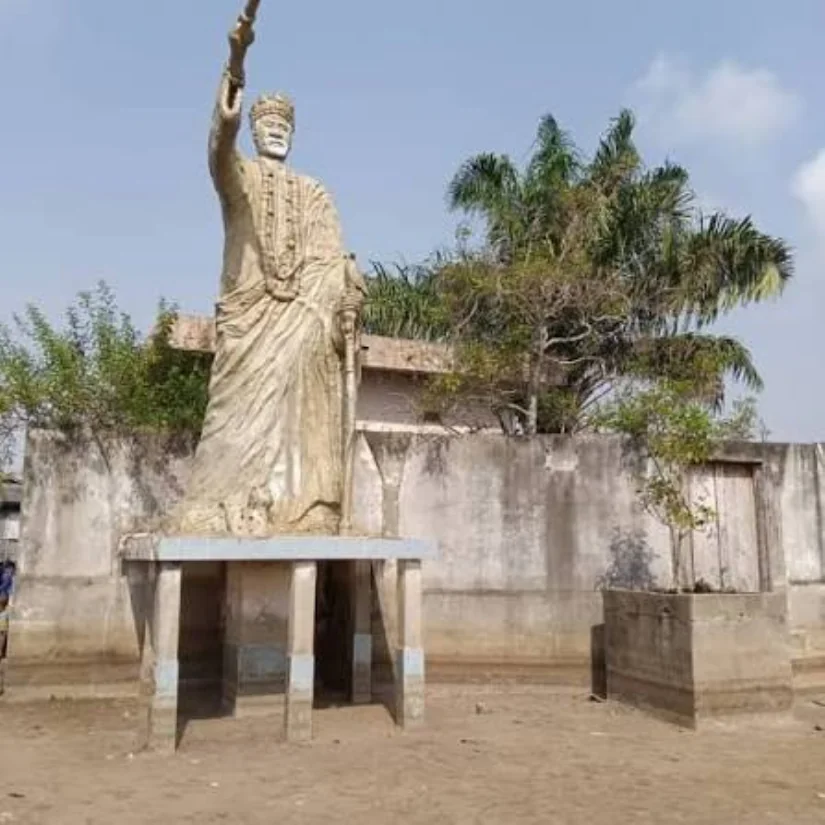 The Kingdom of Dahomey, also called Danhomè, was founded around 1625 by King Houégbadja on the Abomey plateau, approximately 120 kilometres north of the Atlantic coast. From that inland stronghold, it expanded progressively southward over the following two centuries, absorbing neighbouring kingdoms through force or diplomacy.
Its economic engine was singular and devastating: the capture of prisoners sold as slaves to European trading posts established at Ouidah, Grand-Popo, and along the entire Beninese coast. This trade, which reached its peak intensity between 1680 and 1860, transformed Ouidah into one of the most active slave ports in the Gulf of Guinea. Historical estimates suggest that approximately two million people were deported from the coasts of present-day Benin toward the Americas across this period — a significant proportion of them captured by Dahomean armies.
To sustain this commerce, Dahomey developed something rare in the region: a permanent professional army. Its organization included several specialized corps. The Agojie, an elite female force known in the West as the Dahomey Amazons, numbered several thousand warriors recruited and trained from childhood. Male corps included regular infantry, reconnaissance units, and specialists in forest combat. Each unit had a specific role in coordinated operations.
The raids were not improvised punitive expeditions. They were planned economic campaigns conducted in the dry season when roads were passable and agricultural communities were gathered for fieldwork and therefore most vulnerable. Each campaign had an objective measured in captives — a quota that determined the scale and direction of the operation. Dahomey was not a kingdom that raided out of anger. It raided to fill ships.
The Tofinu in the crosshairs
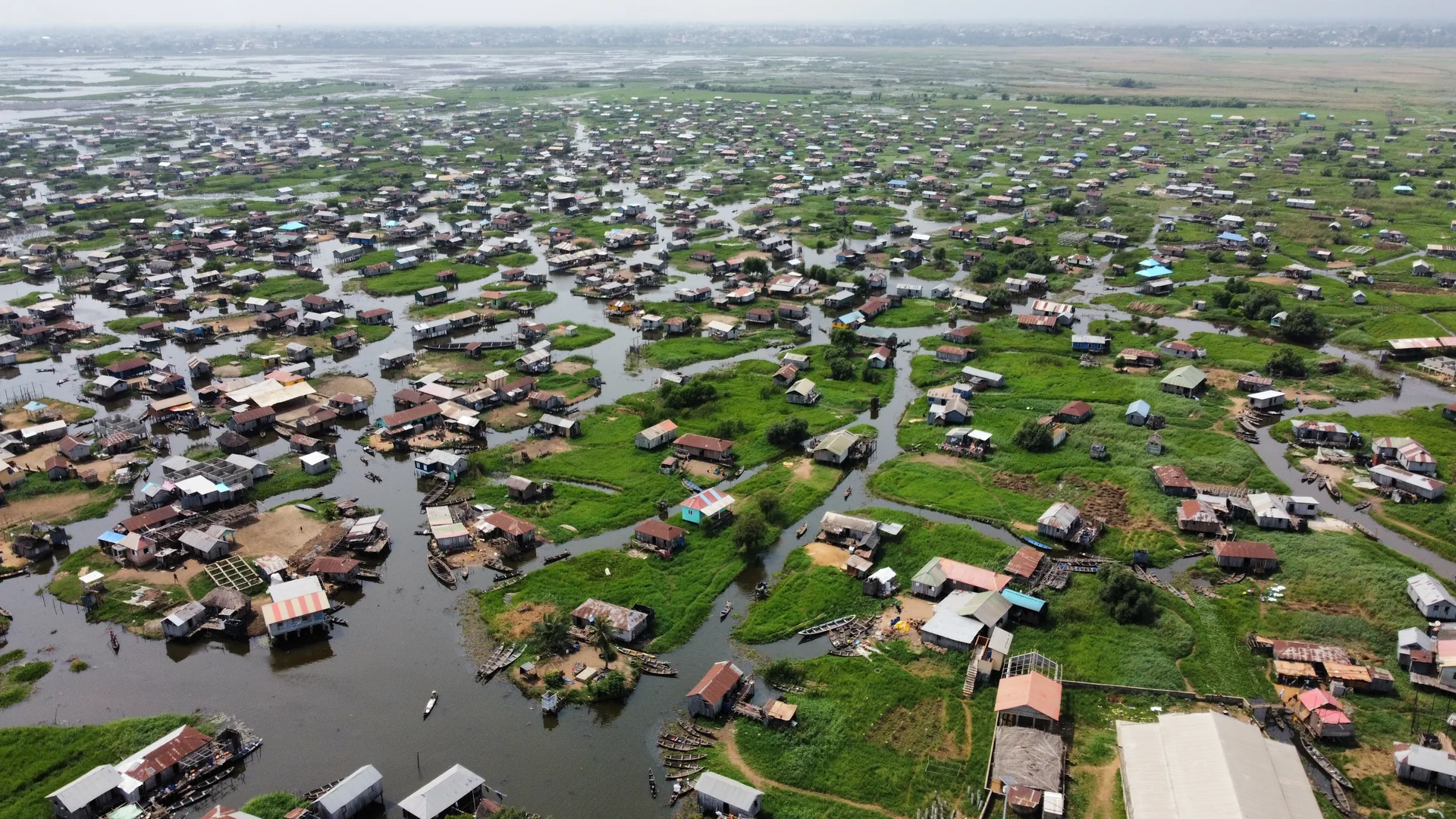 The Tofinu, settled along the banks of the Sô River and the shores of Lake Nokoué, found themselves in a particularly exposed position. Their territory spread between present-day Cotonou and the northern shores of the lake, directly across the strategic routes connecting the Abomey plateau to the coastal slave ports of Ouidah and Grand-Popo.
This geography made them doubly vulnerable. They were too close to Dahomey's main transit routes to go unnoticed, and too dispersed across the flat lakeside terrain to organize collective resistance on any meaningful scale. Unlike Dahomey, the Tofinu had no professional army, no fortifications, and no military hierarchy. Their social organization was clan-based, built for managing lake resources and commercial negotiation with neighbouring communities — not for resisting coordinated military columns.
The raids on Tofinu villages followed a pattern documented in oral traditions and corroborated by colonial archives: a column of warriors would arrive at dawn, in multiple groups encircling the settlement simultaneously. Able-bodied adults and children of transportable age were captured first. Elders considered too slow for the march to Abomey were sometimes killed or abandoned. Houses were burned to discourage return.
Captives were then walked in columns toward Abomey or directly to the holding facilities at Ouidah, chained to prevent escape. The Route des Esclaves — a 4-kilometre documented path linking Ouidah to the Door of No Return on the beach — was the endpoint of these forced marches for thousands of Tofinu captives. What waited beyond the door was a ship, the Atlantic crossing, and a life on the other side with no connection to the lake, the clan, or the language left behind.
The slave trade at Ouidah: where the road ended
To understand what the Abomey razzias meant for the Tofinu, it is necessary to understand where they led their captives.
Ouidah, 35 kilometres west of present-day Cotonou, was in the eighteenth century one of the most active slave ports in the Gulf of Guinea. European trading posts — Portuguese, Dutch, French, British — had established themselves there from the seventeenth century onward. Dahomey had concluded commercial agreements with these powers: enslaved people in exchange for firearms, textiles, alcohol, and metal goods. The firearms, critically, reinforced Dahomey's military advantage over its neighbours, creating a feedback loop in which slave raids funded the weapons that enabled more slave raids.
Sales took place on the beach or in the coastal warehouses. Captives were inspected, assessed, and sorted by physical characteristics. Families were deliberately separated — a calculated choice by traders to reduce the risk of organized solidarity and collective resistance during the crossing. The dispersal was thorough and irreversible.
Those who survived the Middle Passage arrived in the Caribbean, Brazil, or North America. Descendants of Tofinu captives are dispersed today across several countries of the African diaspora of the Americas — a reality that inhabitants of Ganvié carry in their collective memory, and that some Beninese-American families have begun to trace through genealogical research.
Why the water became a refuge
The decision to settle on the lake was not made in a single night of panic. It resulted from repeated observation over several decades: the Dahomey cavalry and infantry, so formidable on dry land, were powerless against water.
This weakness was not merely tactical. It had a religious and cultural dimension. The Dahomean warrior tradition forbade armies from fighting on water — a prohibition rooted in the kingdom's vodun cosmology, which associated water with feminine divine forces (Mami Wata, and Heviosso in his relation to lake storms) that the king's warriors were not to confront. The prohibition was real and observed: Dahomean armies repeatedly halted at the shores of Lake Nokoué rather than pursuing the Tofinu onto the water.
The Tofinu, who had lived along the lake for generations and understood its ecology intimately, observed these hesitations. At some point, this accumulated observation produced a strategic conclusion: the lake offered a boundary that no raiding party would cross. The water was not merely a place to hide. It was a military deterrent made of religion and geography.
The first precarious settlements on the lake date probably to the 1680-1700 period, before the official founding attributed to King Agbodogbé in 1717. Individual families built temporary shelters on the shallowest banks of the lake — crisis refuges, not yet a planned community. When the raids intensified under King Agadja (1708-1732), one of Dahomey's most expansionist rulers, the flow of refugees swelled and the temporary shelters became permanent.
The practical challenge of building on water
Choosing the lake as refuge was a survival decision. Making that refuge liveable was an engineering problem without precedent or reference.
The Tofinu had to solve entirely new problems with no existing body of knowledge to consult. How do you drive wooden posts into soft lake mud and have them hold for decades? Which wood resists permanent immersion in brackish water? How do you access fresh water on a lake whose water is not drinkable? How do you feed several hundred people without arable land?
The answers developed slowly, through experimentation and communal learning. The rônier palm (Borassus aethiopum), abundant in the lakeside ecosystem, turned out to have exactly the density and natural impermeability needed to resist the lake mud's corrosive chemistry. Iroko wood, brought by pirogue from the mainland forests, provided the harder material needed for horizontal beams and flooring. The Acadja fish-trap technique — artificial reefs of branches planted in the lake bed — was adapted and intensified from pre-existing regional practice to feed a growing population without farmland.
The clan structures that had governed Tofinu social life on dry land were preserved but adapted. Neighbourhoods formed around family groups, connected by wooden walkways. The floating market emerged as the only viable form of collective supply logistics — an institution born from necessity that still functions today in a form its founders would recognize.
King Agadja and the intensification of the raids
King Agadja (1708-1732) is the Dahomean figure most frequently cited in Tofinu oral traditions as responsible for the definitive installation phase on the lake. It was under his reign that Dahomey's armies extended their zone of control toward the coast with particular intensity.
Agadja was a systematic expansionist. He conquered the kingdom of Allada in 1724 and then Ouidah in 1727, seizing direct control of the most active slave port on the coast. These conquests eliminated the intermediaries who had previously handled European-Dahomey commercial relations, giving Agadja direct access to the trading posts and a heightened motivation to intensify capture campaigns in zones still outside his control.
It is in this context of peak raid intensity that the founding date of 1717 — traditionally attributed to King Agbodogbé's establishment of the lake community — takes on its full meaning. The official founding corresponds to the consolidation period of Tofinu presence on the lake, at precisely the moment when terrestrial pressure was most severe. The city was born not from inspiration but from desperation transformed into permanence.
The memory of the razzias in contemporary Tofinu culture
The Abomey raids are not abstract history in Ganvié. They are present in the elders' narratives, in certain vodun ceremonies that commemorate victims taken away, in the way native guides recount the city's founding to visitors today.
This memory has multiple dimensions. It is painful — whole families were dismantled, lineages interrupted, members deported without possibility of return. It is also constitutive of Tofinu identity: it was the razzias that made this people a lake community, that forged the capacity for adaptation and resilience that inhabitants of Ganvié claim today as their defining characteristic.
The particular respect accorded to King Agbodogbé in oral tradition — his elevation to the status of almost mythical founding figure — is understandable in this context. He transformed a flight into a foundation. The legend of his transformation into a crocodile to guide his people toward the protected waters is not a folkloric detail: it is a metaphor for a radical adaptation that saved a community, preserved in the form most durable in an oral culture.
The crocodile's sacred status at Ganvié today is a living trace of this founding narrative. Crocodiles in Lake Nokoué are not hunted by the Tofinu. When a crocodile is spotted in the lake near Ganvié, it is approached with caution and respect rather than fear or hostility. The animal that saved the ancestors is not prey.
The end of the raids and what did — and did not — change
The Abomey raids ended with the French military conquest of the Dahomey kingdom in 1894. By then, Ganvié had existed for more than 175 years. What had begun as a temporary refuge had transformed into a permanent, organized society with its own institutions, economy, material culture, and relationship to a specific piece of geography.
After 1894, the Tofinu could have returned to dry land. The threat that had justified settling on the lake had disappeared with the fall of the Dahomey court. Many chose to stay. The lake had become their territory — not just their shelter, but their home in the fullest sense. The pirogue had become their primary transport. The floating market had become their economy. Ganvié was no longer a refuge: it was a civilization.
Today, the descendants of the families who fled the Abomey razzias are the inhabitants of one of the most singular human communities in West Africa. Their presence on Lake Nokoué is evidence that a survival strategy — even one born of circumstances as brutal as organized slavery — can become, over several generations, the deepest identity of a people.
To explore the founding of Ganvié through its legendary and symbolic narrative, see our article on King Agbodogbé, the founder of Ganvié. To understand the ecology of Lake Nokoué that made this founding possible, read our piece on Lake Nokoué's geography and history.
The Secret Guide to Ganvié: Hidden Gems & Etiquette
Discover the authentic Ganvié far from the tourist crowds. Download our exclusive PDF to prepare a respectful and unforgettable visit.
We respect your inbox. No spam.
The Visit Ganvié Team
Written by native Tofinu guides. We have navigated Lake Nokoué since childhood to share the true history of our city, far from tourist traps.
Related articles
Tofinu glossary: essential lexicon of lake life
Complete lexicon of Tofinu, Goun and Fon words to understand lake life at Ganvie. Housing, fishing, navigation, spirituality, cuisine: essential vocabulary before your visit.
edgeLake Nokoue before Ganvie: geography, origins and ecosystem
Before becoming the cradle of Ganvie, Lake Nokoue was a vast lagoon system teeming with fish. A look at the geographical origins and unique ecosystem of this exceptional lake.