
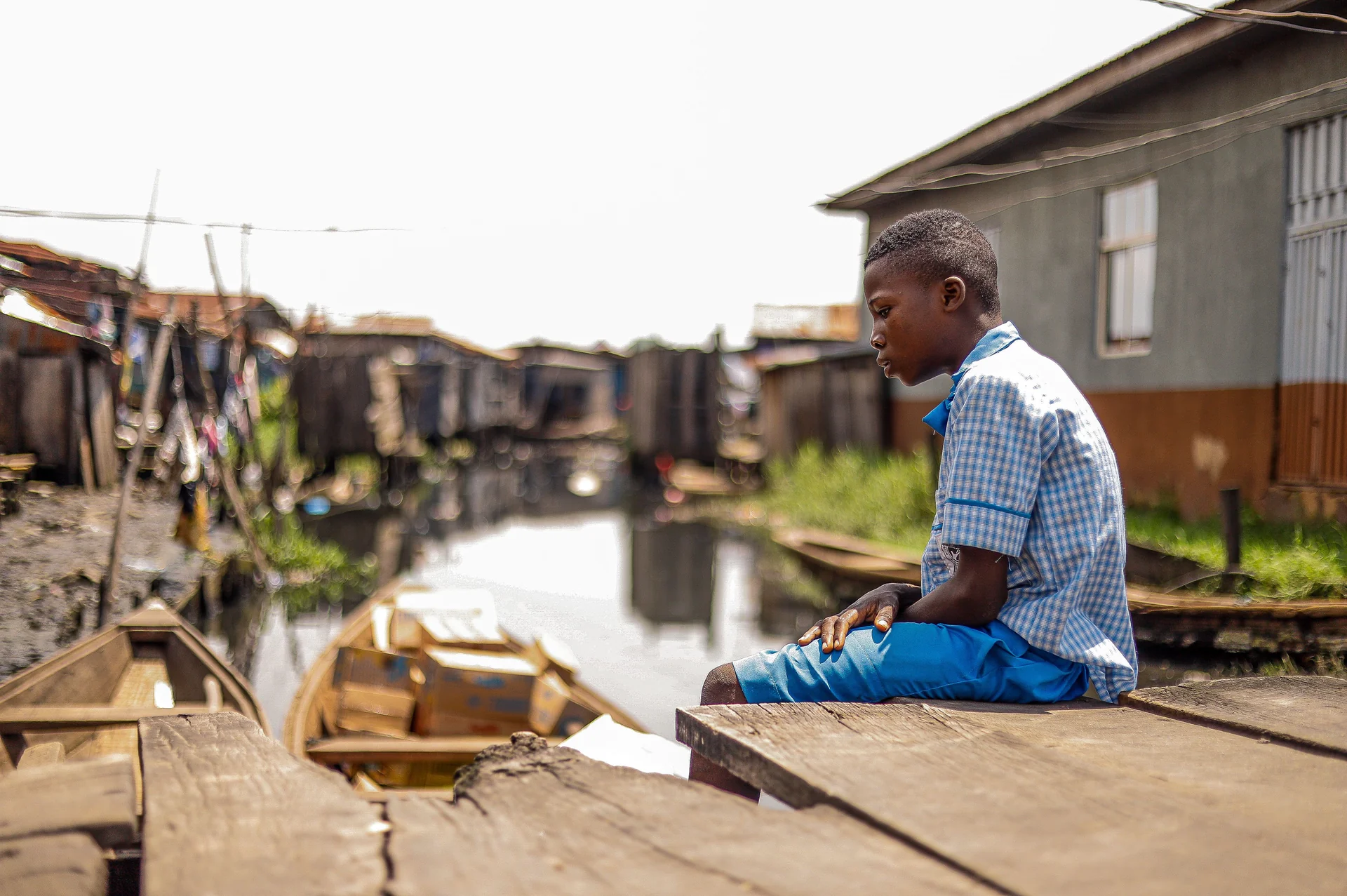
Interviews with Tofinu elders at Ganvie reveal a threatened oral tradition. Clan memory, foundation stories, lake knowledge: a deep dive into the words of the elders of Africa's largest stilt village.
In Ganvie, memory is not written. It is passed from mouth to ear, from grandfather to grandson, from mother to daughter, around the wood fire or in the pirogue gliding across the lake. The interviews with Tofinu elders are not ordinary testimonies. They are the last threads of an oral tradition that connects the present to the founding exile of the 18th century.
This article plunges into the heart of these interviews. It listens to what the elders of Ganvie say, how they say it, and what their words teach us about a people who made water their territory.
Why the elders' word is essential
Tofinu society is a civilisation of orality. Before the arrival of writing and modern schooling, all knowledge of the people was transmitted by voice. Clan genealogies, fishing techniques, culinary recipes, spiritual prohibitions, work songs: nothing was written down, everything was memorised.
This oral transmission gives the elders a unique status. They are not merely elderly people. They are the living libraries of the community. Without them, the names of the founders, the dates of migrations, the causes of conflicts would disappear within a single generation.
During interviews with the Tofinu elders of Ganvie, what strikes you first is the precision of their memory. An 80-year-old fisherman can describe the lake as it was in his childhood, name every species of fish that has disappeared, recount the floods of a given year as if it were yesterday. This memory is not a personal gift. It is the result of a culture entirely structured around oral transmission.
The foundation stories: the origin of Ganvie
The most important story that the elders tell is that of the founding of Ganvie. Each elder knows a version, with variations depending on their clan and lineage. But the core of the story remains the same.
In the early 18th century, the ancestors of the Tofinu lived on the banks of the So River and Lake Nokoue. The kingdom of Abomey, in full expansion, organised raids to capture slaves destined for the Atlantic trade. Faced with this threat, King Agbodogbe made a radical decision: to take his people onto the lake, where the Abomey horsemen could not follow.
What the interviews with the Tofinu elders of Ganvie add to the historical facts is the human dimension of the story. The elders do not recount a date or an event. They recount the fear of families fleeing in the night, the silence of pirogues gliding across the water, the painful choice of abandoning dry land for an uncertain future on the stilts.
"Our ancestors preferred water to the chain," a sage of the Hounsa clan told me. This sentence recurs in almost every interview. It sums up Tofinu identity better than any history textbook.
The memory of the clans
Tofinu society is organised into patrilineal clans called "ako". Each clan descends from a common ancestor and possesses its own history, its own stories, its own songs. The interviews with the elders reveal a complex social cartography, where every neighbourhood name is also a clan name.
When you ask an elder about their clan, they do not simply give a name. They recount a genealogy. They list the chiefs who have succeeded one another, the matrimonial alliances, the territorial conflicts, the reconciliations. This genealogy is not an abstract memory exercise. It underpins land rights, ritual obligations and social hierarchies still in force today.
The clan chief, the "doto", is the guardian of this memory. During ceremonies, it is he who recites the genealogy before the assembly. His word carries the force of law. An interview with a doto is therefore a privileged, almost sacred moment, where the researcher gains access to reserved knowledge.
Knowledge of the lake: fishing, navigation, ecology
The Tofinu elders are also the depositaries of exceptional technical knowledge. Lake Nokoue is a complex ecosystem, with seasonal variations, currents, shifting sandbanks, and fish spawning zones. The elders know all of this without maps or measuring instruments.
During interviews, they describe with remarkable precision the fish cycle: which species migrate up the Oueme River in the rainy season, at what period the males change colour, which nets to use for each catch. They explain the acadja technique, these artificial reefs of branches that attract fish and enrich the ecosystem.
This knowledge is threatened. The younger generations, schooled in Cotonou, spend less time on the water. Modern fishing techniques, more aggressive, are progressively replacing traditional methods. The interviews with the Tofinu elders of Ganvie thus become a race against time to document this knowledge before it disappears.
Spirituality and the vodun of the lake
Another central theme of the interviews is Tofinu spirituality. Lake Nokoue is not a neutral space. It is inhabited by vodun, spiritual forces that must be respected and appeased.
Every fisherman knows that he does not set out without having made an offering. Every family knows the prohibitions that protect their pirogue. The elders tell the story of Tohossou, the vodun of water, and explain how it punishes those who violate the rules of fishing.
These stories are not superstitions. They form a coherent system of resource management, where the spiritual and the ecological are intimately linked. The elders say it clearly: when you respect the vodun, the fish stay. When you ignore them, the lake empties.
The details that only the elders know
What distinguishes the interviews with the Tofinu elders from ordinary tourist accounts is the sensory and technical precision of their testimonies. They do not speak of Ganvie in general terms. They speak of precise events, precise places, precise people.
A 75-year-old fisherman can describe how the sandbank at the entrance to the main channel has shifted two hundred metres in forty years -- information invisible on maps but critical for night navigation. An 80-year-old woman remembers exactly in which pirogue she carried the construction wood for her parents' house, at what age she learned to paddle alone, what wind was blowing that day.
These details are not nostalgia. They are data. The description of the sound the lake makes when a flood is imminent. The colour of the water on mornings when the tilapia will rise en masse toward the Acadja. The behaviour of kingfishers as indicators of fish presence at less than two metres depth. This vernacular ecological knowledge is recorded nowhere else than in the memory of the elders.
A few elders consent to share their knowledge of the Acadja with surprising precision. They describe the selection of woods depending on the installation zone -- different species depending on whether the Acadja is in brackish or fresh water, depending on whether it is exposed to offshore winds or protected by a floating meadow. This empirical selection produces results that aquaculture researchers are still studying in order to reproduce at scale.
The threatened transmission
The observation that recurs in all interviews with the Tofinu elders of Ganvie is that of a transmission growing weaker. Young people speak French at school, watch television, use the internet. The Tofinu language, which carried all the memory of the people, is receding.
Traditional ceremonies are less frequent. The evening gatherings where the elders told clan stories are becoming rare. The "agan", those Tofinu griots who knew genealogies over dozens of generations, have almost disappeared.
Yet initiatives are emerging. Oral documentation projects, carried by Beninese and international researchers, are recording the elders' testimonies. Local associations organise transmission workshops in Ganvie's schools. The memory is not lost, but it needs to be actively preserved.
What the interviews say: a lesson in humanity
Beyond the historical facts and technical knowledge, the interviews with the Tofinu elders of Ganvie deliver a deeper lesson. That of a people who chose freedom over submission, and who built a civilisation on the water without ever renouncing their identity.
The elders do not complain. They do not regret the past. They observe the changes with lucidity, sometimes with concern, but never with bitterness. Their wisdom is made of acceptance and resilience. "The lake changes," says one of them. "We must change with it."
This may be the most precious teaching from the interviews with the Tofinu elders. Memory is not a museum. It is a living force that allows a people to cross centuries without losing its soul.
Meeting the elders during your visit
An interview with a Tofinu elder is not something you plan through a travel agency. It is earned by the way you arrive, the patience with which you listen, and the guide you choose.
Native guides from Ganvie -- those born on the lake, who personally know the elders -- are the natural intermediaries for these encounters. They know which doto agrees to receive visitors, at what time, with what courtesies. They know the codes: appropriate gifts (a bottle of palm liquor or snuff tobacco, depending on the person), how to sit (never directly on the ground, never higher than the elder), the questions that open and those that close a conversation.
If you wish to have access to these interviews, let your guide know in advance. This type of visit sometimes requires prior organisation -- the doto is not always available, the family must be informed. Certain Visit Ganvie tours include a meeting with a village elder in a respectful, prepared setting.
What you will hear in these encounters will resemble no travel guide. It will be a voice, a rhythm, a way of punctuating sentences with silences that last. The best questions to ask are the simplest: what was your father's name? Where was his Acadja? What has changed since you were a child? And then, listen.
How to preserve and transmit
For those who wish to contribute to the preservation of this oral memory, several paths exist.
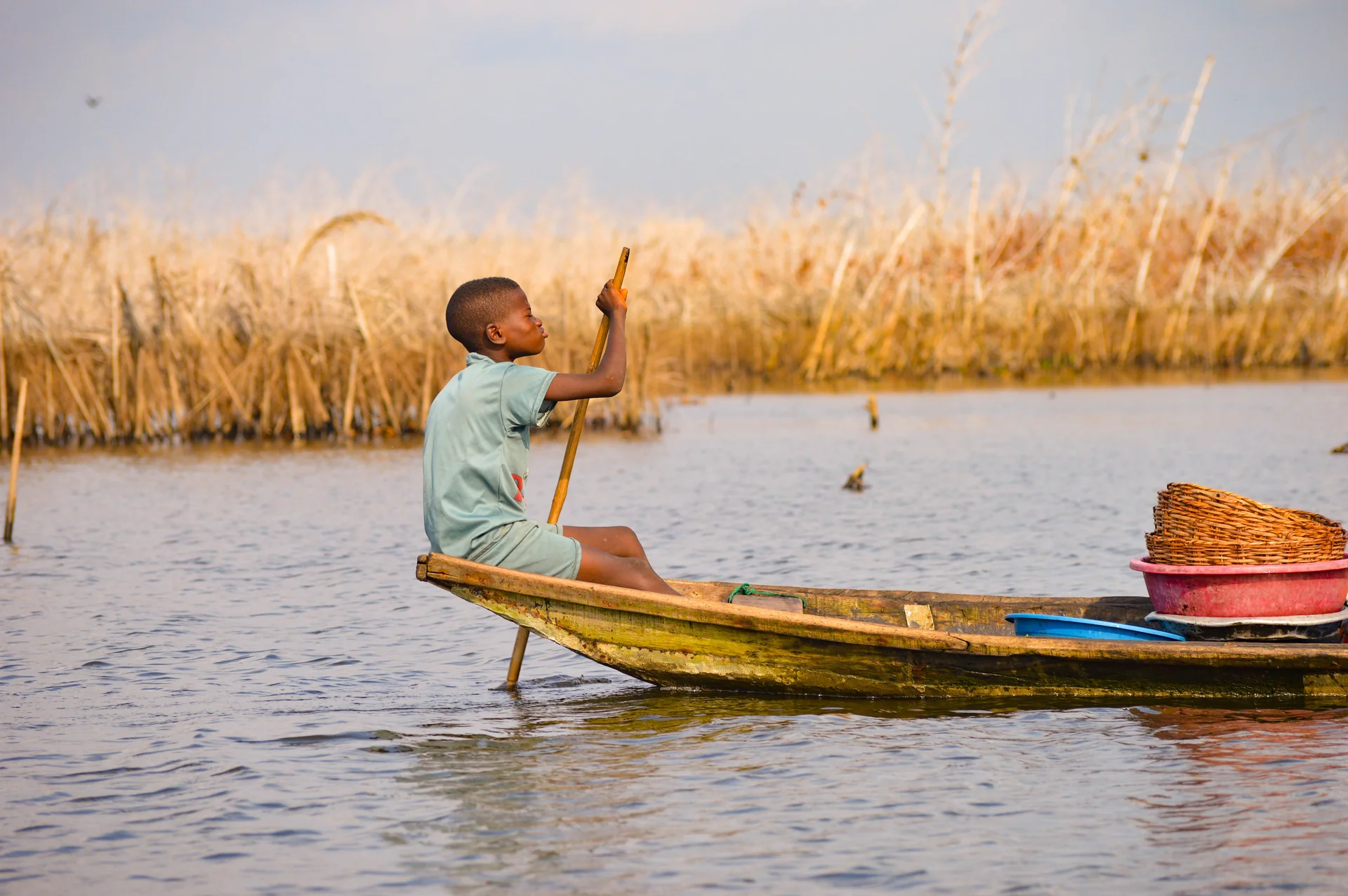
Support the local associations that document interviews. Encourage participatory research projects, where the elders are not study subjects but partners in transmission. And above all, visit Ganvie with respect, taking the time to listen to those who speak.
For the voice of the Tofinu elders will one day fall silent. But if we know how to hear it today, it will continue to resonate over Lake Nokoue for generations to come.
The Secret Guide to Ganvié: Hidden Gems & Etiquette
Discover the authentic Ganvié far from the tourist crowds. Download our exclusive PDF to prepare a respectful and unforgettable visit.
We respect your inbox. No spam.
The Visit Ganvié Team
Written by native Tofinu guides. We have navigated Lake Nokoué since childhood to share the true history of our city, far from tourist traps.
Related articles
Tofinu glossary: essential lexicon of lake life
Complete lexicon of Tofinu, Goun and Fon words to understand lake life at Ganvie. Housing, fishing, navigation, spirituality, cuisine: essential vocabulary before your visit.
edgeLake Nokoue before Ganvie: geography, origins and ecosystem
Before becoming the cradle of Ganvie, Lake Nokoue was a vast lagoon system teeming with fish. A look at the geographical origins and unique ecosystem of this exceptional lake.