
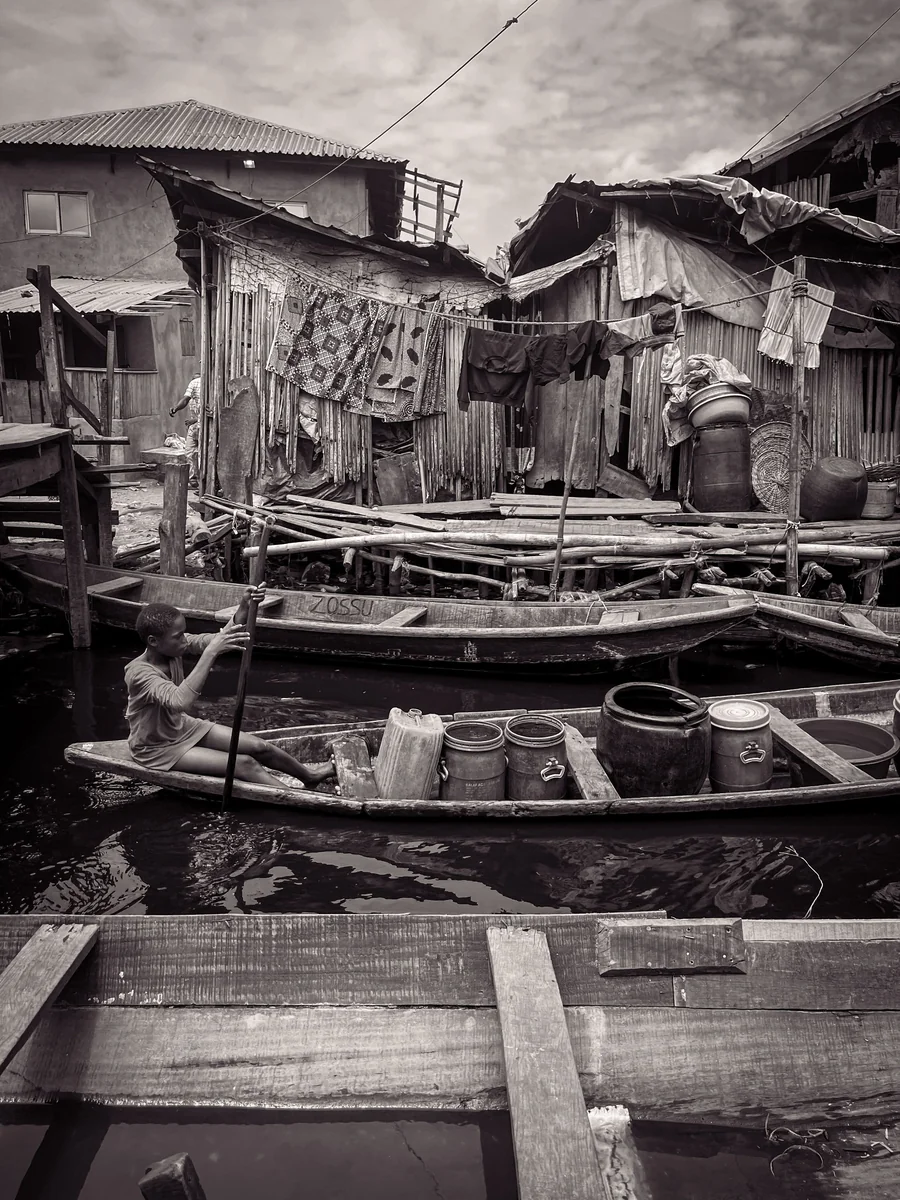
Beyond the main village, the real treasure lies in the neighboring villages and preserved areas of Lake Nokoué — explore Acadja fishing, stilt craftsmanship, and Tofinu culture.
If you are preparing a trip to Benin, the question "what to do in Ganvie?" inevitably comes up. Often called the Venice of Africa, this stilt city is much more than a photographic curiosity. It is a human and natural ecosystem of fascinating complexity on the calm waters of Lake Nokoué. For a smooth visit, read our practical transport guide.
Yet most tourist circuits only cross the center of the main village. For the traveler in search of meaning, the real treasure lies a few paddle strokes away — in the neighboring villages and preserved areas of the lake. This guide covers what to do around Ganvie to transform your visit into a cultural odyssey.
Beyond Ganvie, Lake Nokoué is home to secret lake villages specializing in bamboo crafts, weaving, and traditional Acadja fishing. These preserved areas host 300+ bird species and offer a unique immersion in the history of Tofinu resistance.
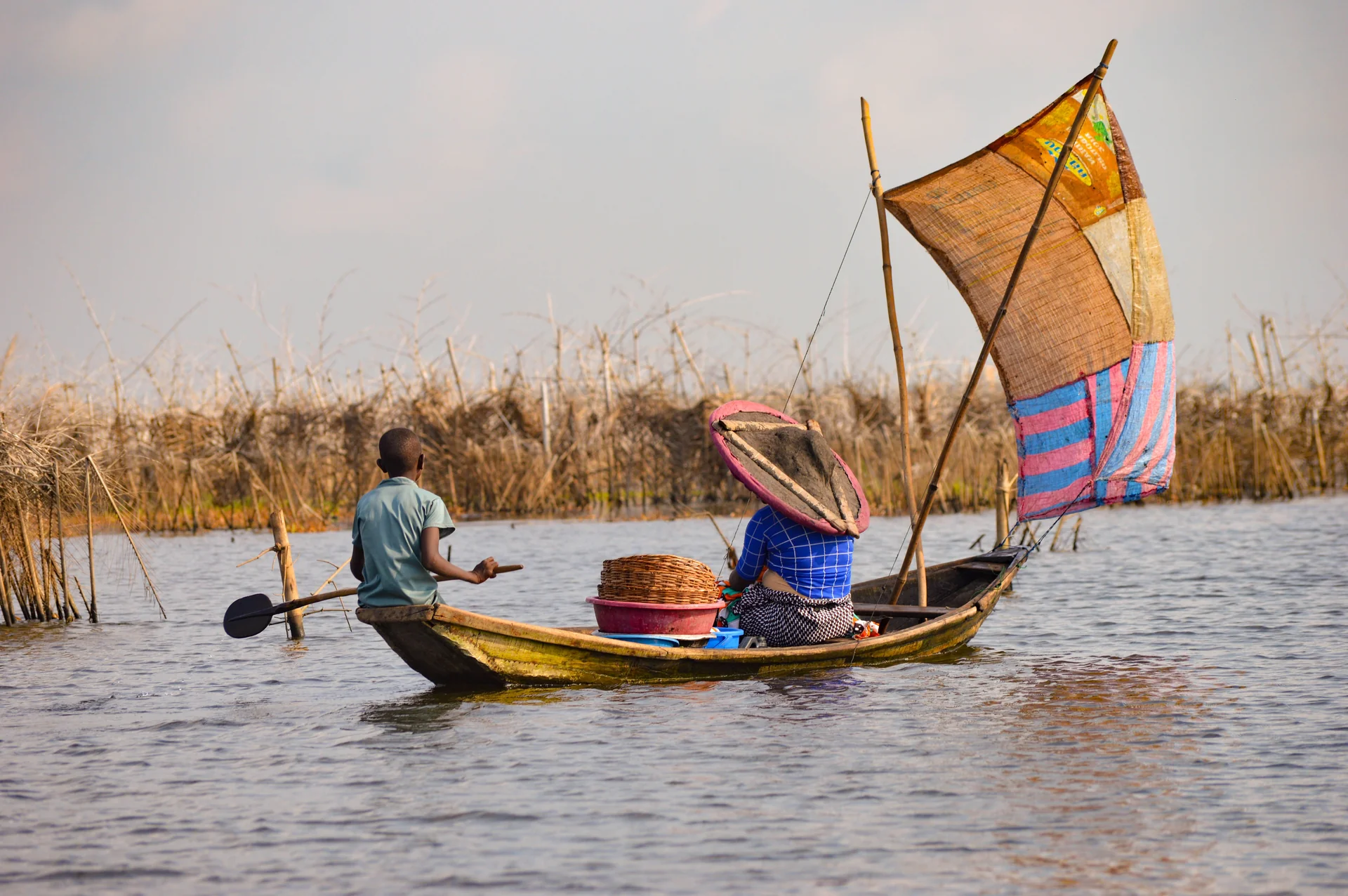
Why explore the lake villages around Ganvie
Venturing beyond the main tourist zone opens a door to a reality few travelers see. Ganvie is only the visible part of a vast network of aquatic life stretching across the lake.
A deep immersion in Tofinu history
The villages of Lake Nokoué were not born by chance. In the 18th century, the Tofinu people fled slave raids from the kingdom of Dahomey by building their homes on the water — a terrain the Fon warriors would not cross. Each satellite village developed its own specialty over centuries, creating a mosaic of know-how that allowed the Tofinu to thrive in an environment that seemed hostile at first glance.
The story varies subtly from one village to the next. Some settled earlier, some later. Some specialized in fishing, others in weaving. These distinctions are invisible to the day visitor but fundamental to understanding how lake society works.
Silence and serenity: the other face of the lake
Central Ganvie is vibrant with merchants, motors, and boat traffic. It is energizing but can be exhausting. As soon as you move toward the less frequented areas of Lake Nokoué, an Olympian silence sets in.
This is where you truly hear the lake: the rustle of wind in reeds, the sharp plunge of a kingfisher, the regular lapping of a paddle against a wooden hull. For travelers wondering what to do in Ganvie beyond the market and the photo stops, this quiet exploration of the outer villages is the answer.
The three-village circuit
To satisfy this thirst for discovery, we designed a signature experience: a guided tour of three lake villages, each representing a pillar of stilt civilization.
Village 1: Acadja fishing and the master fishermen
Fishing is more than a livelihood in Ganvie — it is a way of life and an environmental science passed down through generations. In the first village, you discover the Acadjas — traditional fish aggregation devices.
Did you know?
The word "Acadja" refers to brushwood parks submerged in the lake to create an artificial ecosystem that attracts and shelters fish. It is one of the most ecological fishing systems in the world.
These are artificial fishing parks made of branches and rot-resistant wood planted in the lakebed. They create natural refuges where fish feed and reproduce safely. The technique predates modern aquaculture by centuries and is now recognized by environmental researchers as a model of sustainable fishing.
- Ancestral know-how: Watch men throw cast nets with surgical precision — a gesture that looks effortless but requires years of practice.
- Community management: Lake plots are managed collectively, an inspiring lesson in sustainable resource management where common interest takes priority over individual gain.
— Koffi, native guide"The lake doesn't just give us fish. It gives us our identity. Learning to respect it is learning to respect ourselves."
How an Acadja works: the science behind the tradition
Understanding an Acadja means understanding why fishing in Ganvié has not exhausted the lake in three centuries.
The principle is simple but effective: branches of rot-resistant species — mangrove wood, rônier palm, bamboo — are planted in a ring or rows in shallow zones of the lake, between 0.5 and 2 metres deep. These structures create a dense artificial ecosystem: algae colonize the branches, micro-crustaceans feed there, fingerlings shelter from predators, adult fish come to hunt. Within a few months, an Acadja becomes a self-sustaining colony — a freshwater reef.
Harvesting is done by enclosing the park with nets stretched around the perimeter, then gradually reducing the water level or driving the fish toward the nets. This happens two to four times a year depending on the size of the park and the desired fishing pressure. The interval between harvests allows fish populations to recover.
This system predates industrial aquaculture by centuries. Researchers in sustainable fisheries at the University of Abomey-Calavi and the IRAD still study Acadja as a model of ecological resource management. What the Tofinu developed empirically, contemporary science confirms: Acadja generates sustainable yields without depleting the lake, whereas unregulated net fishing overshoots the stocks.
In the first village, you will see Acadja of very different sizes — some belonging to a single family, others managed collectively by an entire lineage. The surface area of an Acadja largely determines the income level of the family that owns it. The largest can span several hundred square metres.
Village 2: Craftsmanship and domestic ingenuity on stilts
The second village showcases Tofinu building genius. Here you see how a society organizes itself to meet every need without ever touching dry land.
- Bamboo architecture: A stilt house must resist strong winds and constant humidity. The choice of wood species — teak, treated bamboo, iroko — determines whether a structure lasts ten years or fifty. Local carpenters work without blueprints, relying on measurements passed down through families.
- Weaving and women's work: Women transform plant fibers into mats, baskets, and hats. This is a privileged moment to understand the domestic economy and the central role of women in the stability of the stilt home.
- Lake agriculture: Small hanging gardens grow herbs. Wooden platforms host ducks and pigs. Every surface is used. Nothing is wasted.
Village 3: Spirituality and lake legends
The third village belongs to the immaterial. Here, lake legends are not stories for tourists — they are lived realities that shape daily decisions.
Your Visit Ganvié guide shares stories of the founding ancestors and the water deities (vodun) who have protected the city for centuries. You discover traditional places of worship, often discreet and hidden behind palm-frond facades. The spiritual geography of the lake is as detailed as its physical geography: certain channels are sacred, certain tree species are never cut, certain fish are never eaten.
Understanding this cosmology adds a layer to your visit that no guidebook can provide. For more on the deeper meaning of Ganvié's lake culture, read our guide to responsible travel in Ganvié.
Lake Nokoué biodiversity: an ecological sanctuary
If you are still wondering what to do in Ganvie, look at the wild nature surrounding the dwellings. Lake Nokoué is a wetland of international importance classified as a Ramsar site.
Birdwatcher's paradise
With over 300 bird species recorded, the lake is exceptional for bird observation.
- Iconic species: majestic herons, white egrets, black cormorants, and the malachite kingfisher whose blue plumage flashes in the sun.
- Best time: sunrise, when birds leave their nests in the mangroves to feed.
- Recommended equipment: binoculars and a camera with a telephoto lens. The birds are accustomed to pirogues and allow relatively close approaches.
Mangrove ecosystems
Mangroves with their aerial roots filter the water and serve as nurseries for young fish. Navigating between the intertwined roots is a mystical experience. These forests are also the first defense against shoreline erosion and water quality degradation — a critical function as climate change affects the lake's water levels. Read more in our guide to Ganvié's UNESCO status and conservation challenges.
Explore the lake villages
Join a guided 3-hour tour of the secret villages of Lake Nokoué with our native guides and discover Acadja fishing, bamboo architecture and Tofinu legends.
The lake at night: a dimension few visitors ever see
For those who choose to stay overnight in the outer villages or in one of the stilt guesthouses near Ganvié, the lake takes on an entirely different dimension after dark.
By 5 pm, the last motorized pirogues from tourist circuits have returned to Abomey-Calavi. Silence settles in gradually — not total silence, but inhabited silence. You hear the voices of families eating on their terraces, the regular lap of water against the stilts, the creak of a walkway under a footstep. Solar lamps come on one by one at dusk across the canals.
Between 4 and 5:30 in the morning, the lake comes back to life in a way no day visitor will ever witness. It is the hour of the wholesale market: fishermen return with the night's catch and sell it to the women traders in near-darkness pierced only by kerosene lanterns. Dozens of pirogues converge in silence. Transactions happen in low voices, crates of fish change hands. This scene is among the most authentic on Lake Nokoué — and it is over before the first tourist pirogue departs from Abomey-Calavi.
If you are considering staying overnight to experience this, read our full guide to sleeping on the lake at Ganvié.
Practical tips for exploring around Ganvie
- Start early: depart by 7:30 am. The light is softer, the temperature pleasant, and wildlife is most active.
- Essential gear: wide-brimmed hat, biodegradable sunscreen, binoculars, reusable water bottle.
- Local guide required: never navigate the outer channels alone. A native guide is your cultural passport — locals welcome a guided visitor warmly where a stranger alone might be met with suspicion.
- Duration: plan 3-4 hours for the full three-village circuit. The Visit Ganvié Odyssey covers this in a structured half-day.
Conclusion
For travelers asking what to do in Ganvie beyond the floating market and the postcard photos, the answer lies in the outer villages. Acadja fishing, bamboo craftsmanship, lake legends, and 300 species of birds — the lake offers layers of experience that reward the curious traveler.
Book our three-village guided tour for a structured exploration, or contact us to design a custom itinerary around your interests.
Questions fréquentes
What is there to do in Ganvie beyond the floating market?
How long does a complete tour of the lake villages take?
Are the neighboring villages accessible year-round?
Do I need a guide to visit the outer villages?
What is Acadja fishing?
The Secret Guide to Ganvié: Hidden Gems & Etiquette
Discover the authentic Ganvié far from the tourist crowds. Download our exclusive PDF to prepare a respectful and unforgettable visit.
We respect your inbox. No spam.
The Visit Ganvié Team
Written by native Tofinu guides. We have navigated Lake Nokoué since childhood to share the true history of our city, far from tourist traps.
Related articles
Tofinu glossary: essential lexicon of lake life
Complete lexicon of Tofinu, Goun and Fon words to understand lake life at Ganvie. Housing, fishing, navigation, spirituality, cuisine: essential vocabulary before your visit.
edgeLake Nokoue before Ganvie: geography, origins and ecosystem
Before becoming the cradle of Ganvie, Lake Nokoue was a vast lagoon system teeming with fish. A look at the geographical origins and unique ecosystem of this exceptional lake.