
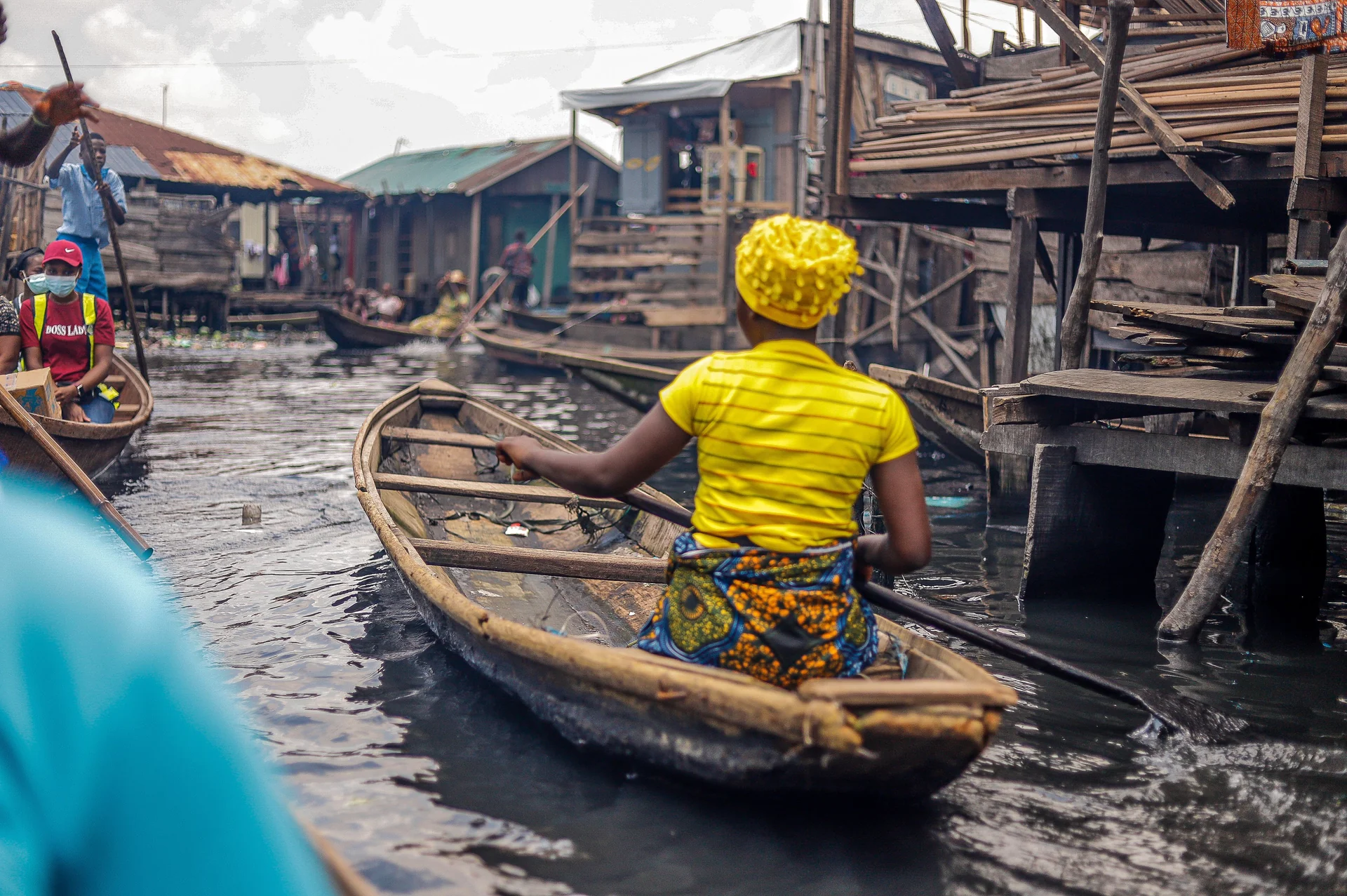
The Ganvié floating market is the economic lung of the lake city — a liquid agora where hundreds of pirogues exchange goods daily. This guide covers hours, products, the Tofinu women's economy, seasonal rhythms and rules for a respectful visit.
If Ganvié is often described as the "Venice of Africa," then its floating market is the Grand Canal. A liquid agora where hundreds of pirogues brush past each other, dock momentarily, and exchange significant quantities of goods without a single foot ever touching dry land. More than a place for commercial transactions, this market is the lung of the lake city — the space where the daily supply, economy, and social cohesion of more than 30,000 people play out every morning.
For a visitor stepping into a pirogue from the Abomey-Calavi embarcadère for the first time, the Ganvié floating market is a sensory experience with few equivalents. But grasping its full depth requires understanding the invisible mechanisms that drive it.
The Ganvié floating market is one of the largest on-water markets in West Africa. It begins at 4 am with wholesale fish trade and reaches its visual peak between 6 and 8 am. Managed almost exclusively by Tofinu women, it is the nerve center of the lake economy. Arrive early, bring small-denomination cash, and always ask before photographing.
A market born from geographical necessity
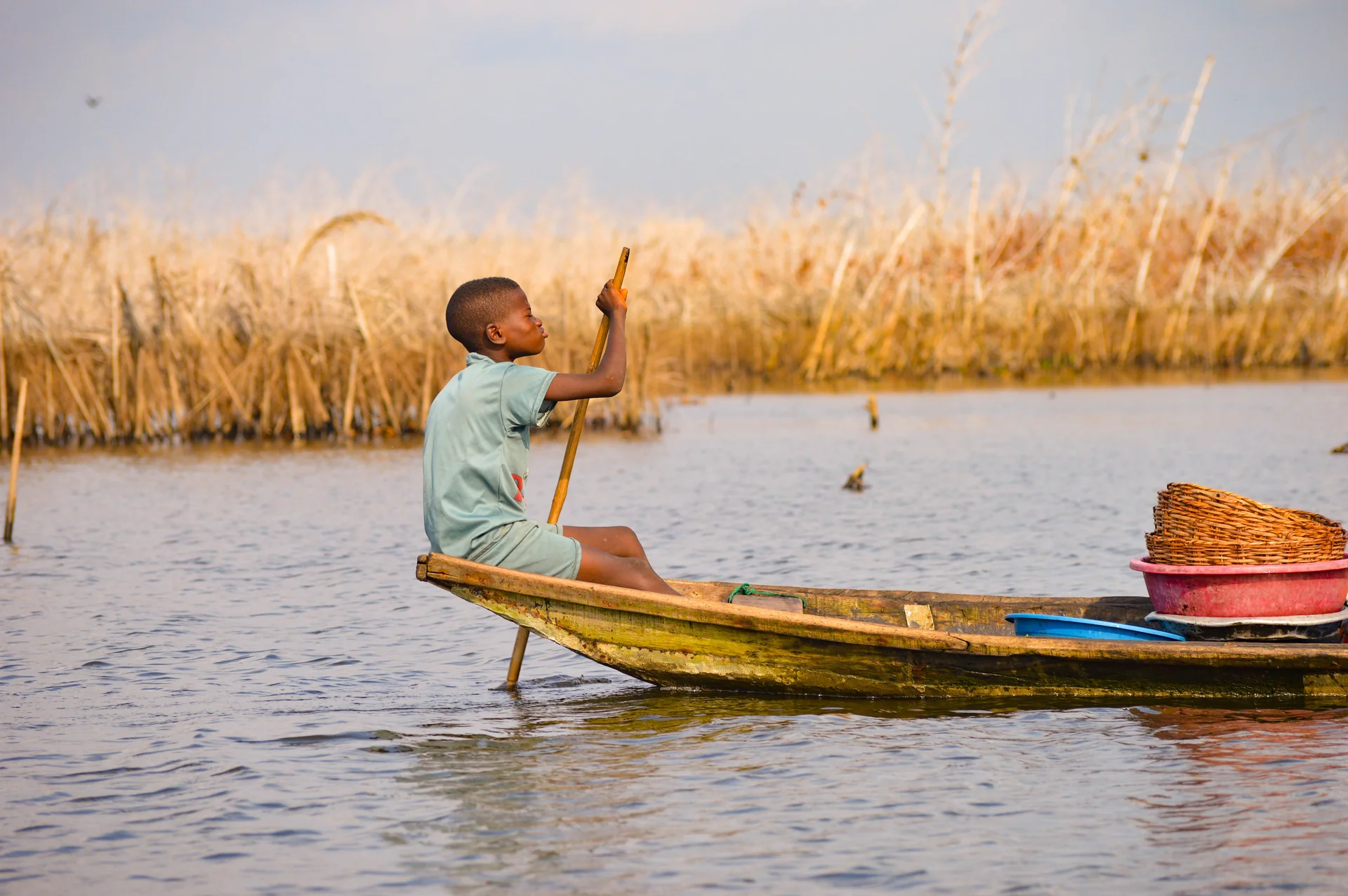 The Ganvié floating market is not a tourist curiosity invented for cameras. It is a logical response to geographic constraint: 30,000 people living on water without direct access to dry land need a daily supply system. The pirogue is their only vehicle. The on-water market is the only form of market possible.
The earliest forms of lake trade at Ganvié trace back to the city's founding in the eighteenth century, when the Tofinu chose Lake Nokoué as a refuge from the slave-raiding armies of the Kingdom of Dahomey. To survive on the water, they needed to build an exchange network between lake families and the farmers and traders on the shore. That network took the form that still exists today: pirogues converging at the same spot, at the same time, with their goods.
What you see on Lake Nokoué in 2026 is a commercial system that has survived three centuries of social, colonial, and economic transformation without losing its foundational logic.
Why the market starts at 4 am
The market follows the rhythm of the lake ecosystem, not an office clock. Fishermen who have worked through the night on their Acadja — those branch structures that concentrate fish naturally — return with their catch before sunrise. Fresh fish cannot survive the tropical heat: it needs to reach buyers as quickly as possible.
By 4 am, the first vendors are already assembling at the central market zone near the heart of Ganvié. The wholesale fish auction happens in near-darkness, lit by solar lamps and headlamps. Fishermen sort their catch, vendors assess and negotiate, transactions close. By the time the sun clears the horizon, most of the perishable goods have already changed hands.
This early cycle is invisible to day-trippers arriving from Cotonou at 9 or 10 am. To witness the market from its first transactions, staying overnight on the lake is the only option. Read our guide to sleeping on the water at Ganvié for accommodations that place you within paddling distance of the dawn trade.
Peak hours: 6 am to 8 am
This is the photographer's window and the reward for the early-rising visitor. The light comes in low over Lake Nokoué, catching the water surface and the stacked pyramids of produce in each pirogue. Red tomatoes piled in cones. Bunches of gold-green plantains. Green peppers and onions in mounds. Dried shrimp in translucent bags.
Fabric sellers arrive with bolts of pagne in every pattern. The air carries wood smoke, smoked fish, and the sweet fermentation of overripe fruit simultaneously.
The noise builds with the light: women calling out prices from one pirogue to another, paddles lapping, wooden hulls scraping, the burst of laughter from a successful deal. Children cross the market in their school pirogues. The whole village seems to converge on this stretch of open water for an hour and a half.
By 9:30 am, the main wave is over. Fresh produce sellers have sold their stock. The food pirogues linger a little longer. The retail market that continues until noon is calmer and more scattered.
What is sold and how the supply chain works
The floating market functions as a complete supply chain for a city with no roads, no trucks, and no refrigerators.
Fish and seafood. Tilapia, capitaine (Nile perch, called "capitaine" locally), shrimp, and lake crab are the anchor products. Catches arrive from all corners of the lake — from the Acadja fish aggregation zones, from channels near the Atlantic inlet, and from reed beds in the northern shallows. A kilo of tilapia typically runs 1,500 to 3,000 FCFA depending on the season and the quality of the catch.
Produce from the mainland. Yams, cassava, tomatoes, chili peppers, onions, okra, and leafy greens arrive each morning by pirogue from farming communities on the lake's northern and eastern shores. These are the ingredients of the Fon and Tofinu kitchen — the base of sauces, stews, and fried dishes prepared in every stilt household.
Household goods. Soap, cooking oil, kerosene, plastic basins, rope, and fishing supplies arrive from Cotonou markets and are redistributed through the floating market with a small commercial margin. This is how a lake family buys what a land family would find at the corner shop.
Street food on the water. Small food pirogues function as floating kitchens — frying akara (black-eyed pea fritters), grilling skewered fish, selling bags of boiled peanuts and sweet fried dough. These are the breakfast vendors for traders who have been on the water since before dawn.
All transactions are in cash (FCFA). Small denominations — 500, 1,000, 2,000 FCFA — are preferred. There are no mobile payment terminals on the water.
Bargaining at the floating market
Bargaining is expected, but with a different dynamic than at Cotonou's land markets. Prices quoted by floating market women are closer to the real price than the inflated opening bids at Dantokpa — margins are already thin. A gentle negotiation (asking for a small discount, buying in bulk) is appropriate. Aggressive haggling is not.
The women who run the lake economy
The Ganvié floating market is a women's economy. Men fish, build, and guide tourists. Women trade, distribute, and supply.
The pirogues you see loaded with goods are owned and operated by women, most of whom learned the business from their mothers. A seventeen-year-old paddling a pirogue loaded with tomatoes may already have five years of market experience behind her. Girls accompany their mothers on the water from the age of seven or eight, first as helpers, then as vendors in their own right.
This matriarchal structure of lake commerce is not incidental. In the Tofinu social system, the floating market functions as a space of economic autonomy for women. Revenue from sales stays within their household economy — it pays for children's school supplies, household improvements, and the next day's inventory.
There is a complex social organization beneath the apparently chaotic surface of this market. Every vendor has her customary zone, her regular customers, her trusted suppliers. Competition exists — sometimes sharp — but it is framed by social relationships that often go back several generations. The woman from whom you buy fish this morning may have bought fabric from the woman who will buy fish from her tomorrow.
Watching a Ganvié market woman at work is a lesson in practical logistics: she balances a loaded pirogue with her own weight, counts change with one hand, assesses the quality of products she is offered in a glance, monitors her toddler in the bow, and maneuvers through market channel traffic — all simultaneously.
The fish economic chain
To understand the floating market, follow a fish from the lake to the plate — and count how many hands intervene in that journey.
The fisherman pulls his catch from the Acadja at 3 or 4 am. He sells wholesale to a specialist vendor at the dawn market. She in turn sells part of her purchase at the retail market (for Ganvié households), while another part is smoked or dried for resale in Cotonou markets.
The woman who smokes the fish can do it herself on a smoking rack on her terrace, or give it to a smoking specialist in the neighbourhood. The smoked fish then moves toward Cotonou, sometimes through several intermediaries, before reaching Dantokpa market or urban restaurants.
This chain, which can involve four or five different actors between the lake and the final consumer, is organized entirely by women. Each link has its margin and its specific role in the economic redistribution.
Seasonal rhythms of the market
The floating market does not look the same in every month of the year. Seasonal variations affect both what you find there and how it presents itself visually.
Dry season (November to March). Water levels drop, the lake recedes slightly from the stilt houses, and fishing concentrates in deeper channels. More produce arrives from mainland farms to compensate for lower lake abundance. The market is active but boat traffic is lighter. The harmattan winds of December to February bring a dry haze that softens the morning light — the most beautiful conditions for photography on the lake.
Rainy season (April to October). Water levels rise, the lake swells, and some pirogue routes become faster. Fish catches are generally better during and just after the rains. The market is denser, but afternoon thunderstorms can cut trading abruptly short.
Short dry season (August). A window of drier weather in the middle of the wet season. The market is active and catches are abundant — a period often underestimated for visiting.
Photography and protocol
The Ganvié floating market is one of the most photogenic places in West Africa. It is also a working space where every person is occupied. The protocol for respectful photography comes down to a few practical rules.
Ask before pointing a lens at someone. A smile, a greeting in French or Fon ("Bonjour, ça va?" or "Mi fon") usually opens the door. If a person declines, accept it immediately and without pressing.
Buy something first. A bag of tomatoes or a few plantains — the transaction creates a real connection with the vendor and makes you a customer, not a spectator.
Avoid flash photography, especially before 8 am. It disrupts women who have been working in low light for hours and who have a long morning ahead of them.
Keep your camera in a dry bag when you're not using it. The spray from a passing pirogue, the rocking of a boat during a purchase — the risks for electronics are real on the lake.
For more on ethical travel practices, read our guide to responsible travel in Ganvié.
The floating market and tourism: a relationship to manage
The Ganvié floating market has become the iconic image of the lake city in tourism brochures worldwide. This visibility has mixed effects on the community.
On one hand, tourist circuits passing through the market allow vendors to sell to customers who sometimes pay above the local price. Artisanal goods find buyers. Some native guides have built income-generating activities around the visit.
On the other hand, regular motorized tour pirogues disturb the market. The wake from motors jolts vendors' boats. Cameras pointed continuously throughout the morning without requests for permission create pressure on vendors who are trying to work. The media attention sometimes transforms the market into an "attraction" rather than a workspace.
The right posture is that of the curious, respectful, participating visitor: arrive early (before the mass tourist wave), buy at least one product, pay a native guide who will facilitate interactions, and photograph only after consent.
The Classic Mistake (and how to avoid it)
Most tourists arrive around 10:00 AM. By that time, the market is almost over, the heat is intense, and they find themselves crammed into a noisy motorboat, watching the vendors from a distance.
With our Premium Tours, you arrive as early as 6:30 AM in a private pirogue. Your native guide knows the vendors personally, allowing you to truly interact, buy a hot coffee or local snack, and experience the market from the inside right as the morning light is at its most beautiful.
Experience the market at dawn
Join our guided morning tour with a native Ganvié guide. Private pirogue, wholesale market at 5 am, retail market at sunrise.
Questions fréquentes
What time should I arrive to see the floating market at its best?
What products are sold at the Ganvié floating market?
Can I buy things directly from the pirogues?
Is the floating market open every day?
How do I photograph the market respectfully?
Can I visit the floating market independently?
Book your visit
Guided tour with native Tofinu guide, private pirogue, fixed prices.
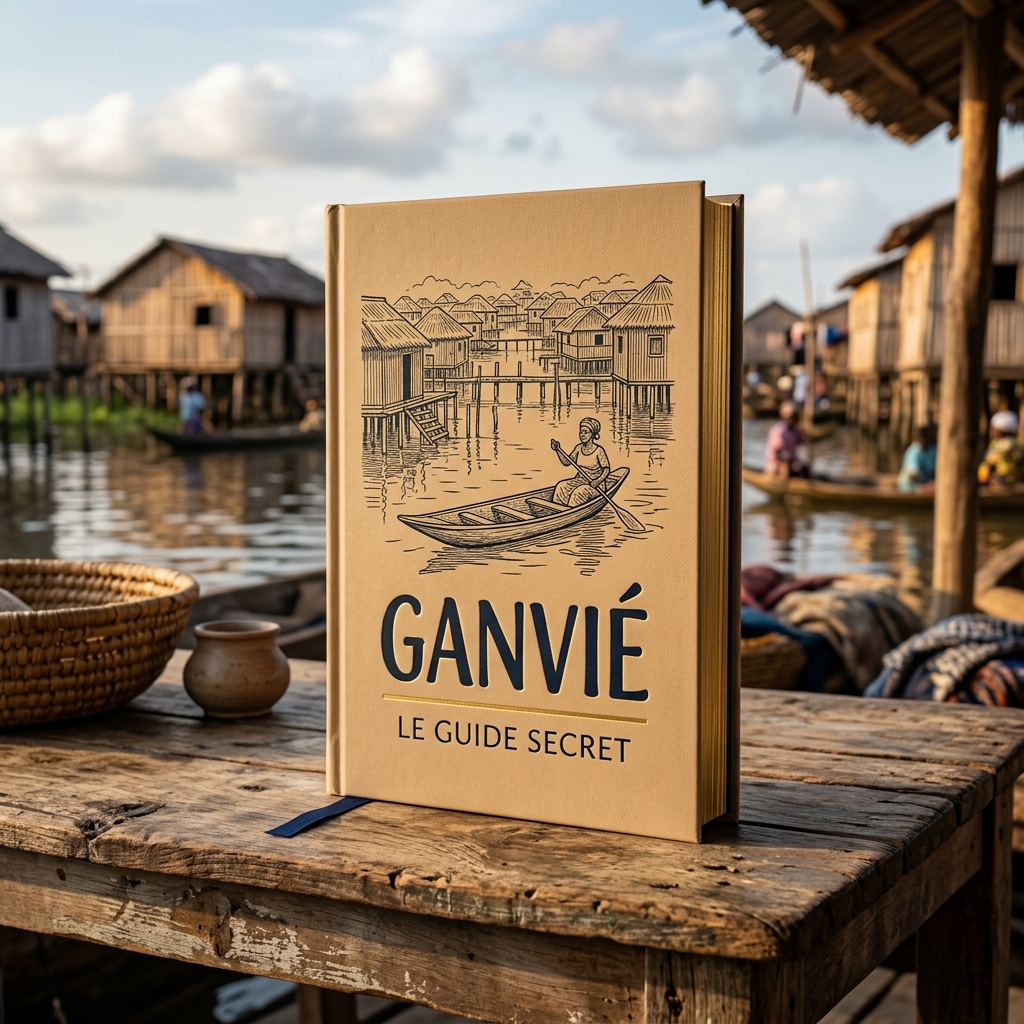
The Secret Guide to Ganvié: Hidden Gems & Etiquette
Discover the authentic Ganvié far from the tourist crowds. Download our exclusive PDF to prepare a respectful and unforgettable visit.
We respect your inbox. No spam.
The Visit Ganvié Team
Written by native Tofinu guides. We have navigated Lake Nokoué since childhood to share the true history of our city, far from tourist traps.
Related articles
Lake Nokoué: ecosystem, birds and aquatic life
Lake Nokoué is a rich ecosystem hosting hundreds of bird species, fish and aquatic plants. An ornithological and ecological guide around the lake city of Ganvié.
supportGanvié's floating schools: education on Lake Nokoué
Discover Ganvié's floating schools: how Tofinu children cross the lake by pirogue every morning to reach their stilt classroom, and the unique challenges of education in a lake city.