
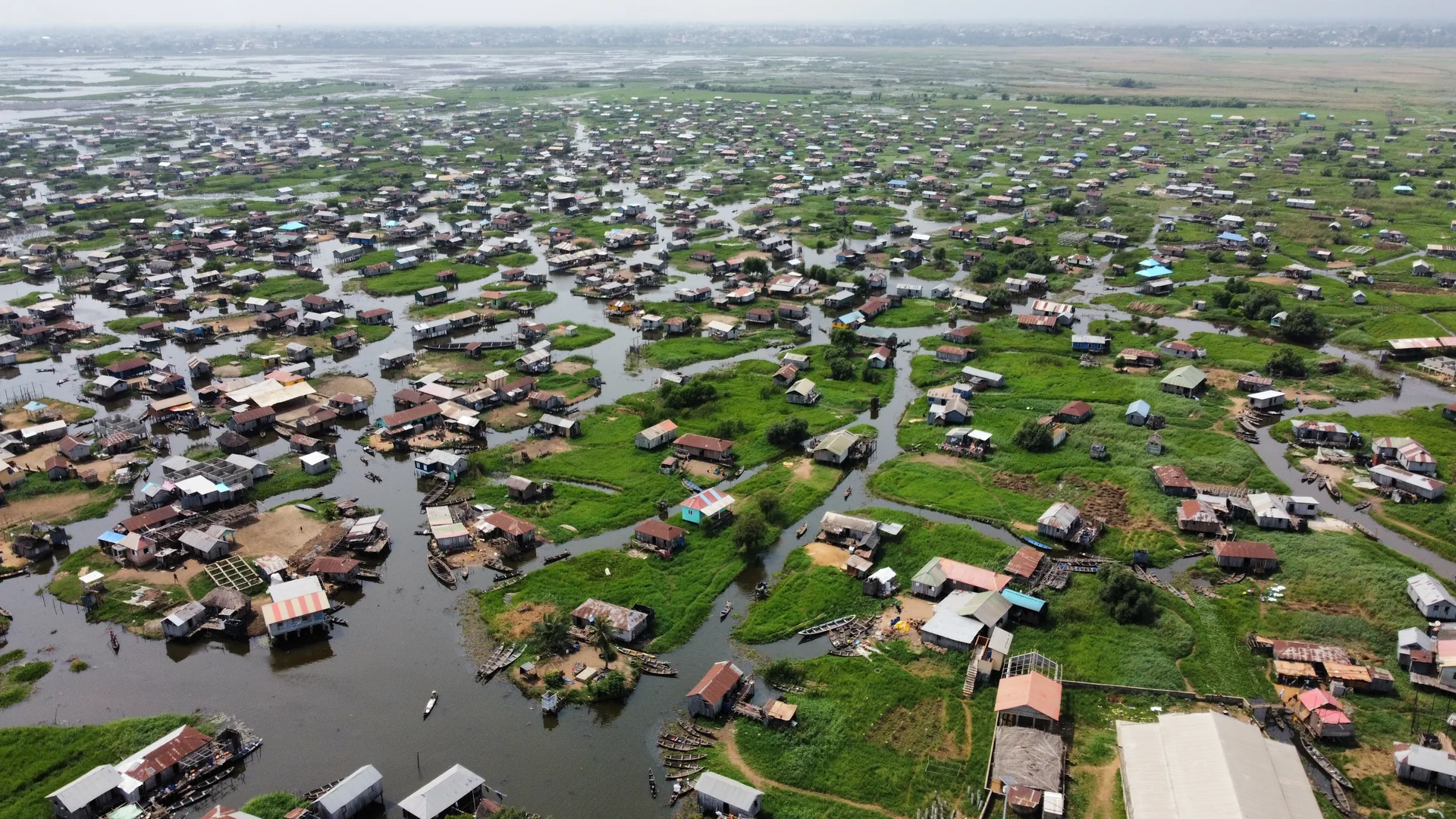
Is Ganvié as extraordinary as they say? Honest assessment between unique beauty, on-the-ground reality, and practical tips to make the visit worth your time.
You've seen the photos. Pirogues on still water, stilt houses rising from the lake surface, women at a floating market under a golden sky. You've probably read the phrase "Venice of Africa" in three different travel blogs. And you're asking the question those blogs never quite answer: is Ganvié actually worth the trip?
The honest answer is yes — but with conditions. What makes Ganvié extraordinary is not the same thing most travel content shows you. And what might disappoint you is rarely what you'd expect.
What is genuinely extraordinary about Ganvié
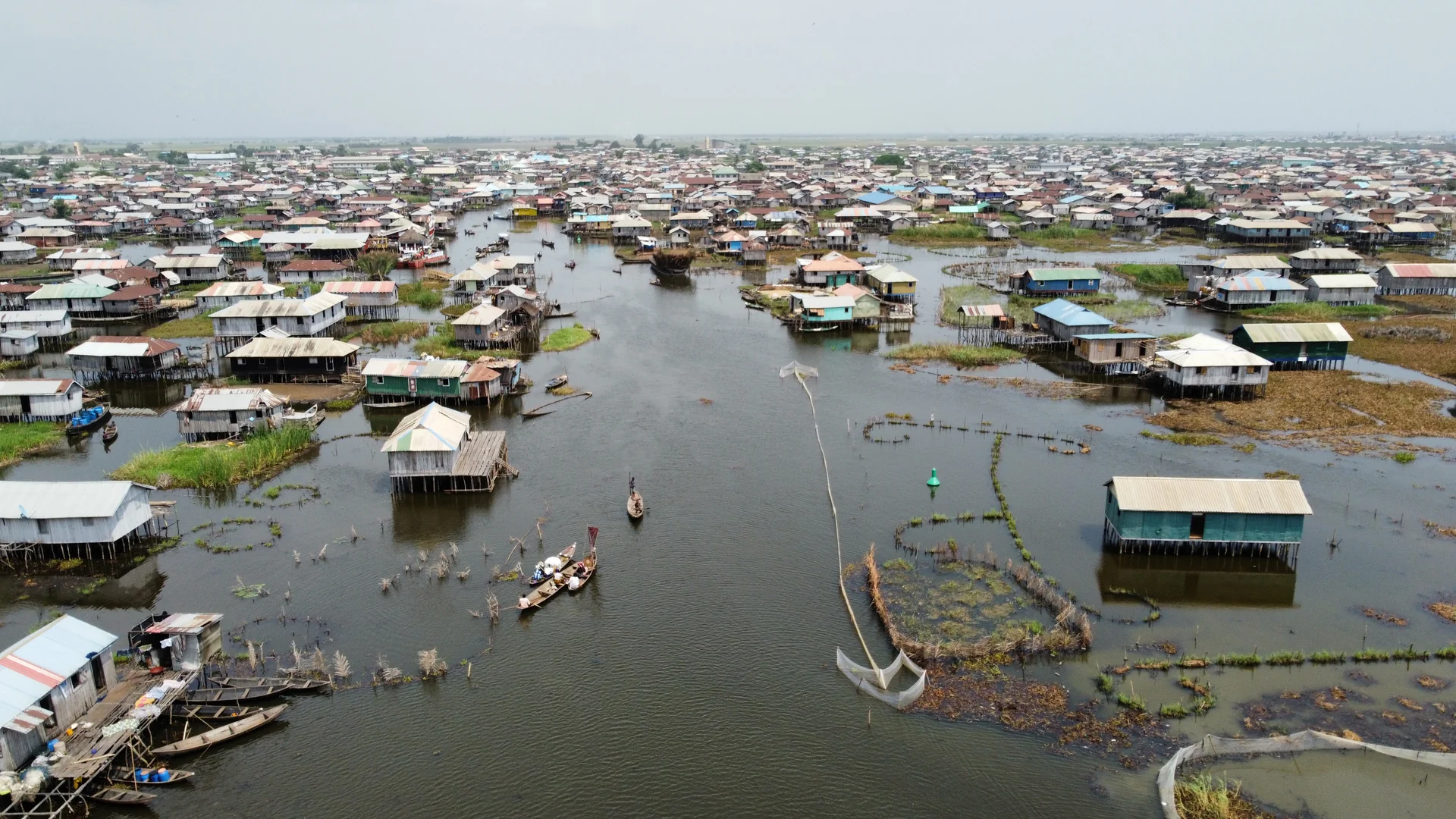 Start with the scale. Ganvié is not a village of a few hundred people preserved for tourist visits. It is a functioning city of over 30,000 inhabitants, built entirely on stilts in Lake Nokoué, with no streets, no cars, and no dry land inside its boundaries. Schools exist on platforms above the water. The floating market operates seven days a week because 30,000 people need to eat, and the lake is their only supply chain. Children paddle their own pirogues to school.
This is not a reconstruction. It is not a living museum. It is a city that exists this way because its founders, the Tofinu people, chose the lake over 300 years ago as protection against the slave raids of the Kingdom of Abomey — and their descendants have simply kept building on that choice ever since.
The floating market, especially in the early hours before 8 AM, is the most striking thing most visitors encounter. Dozens of pirogues loaded with produce, fish, fabrics, and household goods converge on the same area of the lake. Women negotiate loudly from one boat to another. Children sell fritters from smaller pirogues. The smell of smoked fish and wood smoke mixes with the lake air. None of this is staged. The vendors are not selling to tourists — they're supplying a city.
That is the core of what makes Ganvié worth visiting. You are observing, briefly, a way of organizing a human community that has almost no equivalent anywhere in the world at this scale.
What actually disappoints travelers
Let's talk about the embarcadère at Abomey-Calavi first, because most reviews skip it. The departure point for pirogues to Ganvié is a busy, chaotic transit area on the edge of Cotonou's northern sprawl. It is not picturesque. Touts will approach with offers of guide services, better pirogues, special prices. The noise and pressure can feel like a lot before you've even left for the lake.
The crossing itself is beautiful — roughly 30 to 45 minutes on open water, depending on where you're heading on the lake. But if you arrive at the embarcadère without a plan, without a pre-booked guide, or in the middle of the afternoon heat, the experience starts on a difficult foot.
The source of 90% of negative reviews
When reading disappointed reviews on TripAdvisor or Google, you'll notice a common thread: they are almost always from "DIY" travelers who suffered the chaos of the pier, fake guides, and scams. With our Premium Tours, you bypass all of this with a private transfer and a certified guide booked in advance. It completely changes the experience.
Once on the lake, the other common disappointment is the speed of a typical day excursion. Tour boats from Cotonou tend to do a fast circuit: market, main canal, one or two photo stops, back to the embarcadère. An hour and a half on the lake, sometimes less. That pace gives you the surface. It doesn't give you the city.
Some visitors also mention the visible pollution in certain canals — plastic waste caught against the stilts, particularly near the busiest residential areas. Ganvié deals with the same waste management challenges as any densely populated area without truck access. It doesn't diminish the experience, but it is real, and the aerial photos don't show it.
Finally, accommodation expectations. If you stay overnight — which you should, more on that shortly — know that lodges on the lake are basic. Solar electricity until around 10 PM, bucket showers, mosquito nets, and plank floors. There is no resort on Lake Nokoué. There is not going to be.
The truth about photos versus reality
Ganvié photographs beautifully from the air and from slow-moving pirogues in good morning light. Those images represent something real — that quality of light on the water, those compositions of stilts and sky, do exist. You can recreate them if you're there at the right time with some patience.
What the photos leave out is the context in which they exist. The woman you photograph paddling a pirogue loaded with tomatoes is doing her morning logistics run, not posing. The children diving between pirogues are cooling off after school, not performing. The moment you realize this — that you are inside someone's working city, not standing in front of a backdrop — the experience changes entirely.
That shift from postcard to real place is where Ganvié either works for you or doesn't. Some visitors feel it as presence and privilege. Others feel it as intrusion. Your reaction will tell you a lot about whether you're the right kind of traveler for this destination.
Who Ganvié is genuinely for
This destination suits travelers who are genuinely curious about how people live differently, not just what different places look like. It is for people who can accept physical inconvenience — a long pirogue ride, basic accommodation, market fish eaten with their hands — as part of the experience rather than something to be managed around.
It works particularly well for families with children over the age of six or seven. The pirogue crossing, the floating market, the sight of fish being caught and prepared, and the novelty of a city without streets produce exactly the kind of formative travel experience that children absorb differently than adults. It is educational without being labeled that way.
It is also excellent for photographers, with one important caveat: your subject is not a location. It is people at work in their daily lives. The ethics of photography at Ganvié require asking before pointing a lens at anyone, and often buying something from whoever you want to photograph. This is not a creative constraint — it produces better work, because it gives you access to people's actual faces rather than the turn-away postures you get when someone feels photographed without consent.
Ganvié is not for travelers who need reliable comfort infrastructure, a clear itinerary, or a separation between tourism and the lived reality of the place. If you want to be a visitor rather than a participant, the gap between expectation and reality will be wider than it needs to be.
Day trip versus overnight stay: a genuinely different experience
Most people who visit Ganvié come on a day excursion from Cotonou. They leave around 7 or 8 AM, cross the lake, spend one to three hours on the water, and return by noon or early afternoon. This is the default option, and it is better than not going.
But staying overnight is a categorically different visit.
When the day-trip pirogues return to Abomey-Calavi in the afternoon, Ganvié quiets. The motor noise disappears. The canals clear. The city's own rhythm reasserts itself — children swimming off the platforms, men repairing nets by lamp light, the smell of evening cooking drifting across the water. You hear the lake in a way you cannot during the day.
The other thing overnight access gives you is the market at 4:30 AM. The bulk fish market — where fishermen sell their night's catch to retailers — happens before sunrise. It is loud, lamplit, chaotic in a completely different way from the daytime market, and it is entirely closed to anyone who isn't already on the lake. No day-trip schedule can reach it.
Our guide to sleeping on the water in Ganvié covers lodges, prices, and what to expect practically. The price difference between a day trip and an overnight package is not large. The experience difference is substantial.
How to make Ganvié worth your while
Go early. The embarcadère departure by 6:30 AM puts you on the lake during the floating market's best hours. An 8 AM departure puts you on the lake as the market winds down and the light becomes harsh.
Book a guide who lives on the lake. The difference between a guide who commutes from Cotonou and one who was born and raised on the water is immediate and significant. Local guides know which families will let you watch them work, which canal routes pass through residential areas rather than just tourist circuits, and what the city actually looks like from inside rather than from a tourist's viewing angle.
Take time to stop. The pirogues don't have to be moving the whole time. Ask your guide to moor near the market for 20 minutes and just watch. Buy something from a vendor. Drink tea on a stilt-house terrace if someone offers. The best moments at Ganvié are not moving moments.
Stay overnight at least once. If budget allows, structure one night on the lake into your Benin itinerary. The overnight version of Ganvié is the version that stays with you.
Lower your expectations for infrastructure, raise them for experience. The road to Abomey-Calavi is not scenic. The embarcadère is not organized. The pirogue crossing can be hot and slow if the outboard motor needs attention. None of that is the visit. The visit starts when you're on the water.
Common questions from travelers on the fence
Is Ganvié safe? Yes. Lake Nokoué is calm water and the crossing is straightforward. The embarcadère can feel overwhelming on first contact, but petty crime is not a significant concern and the community on the lake is accustomed to visitors. Standard travel precautions apply: don't display expensive equipment unnecessarily, carry only the cash you need for the day.
Can you visit Ganvié independently without a guide? Technically yes — you can hire a pirogue at the embarcadère and visit without a guide. In practice, the visit is significantly shallower without local knowledge. A pirogue operator will take you around the main routes. A guide who lives on the lake will take you into the places that aren't on any tourist circuit.
How long should you spend in Ganvié? A minimum half-day from Cotonou is the floor. A full day is better. An overnight stay is the version that gives you the city rather than a highlight reel. For Benin itineraries of less than five days, even a half-day in Ganvié is worthwhile. For longer trips, the overnight stay makes sense.
Is Ganvié appropriate for older travelers or those with mobility limitations? Getting in and out of a pirogue requires some physical agility, and the market visit involves sitting in a moving boat for extended periods. The wooden walkways between stilt houses are narrow and uneven. If mobility is a concern, discuss this specifically with your guide when booking — some routes and configurations are more accessible than others.
Is it expensive? Relative to most Benin tourism, no. A half-day guided excursion including pirogue transport typically runs 15,000 to 25,000 FCFA per person, depending on group size and season. An overnight stay at a family lodge adds 20,000 to 40,000 FCFA including dinner and breakfast. Combined, a full Ganvié experience costs less than a mid-range hotel night in Cotonou.
The verdict
Ganvié is worth visiting. Not because it's what the photos show, but because what the photos can't show — the functional reality of a city that has been living on water for three centuries — is more interesting than the visual surface.
Go with realistic expectations about access, infrastructure, and your own role as a visitor in someone else's city. Go early. Get a guide from the lake. Stay if you can.
The travelers who leave disappointed are mostly those who came looking for a postcard. The travelers who leave transformed are the ones who came curious about how it actually works.
Discover our guided tours with native Tofinu guides and see our complete Ganvié visit guide for logistics and practical preparation.
Ready to discover Ganvié for yourself?
Guided tour with a native resident. Fixed prices, no surprises.
The Secret Guide to Ganvié: Hidden Gems & Etiquette
Discover the authentic Ganvié far from the tourist crowds. Download our exclusive PDF to prepare a respectful and unforgettable visit.
We respect your inbox. No spam.
The Visit Ganvié Team
Written by native Tofinu guides. We have navigated Lake Nokoué since childhood to share the true history of our city, far from tourist traps.
Related articles
Tipping in Ganvié & Benin: How Much Should You Tip Tour Guides and Boat Captains?
Should you tip during your tour of Ganvié? Discover local customs, recommended FCFA tip amounts for guides and boat drivers, and how to express gratitude respectfully.
supportSafety & Health in Ganvié: Mosquitoes, Life Vests & Family Travel Guide
Visiting a water stilt village raises natural questions about boat safety, mosquitoes, and health. Discover expert safety tips for traveling to Ganvié with complete peace of mind.