
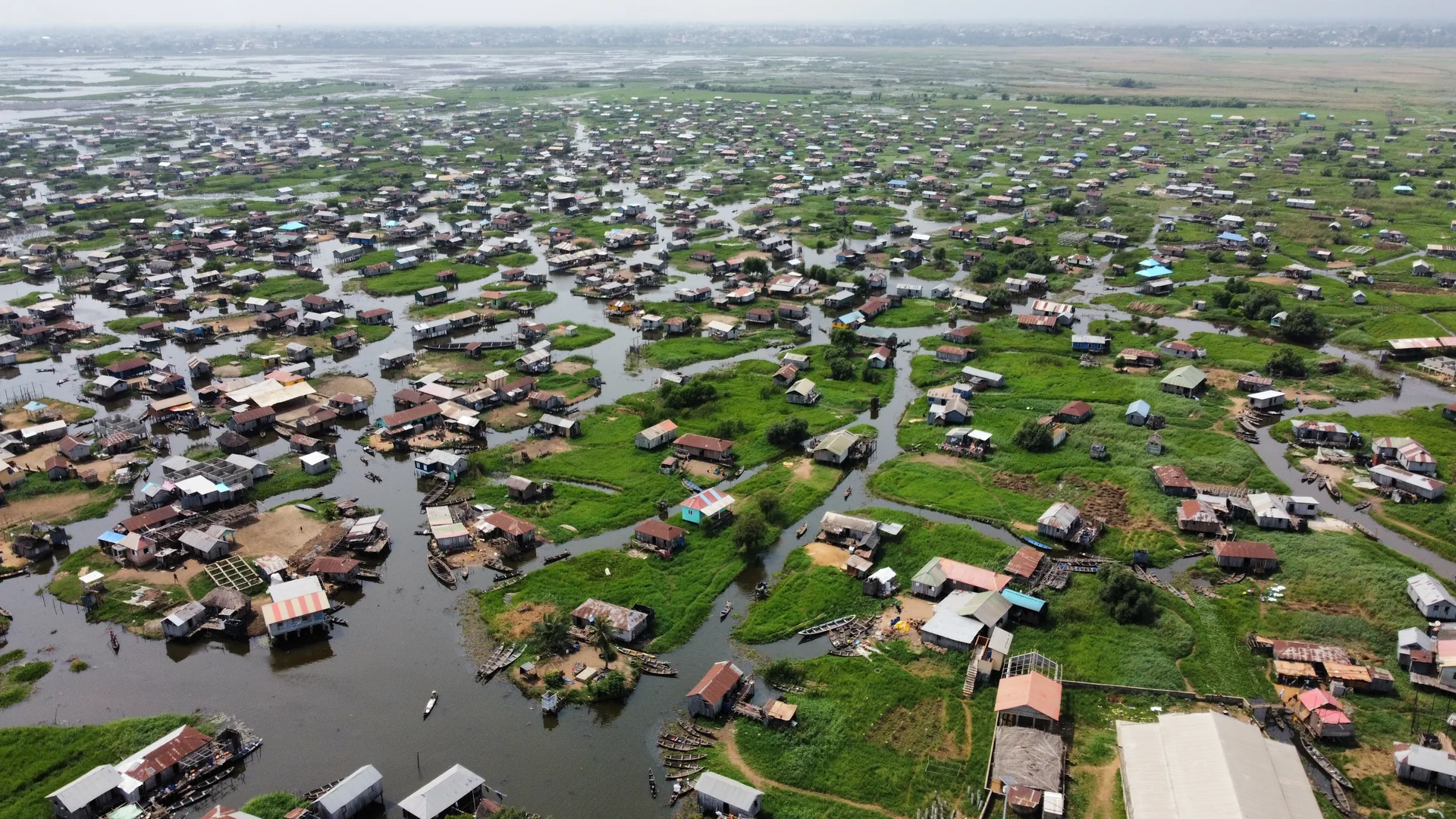
A king who turns into a hawk, then a crocodile, and founds Africa's largest stilt village. The true founding legend of Ganvié, corrected from historical confusions.
A man arrives alone at the edge of a lake. Behind him, warriors. Ahead of him, water that none of his pursuers will dare to cross. Agbodogbé is the Tofinu king who, according to oral tradition, founded Ganvié in 1717 by first transforming into a hawk to scout for habitable land, then into a crocodile to carry his people across the water. This legend, passed down for three centuries by the guides and elders of the stilt city, explains why Ganvié still exists today at this precise spot on Lake Nokoué.
The story does not stop at magic. It tells of a survival strategy against the slave raids of the Kingdom of Dahomey, and a rule of war that no one at the time would have thought could be turned against its authors.
Why Ganvié exists: the law that forbade war on water
In the early eighteenth century, the armies of Dahomey intensified their raids on the coastal villages of what is now southern Benin. Their goal was simple and brutal: capture men and women to sell to the European slave traders stationed at Ouidah. The land villages had no way to resist. The slave raiders had weapons, numbers, and an already well-established trade route to the coast.
One rule, however, escaped the Dahomey soldiers. Their military tradition forbade them from fighting on water. This was not a tactical weakness but a religious belief deeply embedded in the kingdom's warrior culture. The Tofinu, a people who then lived along the shores of Lake Nokoué, eventually understood that this prohibition could become their only escape.
Settling on the water was not an aesthetic choice or an architectural whim. It was the one frontier the enemy would never cross, and therefore the only survival option for a people who could not compete militarily with Dahomey.
This military logic predates the legend of the magic king. It explains it. Before Agbodogbé became a crocodile, an entire people first had to collectively decide that the water was better than the land. That initial choice, more political and strategic than mystical, is often glossed over in the shortest tourist versions of the story. Yet it is what makes the legend credible: it did not emerge from nowhere, it responded to a real and well-documented threat.
Agbodogbé, the hawk who searched for the promised land
The most consistent account across oral sources places Agbodogbé's arrival at the edge of the Cotonou lagoon in 1717. He was fleeing, like his people, from tribal wars and the threat of deportation to the slave forts on the coast.
This Tofinu king, regarded today as the founding king of Ganvié, was not a chief like any other. The transmitted accounts describe him as powerful in voodoo, capable of mobilizing forces that his adversaries could neither understand nor anticipate. Fidèle Degni, a Tofinu descendant native to this lake region, recounts the scene directly: his people arrived with their king Agbodogbé at the edge of the lagoon, fleeing deportation into slavery. This king transformed into a hawk to fly over the lagoon in search of land to settle.
Seen from the sky, Lake Nokoué offered an advantage no one had yet exploited: its shallow waters, submerged sandbanks, and tiny islands invisible from the shore. A patch of land spotted, but inaccessible to ordinary men, separated from dry land by a stretch of water that no one at the time would have thought to cross with an entire people.
This is where the legend takes its most famous turn.
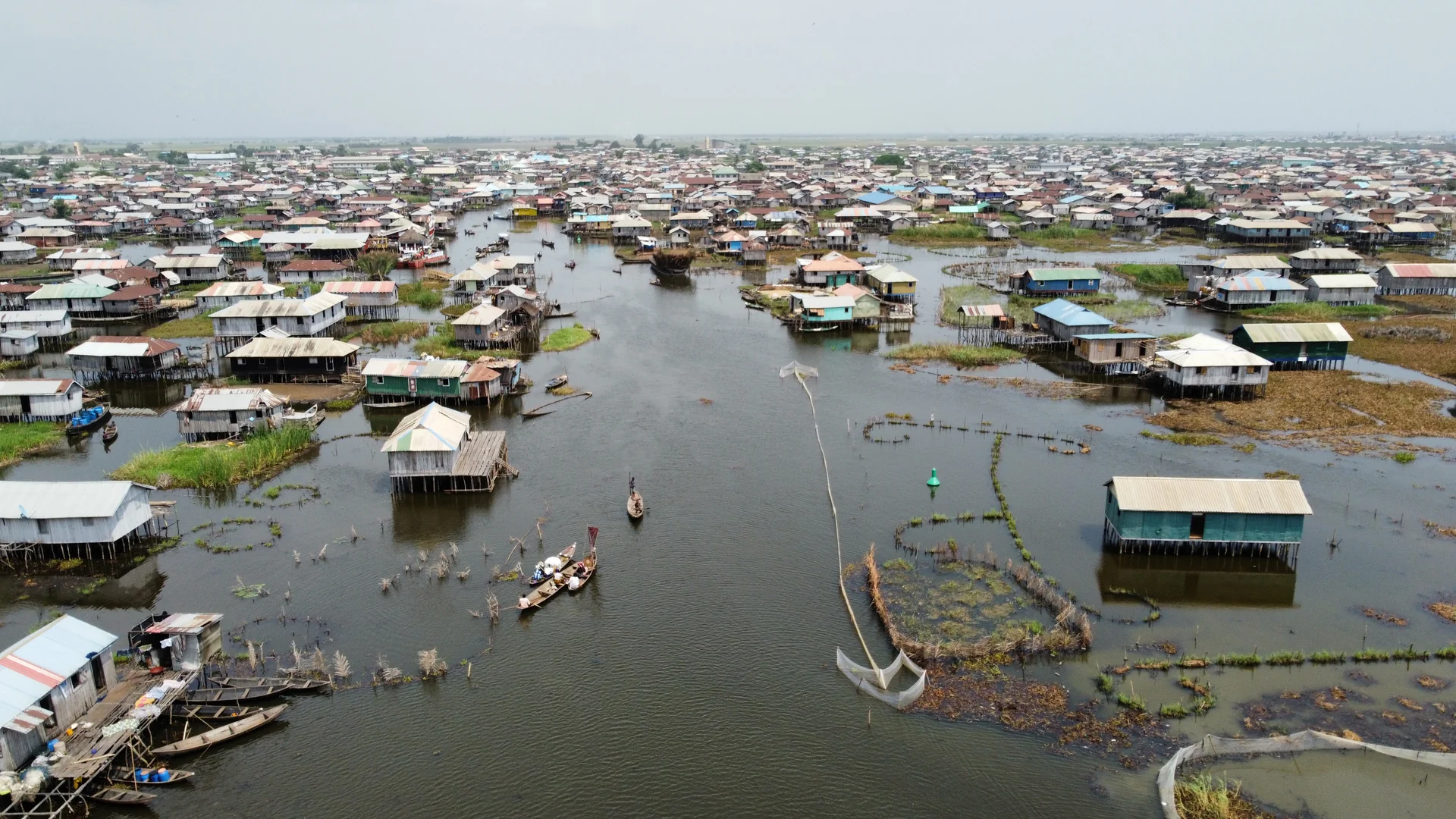
The metamorphosis into a crocodile and the crossing of the Tofinu people
Agbodogbé returned to human form, but his companions left on the shore did not possess his power. They could not fly. They could not swim long enough to reach the spotted island either, especially with children, belongings, and elders too frail to swim across.
The king then transformed into a crocodile. He carried his people on his back, crossing after crossing, until everyone reached the promised land. Each round trip brought the entire community closer to the safety that no dry land could still guarantee.
This second act of the legend gives the crocodile a special place in Ganvié's culture that persists to this day. The reptile becomes sacred, a protector rather than a predator, sealing an alliance that the inhabitants have honored for three centuries. You do not hunt crocodiles at Ganvié. You respect them as you would respect an ancestor who literally enabled the survival of everyone who came after.
The legend does not describe a conquest. It describes a debt, passed from generation to generation in the form of respect rather than a story frozen in a book.
Ganvié, a name that means survival
The name of the village directly bears the trace of this founding. Translations vary slightly depending on the source, but they all converge toward the same idea: a people who escaped the worst.
Some sources translate Ganvié as "finally safe" in the Tofinu language. Others, drawing on the Fon language, render it as "community saved" or "we survived." The nuance between these translations likely stems from dialectal variations and the oral transmission of the name across generations, rather than any real contradiction.
One word. Three formulations. One story behind them.
It is no coincidence that such a loaded toponym continues to be spoken, told, and passed on. A place name that means "we survived" does not easily fade from collective memory, even three centuries later.
A legend, two spellings: Agbodogbé or Agbogdobé?
Anyone who tries to document this history seriously will quickly encounter a persistent spelling variation. Some sources write Agbodogbé, others Agbogdobé. A third variant, Agbogboé, appears more sporadically, likely a transcription error rather than a distinct form.
This instability is not surprising for a name transmitted orally for more than three centuries before any systematic written fixation. The Tofinu and Fon languages had no standardized orthography when this story took shape. Each transcriber, whether researcher, journalist, or tour guide, made a slightly different phonetic choice.
Both spellings refer to the same figure, the same story, the same date of 1717. This is not a historical contradiction. It is a visible trace of the oral tradition itself.
The statue on the royal square, living memory of Ganvié
This story is not merely a tourist anecdote repeated for passing visitors. A commemorative statue of the founding king stands on Ganvié's royal square, at the very heart of the stilt city. It gives physical form to a narrative that would otherwise remain purely oral.
This is precisely what Jean, a tour guide at Ganvié for many years, conveys when he tells this story to the visitors he accompanies on the lake. He places the king's arrival in 1717, describes his power in voodoo, his transformation into a hawk and then a crocodile, and the sacred alliance that follows with the reptile.
This testimony matters for a simple reason. Jean is not reciting a legend he read in a tour guide printed in Paris. He is passing on a story he himself received, on site, in the continuity of an oral tradition transmitted from guide to guide, generation to generation.
That is the difference between reading a story and receiving it from someone who received it before you.
Hear the True Story
Many "low-cost" tours settle for reciting a 3-minute memorized summary (and often confuse the historical kings). By booking one of our Premium Tours, you are accompanied exclusively by native Tofinu guides. They didn't read this story in a book; they grew up with the oral tradition. They will take the time to explain the deep connections between the lake, Vodun spirituality, and the survival of our community.
Book a Native Tofinu Guide
Discover the history of Ganvié told by those who were born there.
Tê-Agbanlin is not the founder of Ganvié: clearing up the confusion
A confusion circulates regularly online, including on otherwise serious tourism sites. It deserves to be clearly corrected, because it attributes to one king a foundation that is not his.
Tê-Agbanlin is the founder of the kingdom of Xogbonu, which later became Porto-Novo, the current capital of Benin. His personal history is rich and well documented elsewhere: heir to the kingdom of Allada in the eighteenth century, he moved south after a succession conflict with his brothers Medji and Aho Daco-Donu, founded his own kingdom on lands then occupied by Yoruba populations, and ruled for several decades until his death.
His migratory route did indeed pass through several localities, including Ganvié, before he reached his final destination at Porto-Novo. The accounts of his migration also mention Calavi, Godomey, and other lakeside villages. But passing through a place is not founding it. Ganvié was merely a stop on his journey south, not his arrival point or the seat of his power.
The geographical and temporal proximity between the two stories probably explains the confusion. Same century, same region, same dynamic of flight from the dynastic conflicts of Allada and Dahomey. It was easy, at some point in the transmission of these stories on less rigorous travel blogs, to mix up the two royal figures.
Agbodogbé founded Ganvié. Tê-Agbanlin founded Porto-Novo. Two kings, two kingdoms, two distinct founding legends that each deserve to be told without being conflated with the other.
Who were the Tofinu before the lake?
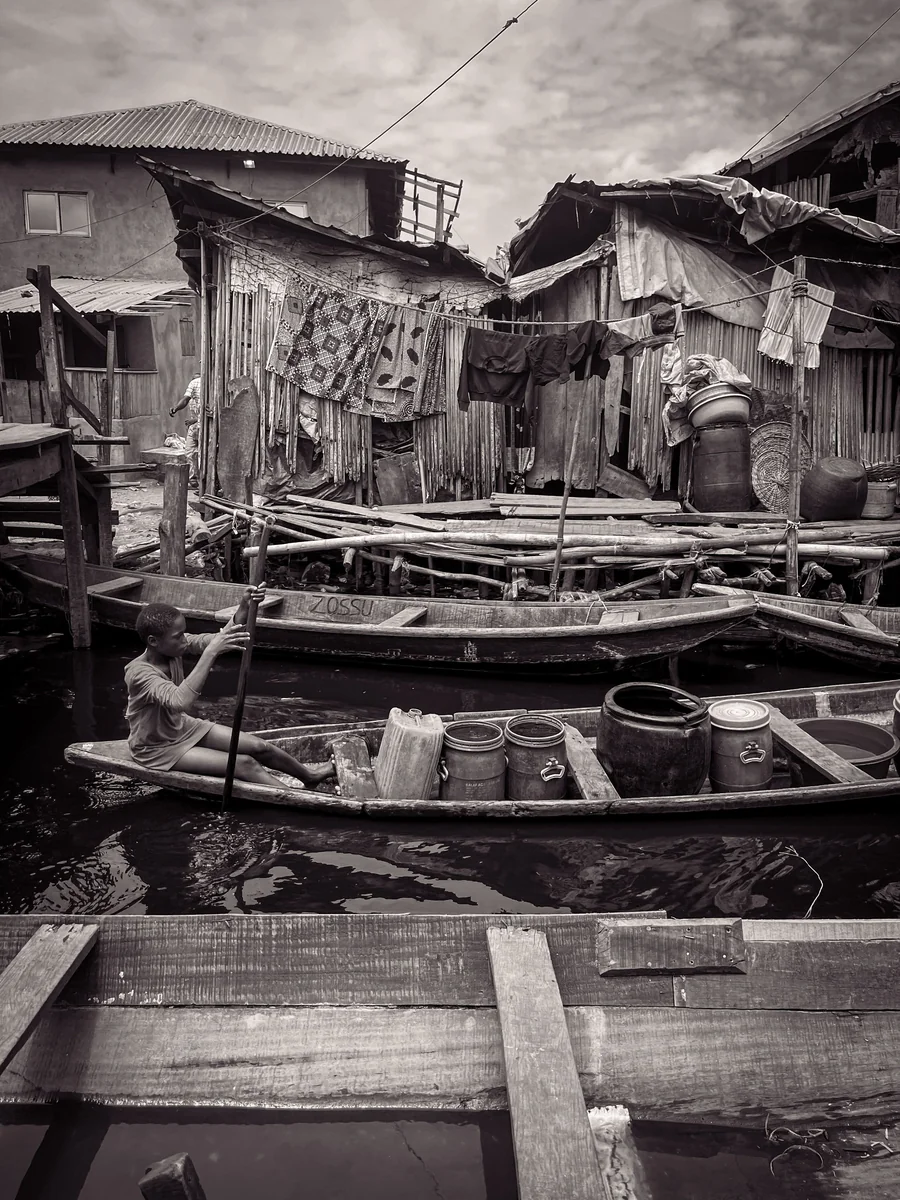
The legend of Agbodogbé is most powerful when read against the reality of who the Tofinu were before the founding moment of 1717.
The Tofinu were not nomadic refugees wandering the region in search of a home. They were a settled people with deep roots along the banks of the Sô River and the shores of Lake Nokoué. Before the slave raids intensified, they practiced a mixed economy: lacustrine fishing using techniques adapted to the shallow lagoon, small-scale agriculture on the riverbanks, and trade along the routes connecting the interior plateau to the Atlantic coast.
Their knowledge of the lake was precise and practical. They understood the seasonal variation in fish distribution, the depths of the different sectors, the behaviour of migratory species that moved between the lagoon and the ocean. They built pirogues suited to the shallow waters of the Nokoué. They knew how to navigate by stars and current at night. This knowledge was not incidental — it was the patrimony that made survival on the lake possible when land could no longer be held.
The Tofinu were also a people already accustomed to the symbolic relationship between their community and the water. The lake was not a hostile environment they were forced into. It was a place they already knew, already fished in, already used as a boundary and resource. The founding of Ganvié was not a leap into the unknown — it was the extension of an existing relationship into something permanent.
This context matters for understanding the legend. Agbodogbé's hawk transformation does not represent a random choice of direction. It represents the scouting ability of a people who already knew the lake well enough to identify which parts of it could support long-term settlement. The crocodile crossing was logistically extraordinary — but the decision to head for the water was a decision taken by people who knew what the water could offer.
The practical organization of life after the founding
The legend ends with arrival at the promised land. The harder story begins immediately after.
Building a permanent community on a lake in the early eighteenth century meant solving problems without precedent. There were no templates, no neighbouring communities that had done the same, no texts to consult. Everything had to be worked out through observation, trial and accumulated failure.
The wood question came first. Which trees could be planted in lake mud and hold a house for decades without rotting? The rônier palm, abundant along the lake shores, proved to have exactly the density and natural impermeability needed to resist the mud's chemistry. Its trunks could be driven into the lake bed by hand, using the body's weight and gravity, without any mechanical tool. A rônier post correctly set can last twenty to thirty years.
The freshwater question was equally urgent. Lake Nokoué is saumâtre — brackish, not drinkable. The early settlers organized regular pirogue journeys to collect fresh water from the mainland and from the Sô River, which they would need to continue for as long as the community existed on the lake. This dependency on the mainland for water — and for agricultural produce, wood, and other materials — shaped the Tofinu economy permanently: the floating market was not an aesthetic choice but a logistical necessity.
Food was the third constraint. The Acadja technique — planting branches in the lake bed to create artificial fish refuges where fish breed and concentrate — was not invented by the Tofinu, but they adapted and intensified it to feed a growing population with no farmland. An Acadja requires time to become productive: the first cycles of construction yielded little; the system delivers its full potential only after several months of maturation. The early settlers had to manage through a difficult transition period before their food production could become self-sustaining.
These practical solutions — the rônier post, the water supply route, the Acadja system — are the unglamorous engineering of the founding. They are absent from the legend but they are what made the legend possible.
What the legend of Agbodogbé tells us about real history
A legend is never just a legend. The story of Agbodogbé encodes a precise historical truth in symbolic form: a people identified the one flaw in their enemy's military system and exploited it until a flight became a lasting foundation.
The transformation into a hawk tells of scouting the terrain, a strategic skill before it was a mystical power. The transformation into a crocodile tells of the collective transport of an entire community toward safety, a logistical operation as much as a magical feat. The respect for the crocodile today tells of a debt of gratitude that has crossed the centuries without erasing itself, transmitted without interruption despite colonization, independence, and the massive arrival of tourism.
Ganvié, three hundred years later, counts tens of thousands of inhabitants spread across several kilometers of stilt houses. The school, the floating market, the canals that serve as streets: everything that visitors see today rests, ultimately, on a decision made by a fleeing people at the edge of a lake in 1717, under the authority of a founding king whom oral tradition transformed into a being half-human, half-animal.
The legend may have taken a mystical form over time. The decision that preceded it, however, had nothing magical about it. It was a matter of calculation, courage, and intimate knowledge of the terrain that neither the armies of Dahomey nor the slave traders of Ouidah ever managed to anticipate.
The sacred crocodile in contemporary Tofinu culture
The crocodile's place in Ganvié's living culture is among the most direct connections between the founding legend and the present.
In Tofinu vodun cosmology, the crocodile that carried Agbodogbé's people across the water is not merely a historical character. It is an ancestor — a being that entered into a binding relationship with the Tofinu at the moment of founding, and whose protection the community continues to honor. The crocodile is therefore not hunted, not feared, and not treated as a nuisance even when one is sighted in the lake near the stilt houses.
When a crocodile appears in the waters of Ganvié, the correct Tofinu response is calm acknowledgement rather than alarm. The animal is given space. No one approaches aggressively or attempts to drive it away. Elders who witness such an event may see it as a sign worth interpreting — a visit from an ancestral presence, or an indicator of the lake's state.
This attitude has practical consequences. The Tofinu have coexisted with the crocodile population of Lake Nokoué for three centuries without the systematic hunting campaigns that have eliminated crocodiles from most other inhabited lakesides in West Africa. The relationship coded into the founding legend has functioned, in practice, as a conservation mechanism — not through ecological policy, but through cultural prohibition rooted in a debt of gratitude.
Ganvié, three centuries on
Three hundred years after the events that the legend of Agbodogbé encodes, Ganvié counts tens of thousands of inhabitants spread across several kilometres of stilt houses, wooden walkways and canal-streets.
The school, the floating market, the pirogue as the universal mode of transport, the clan-based organization of space — everything that contemporary visitors see when they cross Lake Nokoué toward the stilt city is the direct continuation of decisions made under duress in the seventeenth and eighteenth centuries, refined across ten or twelve generations of people who were born on the water and will die there.
The founding legend remains alive because it does real work in the community. It explains the crocodile's sacred status. It grounds the Sakété's authority in a lineage that reaches back to Agbodogbé. It gives the name of the city — "we survived," in the most direct translation — a weight that no one who lives there has forgotten. A people who remember how close their ancestors came to being wiped out do not take their existence for granted.
Visiting Ganvié today means physically crossing the water that saved a people. The local guides, direct heirs to this memory, tell its details to those who take the time to listen rather than merely photographing the stilt houses from a moving pirogue.
This story never truly closes. Each new generation of guides tells it a little differently, with their own words, their own emphasis, their own details added or left aside. That may be the strongest proof that it remains alive, and not frozen in a history book that no one consults anymore.
The Secret Guide to Ganvié: Hidden Gems & Etiquette
Discover the authentic Ganvié far from the tourist crowds. Download our exclusive PDF to prepare a respectful and unforgettable visit.
We respect your inbox. No spam.
The Visit Ganvié Team
Written by native Tofinu guides. We have navigated Lake Nokoué since childhood to share the true history of our city, far from tourist traps.
Related articles
Why Ganvié is called the Venice of Africa — and why the name falls short
Where the nickname 'Venice of Africa' comes from, what it accurately captures about Ganvié, and why the comparison breaks down the moment you understand what this city actually is.
supportWho are the Tofinu people of Lake Nokoué
The Tofinu, water people of Benin, have built a unique society on Lake Nokoué over three centuries. Clan organization, fluvial economy, living traditions.
supportRazzias of Abomey: how Ganvié was born on the water
The military slave raids of the Dahomey kingdom forced the Tofinu to abandon dry land and seek refuge on Lake Nokoué in the 17th century. A survival choice that gave birth to Ganvié.