
Where the nickname 'Venice of Africa' comes from, what it accurately captures about Ganvié, and why the comparison breaks down the moment you understand what this city actually is.
Every travel article about Ganvié uses it. Every tour operator's website leads with it. The phrase "Venice of Africa" has attached itself to Ganvié so completely that it now precedes almost every other piece of information about the city — appearing before its history, before its 30,000 residents, before any mention of why it was actually built.
The name does something useful: it creates an instant visual reference for people who have never seen Ganvié. But it also flattens something that doesn't need a European equivalent to be understood. The comparison tells you Ganvié has water and canals. It doesn't tell you why the water is there, who built this city, or what keeps it standing after three centuries.
Where the nickname comes from
 Calling an African lake city "Venice" is not a recent invention of travel marketing. The comparison appeared in French colonial literature as early as the 1920s, when European explorers and administrators documented Lake Nokoué's communities. They were genuinely astonished — how could a city of thousands exist with no streets, no vehicles, no contact with solid ground? — and they reached for the only reference in their vocabulary that seemed to match.
Venice was, for educated French travelers of that era, the single Western model of a significant city built on water. The comparison was born not from architectural resemblance but from a cognitive need: how do you describe something without a European equivalent? You find the nearest equivalent and note the differences later.
The phrase gained momentum through the 1950s and 1960s as Benin (then Dahomey) developed an international tourism sector. Travel writers and guidebooks picked it up. Tourism agencies made it their headline. By the time West African tourism expanded in the 1970s and 1980s, "Venice of Africa" had become inseparable from Ganvié in any published source.
It is worth noting that the comparison was made about Ganvié, not by Ganvié. The Tofinu people who built and inhabit the city have their own name for it — Ganvié, which translates roughly as "community that survived" or "we are saved" — and their own framework for understanding what they built. The Venetian nickname came from outside, from a colonial gaze looking for a familiar reference point, and it stuck because it traveled well in European markets.
What the comparison accurately captures
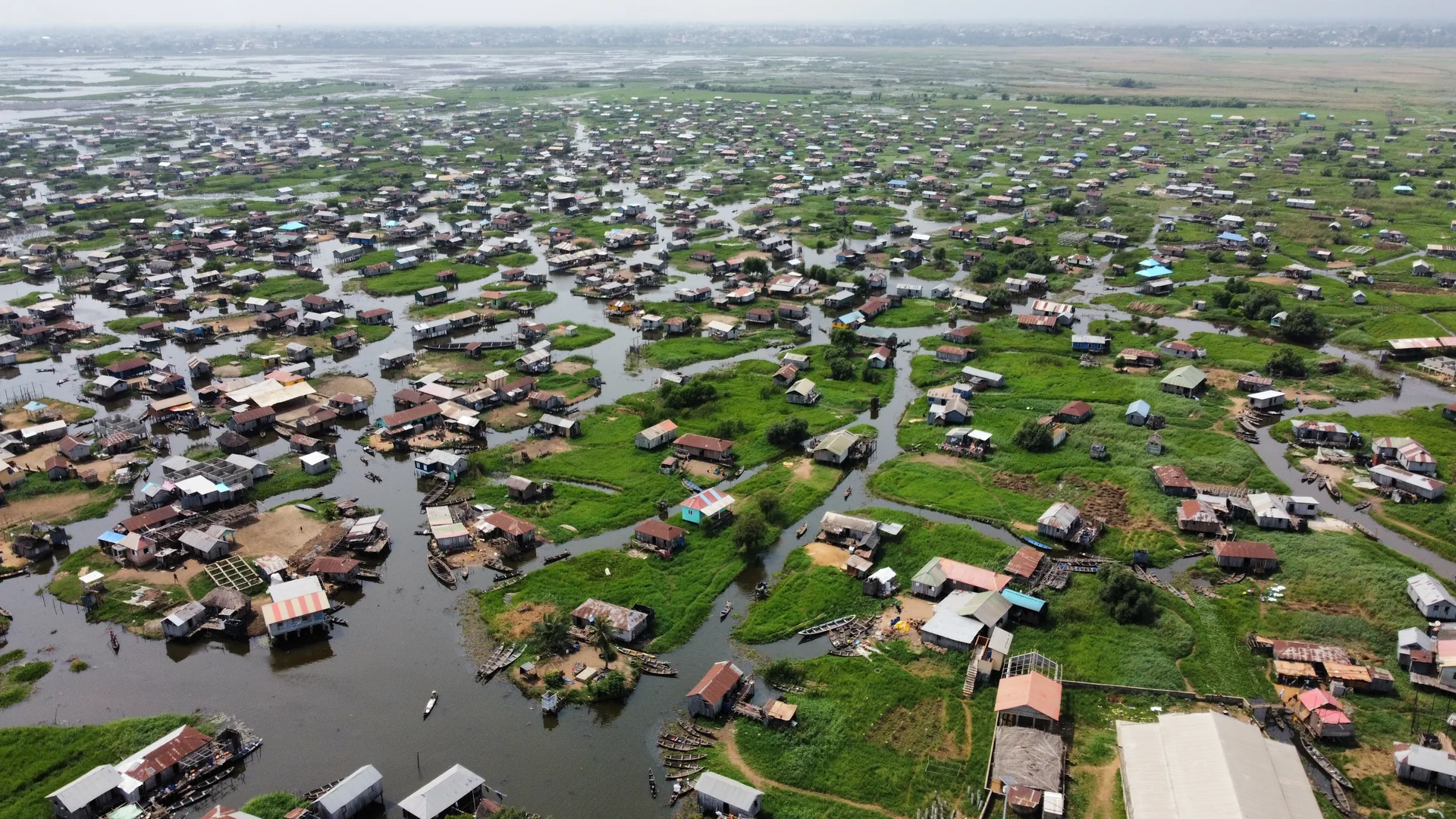
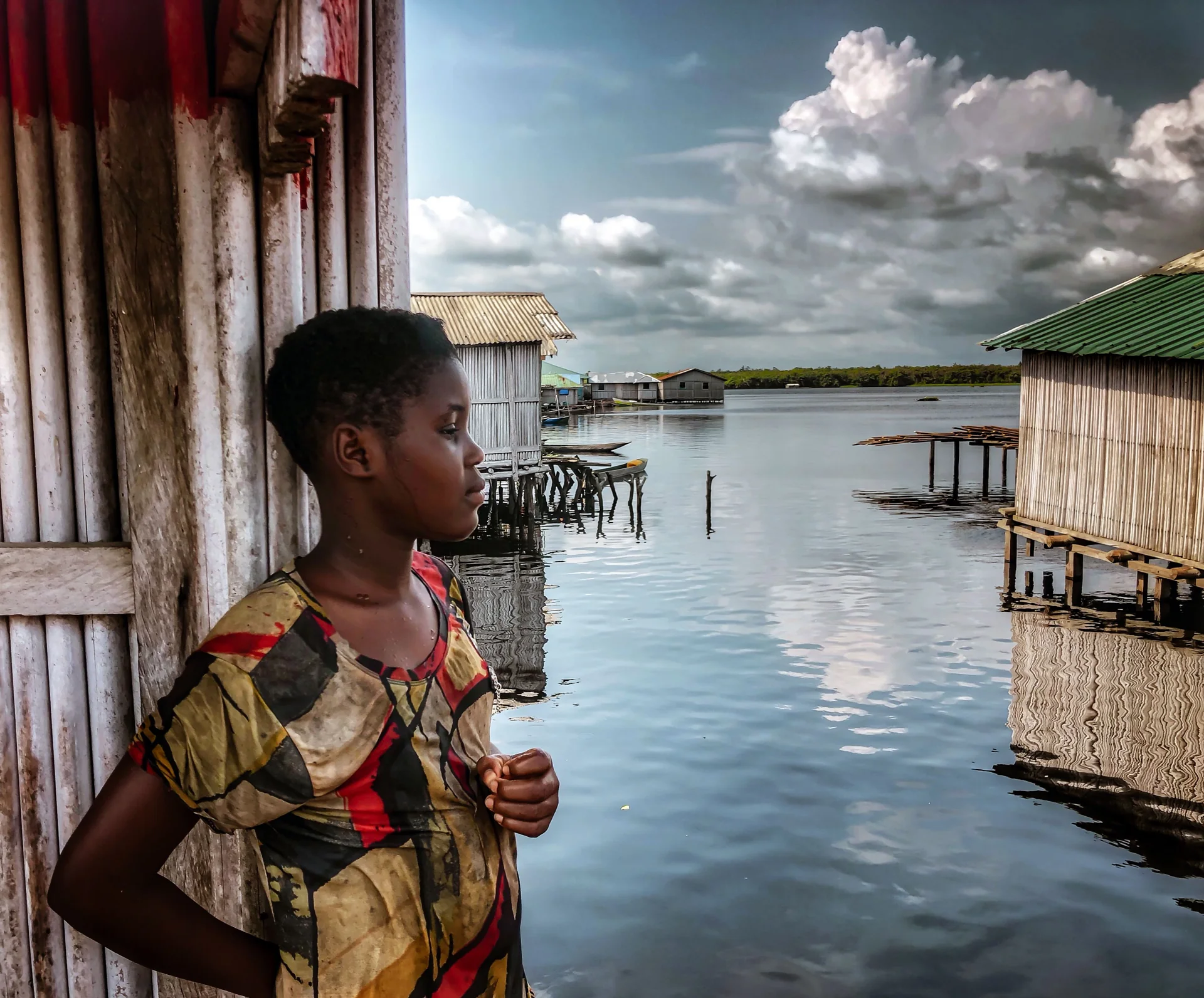
The visual parallel is real. Seen from the air or from a slow-moving pirogue, Ganvié does recall certain aspects of Venice. Canals instead of streets. Buildings that rise directly from the water. Boats as the primary mode of transport. A densely built urban environment where the architecture and the water system are inseparable.
The scale comparison also holds in one direction: Ganvié is genuinely large. With over 30,000 inhabitants spread across several kilometers of lake, it is not a village or a hamlet. It is a city, and it functions as one, with its own market, schools, places of worship, and internal economy.
The nickname also does one thing that matters for Ganvié's tourism economy: it creates a sense of significance before the visitor has any other information. "Venice of Africa" signals that this is not a minor attraction. It primes the visitor to expect something extraordinary, and on that point, it is not wrong.
Where the comparison breaks down
Venice was built over centuries by a republic with significant economic resources. It was constructed using stone, brick, and sophisticated engineering to create a permanent urban infrastructure. Its canals were designed partly for commercial traffic, partly for defensive purposes, and partly as architectural statement. Venice is a monument to ambition and wealth.
Ganvié was built by people fleeing for their lives.
In the early eighteenth century, the armies of the Kingdom of Abomey conducted systematic slave raids throughout southern Benin. Their military code, grounded in religious tradition, forbade combat on water. The Tofinu people discovered this prohibition and acted on it: if the enemy couldn't fight on water, the water was the safest place to live.
Building on Lake Nokoué was not an aesthetic choice. It was a survival strategy. The stilts were not architectural elegance — they were the only way to place a house above an enemy's reach. The canal system was not designed for gondoliers — it was the road network of a community that had abandoned land altogether to stay free.
This is a fundamentally different story from Venice's origin, and it produces a fundamentally different kind of city. Venice is built to impress. Ganvié was built to survive. The buildings of Venice are designed to be seen from the water as grand facades. The stilt houses of Ganvié are oriented toward function and community, not display. The two cities share a surface condition — water — while being organized around completely opposite founding logics.
Venice versus Ganvié: a concrete comparison
The differences compound when you move from origins to daily life.
Venice's economy has been dominated by tourism for decades. The city's resident population has been declining for a century and now stands at roughly 50,000, with huge seasonal swings driven by visitors. Its commercial life is largely organized around tourists. The locals are a minority in their own city for much of the year.
Ganvié's economy is rooted in fishing and trade. The floating market supplies the city's food and household goods. The Acadja fishing system — a sophisticated network of submerged branches that attract and concentrate fish — provides the city's primary protein source. Tourism exists as a secondary economy, not the primary one. The 30,000 residents of Ganvié are not living in a city organized for visitors; they are living in a city organized for themselves, and visitors happen to come and observe.
Venice's physical fabric is largely static — protected, preserved, photographed. Ganvié is dynamic. Houses are rebuilt when the wood rots. New platforms are added as families grow. The city's footprint on the lake changes slowly over time. It is a living construction, not a preservation project.
Venice has piazzas designed for social gathering, grand churches built over centuries, civic monuments that communicate political power. Ganvié has the floating market — the city's most important social space — which is fundamentally a marketplace and supply system, not a monument. Social life in Ganvié happens on the water, not in dedicated civic spaces.
The other "Venices" of Africa
Ganvié is not alone in carrying this nickname. Makoko, a stilt community in Lagos harbor, is sometimes called the "Venice of Lagos." Nzulezu in Ghana bears a similar label. Parts of the Niger Delta communities in Nigeria have received it. The phrase has been applied to lake and river communities across the continent wherever the visual surface condition — buildings above water — triggered the same European reflex.
Of these, Ganvié is the largest and the most continuously inhabited over the longest period. But the multiplication of the nickname reveals its limitation: it is a visual description, not a cultural one. It tells you what something looks like, not what it is, how it was built, or why it continues to exist.
The Tofinu perspective
There is no record of the Tofinu people adopting the Venice comparison for themselves. Their name for their city — Ganvié — encodes the founding experience directly: survival, not aesthetics. When local guides talk about the city, they talk about the history of the razzia escapes, about the king Agbodogbé who is said to have transformed into a hawk to scout the lake and a crocodile to carry his people across the water, about the sacred status of crocodiles in Tofinu culture as descendants of that founding act.
None of that appears in a Venetian framework. The comparison is, in a specific way, a culturally amputating description: it names the surface while erasing the meaning.
This doesn't make the nickname harmful — it's been absorbed into Ganvié's own tourism vocabulary, and local guides use it themselves when speaking to international visitors. But the guides who know the city best tend to use it as a door opener, then immediately move past it. "You've heard Venice of Africa — here is what that actually means."
What Ganvié is that no nickname captures
Three hundred years of continuous habitation on water with no access to mainland for daily life. A fishing economy built around a technology — the Acadja trap system — that represents one of West Africa's most sophisticated indigenous aquaculture techniques. A commercial culture organized almost entirely by women, who control the floating market and the trade networks that feed the city. A community that developed, without outside intervention, the logistics of birth, education, health, and death on water.
No comparison to another city captures this. Ganvié is not the Venice of Africa. It is not the Bangkok of Africa (another comparison sometimes made). It is Ganvié — a Tofinu lake city founded by people who refused enslavement and built their freedom on water.
The nickname opens a door because it creates recognizable visual expectations. What you find on the other side of the door has nothing to do with Venice.
Understanding Ganvié before you visit
The context of the city's founding changes everything about how you experience the visit. When you understand that the stilts are not decorative but structural necessities born from a survival strategy, the city looks different. When you know that the floating market is the only food supply system for 30,000 people who cannot drive to a supermarket, watching the pirogues negotiate and trade becomes something other than a spectacle.
For the full story of how Ganvié was founded, read our article on the history of Ganvié and the Tofinu people. For more on the founding king Agbodogbé, the legend of the hawk and the crocodile, and the slave raid history that produced the city, read our piece on Agbodogbé, the king who became a crocodile.
The Venice comparison will still come up — in guidebooks, at the embarcadère, in your own conversations about the trip when you get back. Use it if it helps someone visualize the setting. Then go past it.
Frequently asked questions
Who first called Ganvié the Venice of Africa? The comparison appears in French colonial literature from the early twentieth century, used by European explorers and administrators documenting Lake Nokoué's communities. It was not a name given by the Tofinu themselves — it came from outside, from travelers looking for a European reference point to describe something they had never seen before.
Is Ganvié really similar to Venice? Superficially yes: both are cities built on water where boats replace wheeled transport. But the origins, architecture, economy, and cultural logic are completely different. Venice was built as a monument by a wealthy republic. Ganvié was built as a survival strategy by a people fleeing enslavement.
Are there other lake cities like Ganvié in Africa? Yes. Makoko in Lagos and Nzulezu in Ghana are also sometimes called "Venice of Africa." Of these, Ganvié is the largest and has the longest continuously documented inhabitation.
How big is Ganvié? Over 30,000 inhabitants spread across several kilometers of Lake Nokoué. It is not a village but a city, with functioning schools, a market, restaurants, and a full range of community infrastructure — all on stilts above the water.
What does the name Ganvié mean? The name derives from the Tofinu language and translates roughly as "community that survived" or "we are saved" — a direct reference to the founding escape from the slave raids of the Kingdom of Abomey. Unlike the Venetian nickname, the name Ganvié encodes the city's actual history.
The Secret Guide to Ganvié: Hidden Gems & Etiquette
Discover the authentic Ganvié far from the tourist crowds. Download our exclusive PDF to prepare a respectful and unforgettable visit.
We respect your inbox. No spam.
The Visit Ganvié Team
Written by native Tofinu guides. We have navigated Lake Nokoué since childhood to share the true history of our city, far from tourist traps.
Related articles
Tofinu glossary: essential lexicon of lake life
Complete lexicon of Tofinu, Goun and Fon words to understand lake life at Ganvie. Housing, fishing, navigation, spirituality, cuisine: essential vocabulary before your visit.
edgeLake Nokoue before Ganvie: geography, origins and ecosystem
Before becoming the cradle of Ganvie, Lake Nokoue was a vast lagoon system teeming with fish. A look at the geographical origins and unique ecosystem of this exceptional lake.