
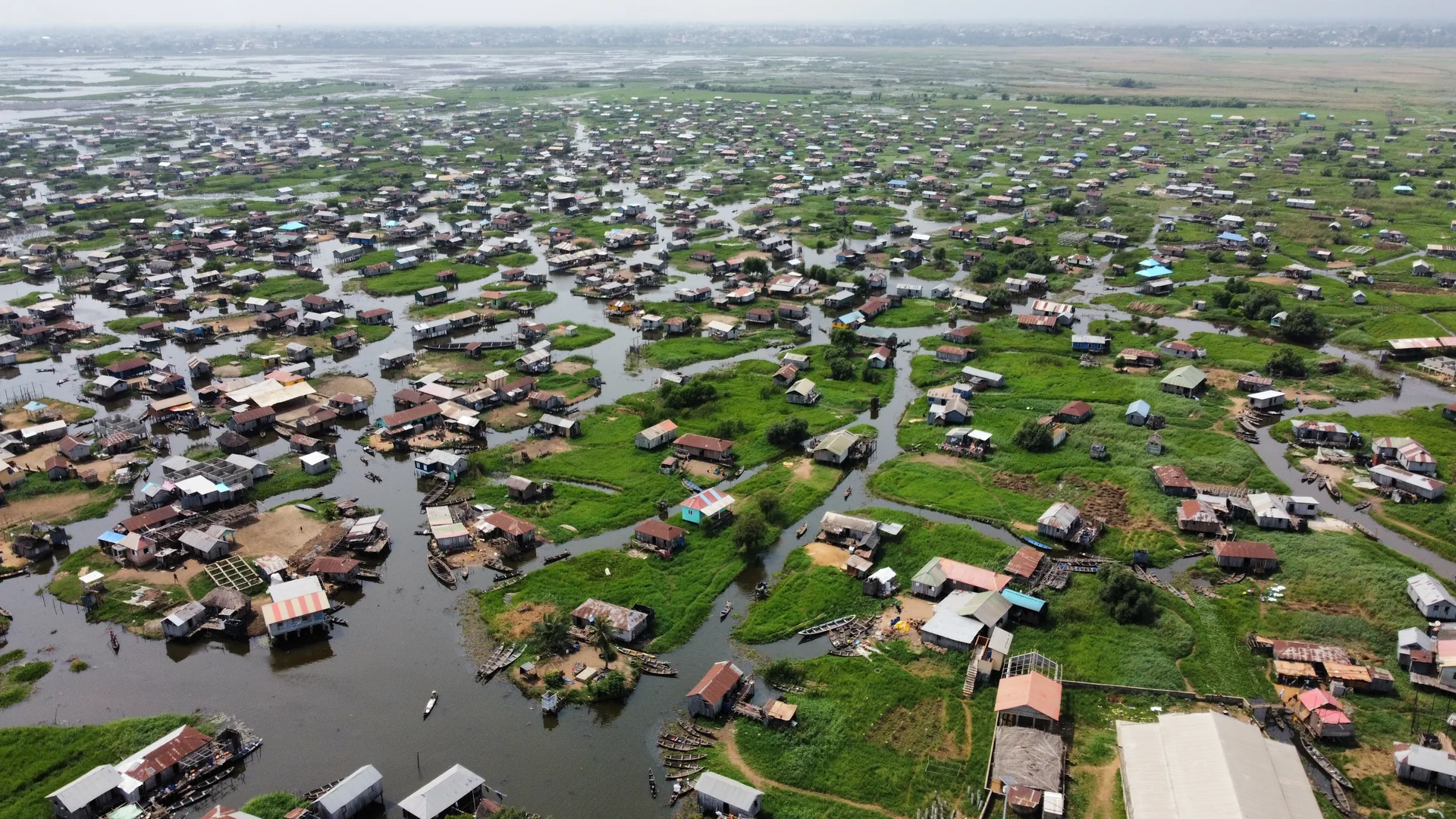
Ganvié has been on UNESCO's tentative list since 1996 but is still not a World Heritage site. Administrative delays, uncontrolled urban growth, environmental pressure and political hurdles explain why.
Ganvié has been on Benin's tentative list for UNESCO World Heritage status since 1996. Thirty years. Three decades since Africa's largest stilt village — founded in the 18th century by the Tofinu people fleeing slave raids — began waiting to join the circle of protected sites. Why the delay? What obstacles stand between Ganvié and World Heritage recognition?
The answer is layered. It involves administrative bottlenecks, environmental degradation, political shifts, and deeper questions about what it means to protect a living, breathing community.
The real status of Ganvié at UNESCO
 Before examining the obstacles, a clarification is needed. Many travel websites and articles claim Ganvié is a UNESCO World Heritage site. It is not. Ganvié sits on Benin's tentative list: a preliminary step before an official nomination. For a detailed explanation of this status, read our companion article: Ganvié and UNESCO: real status on the tentative list.
The tentative list is a promise. Benin commits to proposing Ganvié as a candidate. But the gap between a promise and a completed nomination is wide, and filled with challenges.
Obstacle 1: Administrative inertia
The first barrier is bureaucratic. Since 1996, the nomination file for Ganvié has never been finalized. Successive governments have come and gone, each with different priorities. Benin's Ministry of Culture, responsible for the dossier, has undergone repeated restructuring.
For a site to earn World Heritage status, the state must submit a complete application: a management plan, an authenticity analysis, a comparative study, and conservation commitments. This requires financial and human resources that Benin has not always been able to dedicate.
Preparing a UNESCO nomination costs an estimated 50,000 to 150,000 euros, with no guarantee of success. For a country with limited resources, this is a significant investment, especially when several Beninese sites compete for ministerial attention.
Obstacle 2: Uncontrolled urban development
The second obstacle is visible to anyone who visits Ganvié. Between 20,000 and 40,000 people live here, building, expanding and renovating their homes without any coherent urban plan. Traditional wooden stilts share space with corrugated iron roofs. Canals narrow as extensions creep outward.
UNESCO requires a candidate site to demonstrate satisfactory preservation of its outstanding universal value. Yet Ganvié's architecture is modernizing fast. Traditional bamboo and wood houses are replaced by concrete block and metal sheet constructions. Without intervention, the very authenticity that makes Ganvié unique may disappear before any inscription occurs.
The challenge is immense: how do you impose urban planning rules on a community that has always built according to its own logic, without architects or building permits? The solution cannot be top-down. It must be negotiated with residents, clan chiefs and local authorities.
Obstacle 3: Environmental pressure
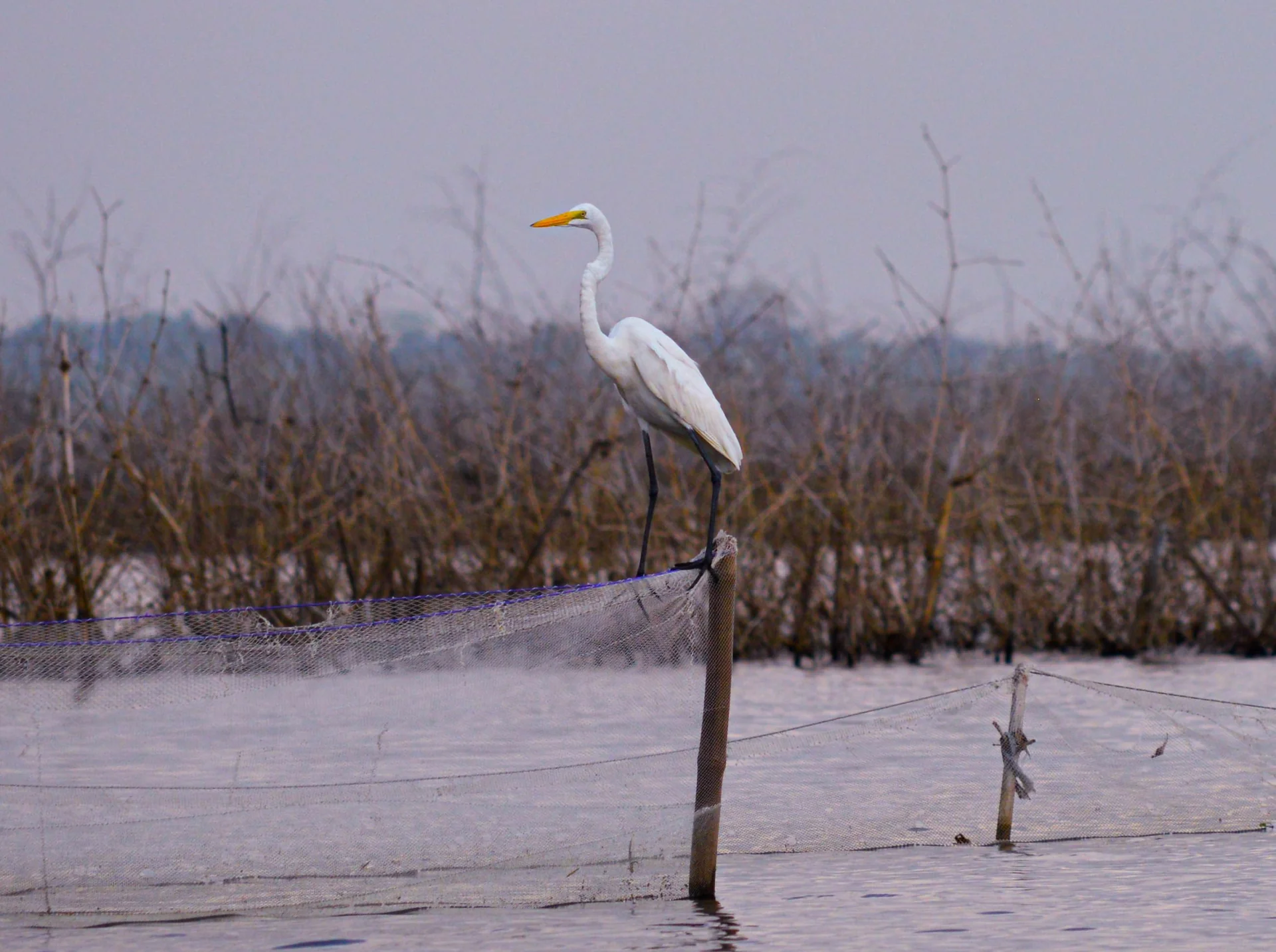
Lake Nokoué itself is under threat. Urban pollution from Cotonou, sedimentation from deforestation along the shores, overfishing of the lake's resources: all these factors degrade the ecosystem that sustains Ganvié.
Rising water levels, linked to climate change and sea level rise, weaken the stilts and threaten building stability. Seasonal floods grow more frequent and intense. Fish stocks dwindle, pushing fishermen toward more aggressive techniques that worsen the degradation.
UNESCO requires candidates to demonstrate protection against natural and human threats. Cleaning Lake Nokoué and regulating its water levels are problems far beyond Ganvié's borders. They concern all of southern Benin and require coordinated regional action.
Obstacle 4: Political dynamics
A UNESCO nomination is never purely technical. It is also political. A change of government can mean a change of priorities. A minister may advocate for the dossier with conviction, only to be replaced by a less interested successor.
Mass tourism is another sensitive issue. World Heritage status would attract more visitors to Ganvié. This is an economic opportunity, but also a risk. Without proper infrastructure and regulation, tourist influx could accelerate site degradation. Benin must balance promotion with protection.
Obstacle 5: The authenticity dilemma
Finally, there is a deeper philosophical hurdle. UNESCO was designed to protect architectural and natural sites. Ganvié is neither. It is a living city, evolving and transforming over time. How do you freeze its authenticity without killing what makes it alive?
UNESCO criteria require a degree of stability in the features that define a site's universal value. But a community cannot live in a museum. The Tofinu have the right to modern comfort, to build with durable materials, to install electricity and running water.
Ganvié's World Heritage challenge is therefore exemplary. It forces a rethinking of what conservation means when the site to protect is home to thousands of people with their own aspirations.
What World Heritage status would actually change for Ganvié
This question is worth asking before discussing how to get there. World Heritage inscription is not merely a prestige label. It has concrete practical consequences that would affect residents, guides, and visitors in measurable ways.
International visibility and tourism. Heritage sites attract visitors at a different scale. Sites inscribed after decades of obscurity often see tourist numbers double or triple within five years of inscription. For Ganvié, this would mean more economic opportunity for guides, pirogue operators, artisans, and food vendors. It would also mean infrastructure pressure: more people on boardwalks that were not designed for tourist traffic, more pirogues in channels that are already crowded in the morning hours.
Conservation funding. UNESCO does not automatically provide funding for inscribed sites, but Heritage status unlocks access to the World Heritage Fund, international NGO partnerships, and bilateral cooperation agreements that are otherwise difficult to access for non-inscribed sites. Several African heritage sites have secured millions in conservation funding through these channels following inscription.
Protection obligations. Inscription binds Benin to specific conservation commitments. The state must produce periodic conservation reports, respond to UNESCO advisory body recommendations, and maintain the site's outstanding universal value. This is accountability with teeth — UNESCO can place a site on the List of World Heritage in Danger if a state fails to protect it, which carries reputational consequences.
Resident rights and urban regulation. This is the most sensitive dimension. Heritage designation typically requires some form of urban planning control in a buffer zone around the site. In Ganvié, this would mean restrictions on building materials, heights, and extensions that directly affect how residents can develop their homes. The negotiation of these rules — balancing conservation requirements with residents' right to modern living — is where most stilt village protection projects founder.
The living community tension. Ganvié is not an archaeological site. Its 20,000 to 30,000 residents are not curators of a museum. They are people who need running water, electrical connections, durable construction, and economic development. Heritage status must find a way to protect the outstanding universal value of the site — the stilt architecture, the water-based culture, the Acadja fishing system — without requiring residents to live in a preserved past. This balance has been achieved elsewhere (the old cities of Bergen in Norway, the floating villages of Ha Long Bay in Vietnam), but it requires significant negotiation and political will.
Paths forward
Despite these obstacles, progress is possible. Several concrete actions could restart Ganvié's candidacy.
First, a participatory management plan involving residents, local authorities and UNESCO experts. This plan would define adapted urban rules, protection zones, and funding mechanisms for conservation.
Second, a Lake Nokoué cleanup program in partnership with surrounding municipalities and international organizations. A healthy lake is the non-negotiable foundation for any credible nomination.
Third, a dedicated team within Benin's Ministry of Culture, focused exclusively on the Ganvié dossier, with a clear budget and timeline.
The urgency of action
Time is not on Ganvié's side. Every passing year sees its architecture modernize a little more, the lake degrade a little more, the nomination slip a little further away. The obstacles to Ganvié's World Heritage status are not insurmountable. But they require strong political will and coordinated effort from all stakeholders.
Ganvié deserves protection. Not for a prestigious list, but so that future generations can still discover what it means to build a life on water.
Questions fréquentes
Is Ganvié a UNESCO World Heritage site?
Why has Ganvié not been nominated to UNESCO after 30 years?
Would UNESCO World Heritage status help Ganvié?
What is the tentative list?
Can visitors help protect Ganvié?
The Secret Guide to Ganvié: Hidden Gems & Etiquette
Discover the authentic Ganvié far from the tourist crowds. Download our exclusive PDF to prepare a respectful and unforgettable visit.
We respect your inbox. No spam.
The Visit Ganvié Team
Written by native Tofinu guides. We have navigated Lake Nokoué since childhood to share the true history of our city, far from tourist traps.
Related articles
Voodoo & Lake Spirituality in Ganvié: Water Shrines, Tofinu Deities & January 10th Rituals
Ganvié is not only an architectural marvel — it is a sacred territory rooted in Voodoo spirituality. Discover the intimate bond between the Tofinu people and the guardian spirits of Lake Nokoué.
edgeGanvié stilt architecture: techniques, heritage and preservation challenges
Ganvié's stilt architecture is a living heritage built on ancestral techniques transmitted orally since the 18th century. Analysis of materials, construction methods, the spatial organization of this lake city, and the contemporary challenges threatening this unique building knowledge.